
You open the packet, and a small flat pouch drops out. The tea inside is fine, almost powdery, and the bag barely moves once the water hits it. Then you watch someone brew the same tea loose, in a pot with room. The leaves unfurl. The color shifts. The cup tastes like it came from a different shelf. That moment is where the real question starts. Not which is better, but what exactly changed.
The honest answer is that it depends on the tea, the bag, and what you are optimizing for. The gap between bagged and loose tea is not always where people expect it to be. Some bags hold perfectly decent leaf. Some loose teas are poorly stored and stale. The format matters, but the leaf inside matters more. Once we separate the good arguments from the assumptions, choosing becomes easier.
What actually goes into a tea bag
Most mass-market tea bags contain what the industry calls fannings and dust. These are the smallest particles left after whole leaves are sorted and graded. They are not floor sweepings, exactly, but they are the fraction of the leaf that broke down during processing. Fannings brew quickly, produce strong color fast, and deliver a bold, one-dimensional cup. That is by design. Speed and consistency are the point.
A step above fannings is CTC tea, short for crush-tear-curl. This method rolls the leaf into dense pellets that extract rapidly and evenly. CTC dominates the global tea bag market because it suits high-volume production and delivers a predictable cup. It works well in black tea blends, especially with milk and sugar, but it is rarely used for Japanese green tea because the processing style is fundamentally different. Japanese tea relies on steaming and rolling to preserve the leaf shape. CTC would undo all of that.
Then there are pyramid bags, sometimes called sachets. These use a larger, more open mesh and often contain bigger leaf pieces or even whole leaves. A good pyramid bag gives the leaf more room to expand, which improves extraction. If you have ever brewed a premium pyramid-bagged Sencha and found it genuinely good, this is why. The format matters less than the space and the leaf quality inside.
The bag material itself also plays a role. Nylon or PET mesh is also used, though some drinkers prefer to avoid synthetic materials in hot water. Cotton or corn-starch-based mesh is another option. For Japanese green teas, which tend to be more flavor-sensitive than heavily oxidized teas, the bag material can make a noticeable difference in the cup.
So the quality spectrum runs wide. A cheap flat bag stuffed with dust and a high-end pyramid bag with whole-leaf Sencha are both technically tea bags, but they sit at opposite ends of the experience. Dismissing all bags as inferior misses the range that actually exists within the category.
What you get with loose leaf
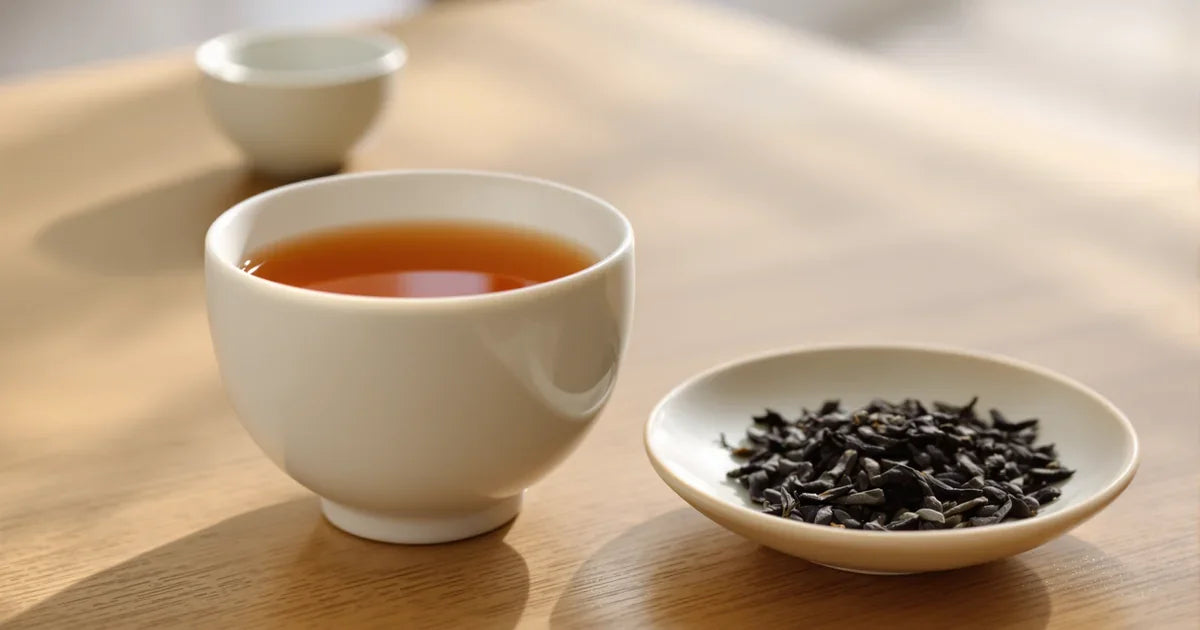
Loose leaf tea is sold as it was finished at the factory: whole or mostly whole leaves, sometimes with stems or smaller pieces, but not compressed into a bag. When you add water, the leaves have room to open fully. That room is not cosmetic. It changes how flavor moves from leaf to cup. Understanding why requires looking at the leaf itself.
A tightly rolled Sencha needle, for example, needs space to unfurl. As it opens, the surface area exposed to water increases gradually, which means different compounds release at different rates. The first seconds bring sweetness and amino acids. The later seconds bring more astringency and body. That layered extraction is part of what makes loose leaf tea taste more complex than a bag of the same tea, where everything hits the water at once because the particles are so fine.
The second and third steep take this further. With loose leaf, each infusion pulls a slightly different profile from the same leaves. The second steep of a quality Sencha is often sweeter and rounder than the first because the initial pour already carried away the sharpest edges. The third steep can be lighter, almost clean in a way that feels like a different tea entirely. That progression is one of the quiet pleasures of brewing Japanese tea at home, and it simply does not exist with most tea bags.
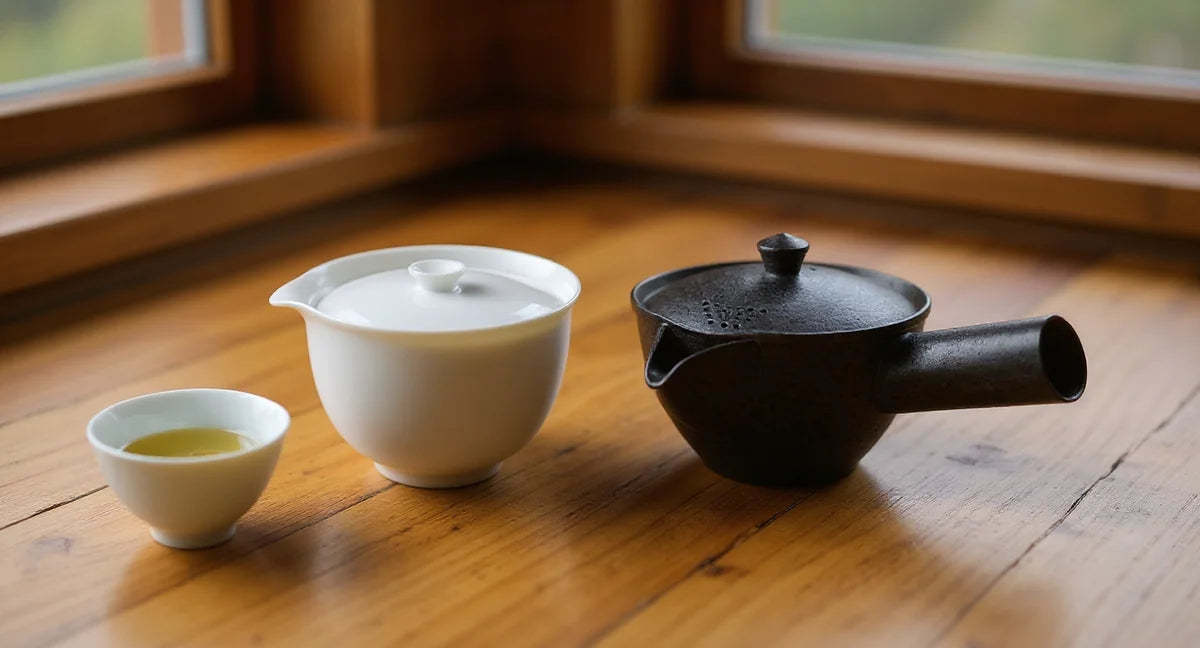
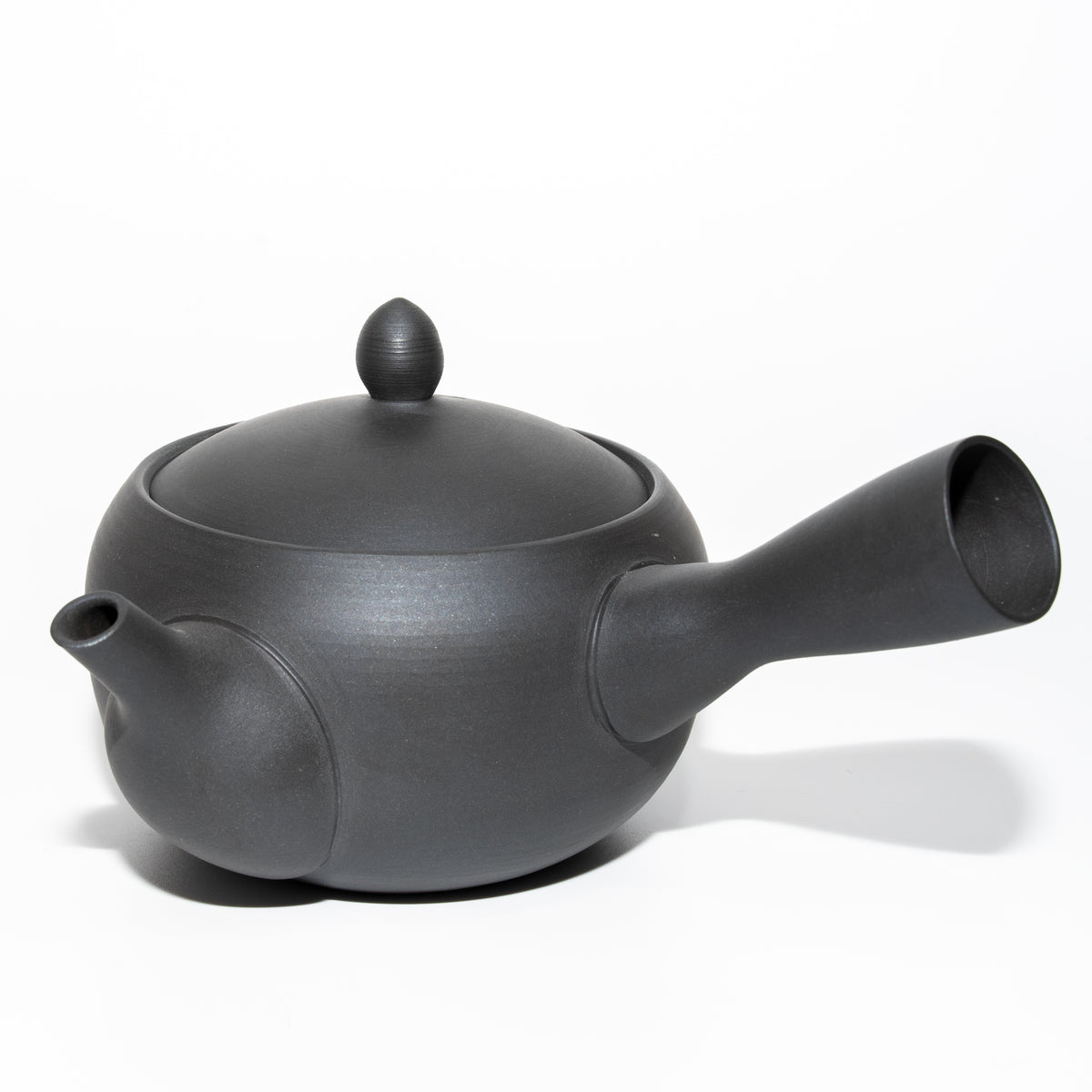
There is also the visual and ritual side. Watching Hojicha leaves darken in a Kyusu, or seeing Gyokuro unfurl slowly in a small pot, adds a sensory layer that a sealed bag cannot offer. For some people, that dimension is half the reason they drink tea. For others, it does not matter at all. Both positions are valid.
Flavor comparison from our tasting notes
In our tasting notes, Asanoka Sencha from Shimokubo Isao Tea Factory was brewed in drip bags from Seiwa (58024 and 58375) and Yamanaka Sangyo, each at 70 °C for 90 seconds with 4 g of leaf in 120 ml of water, and compared with a Kyusu brew.
The Seiwa 58024 note describes the aroma as intact, with a little less impact. The Seiwa 58375 note records some loss of texture, and notes that as the perception of umami changes, the overall sense of volume in the cup is diminished. The Yamanaka Sangyo note describes a cup very close in flavor to the Kyusu brew, with slightly less viscosity.
When bags win, it is usually on convenience, consistency, and portability. A bag brews in a mug with no tools. It produces the same cup every time. It travels easily. For a morning at the office, a hotel room, or a quick cup between tasks, that reliability is genuinely useful. We would never tell someone their daily bag of Hojicha is wrong.
When loose leaf wins, it is on complexity, body, and repeatability. A single portion of good Sencha or Gyokuro can give you two or three steeps, each with a different character. The second steep of a quality Sencha often tastes sweeter and rounder than the first. Most bags do not survive a meaningful second steep because the small particles have already given everything on the first pour.
Cost per cup
Tea bags look cheaper at the register, but the math shifts when you count cups per gram and factor in multiple steeps. Here is a rough comparison based on common Japanese teas — prices vary by brand, pack size, and retailer.
| Tea | Bagged (per cup) | Loose leaf (per cup) | Notes |
|---|---|---|---|
| Sencha | About $0.30 to $0.50 | About $0.25 to $0.40 | Loose leaf gives 2 to 3 steeps per portion |
| Hojicha | About $0.20 to $0.35 | About $0.15 to $0.25 | Roasted teas are often less expensive per gram |
| Genmaicha | About $0.20 to $0.30 | About $0.12 to $0.20 | Rice blend keeps the base cost low |
| Gyokuro | Rarely sold bagged | About $0.80 to $1.50 | 3 steeps typical, premium leaf rewards patience |
The second-steep advantage is where loose leaf pulls ahead on value. A 5-gram portion of Sencha brewed twice effectively halves the per-cup cost. Three steeps make it even more economical. Bags rarely offer that second act.
There is also a storage consideration. Loose leaf in a sealed tin or bag keeps well for months if stored away from light, heat, and moisture. A single 100-gram pack of Sencha can yield roughly 20 cups across multiple steeps. The upfront cost is higher, but the per-cup cost tends to drop below most bagged options once you are brewing at home regularly. When you factor in multiple infusions, loose leaf Japanese tea often costs the same or less than bagged, while delivering a noticeably better cup.
Which is right for you
There is no universal answer, but the use case usually makes the choice clear.
If tea is part of your daily routine and you want a reliable cup without fuss, bags work fine. Choose a quality brand that uses whole leaf or large pieces in pyramid bags, and the cup will be respectable. There is no shame in a good tea bag brewed with care.
If you are exploring Japanese tea and want to understand what makes Sencha different from black tea, or why Gyokuro tastes so dense, loose leaf opens doors that bags cannot. The ability to see the leaf, smell the dry tea, adjust the ratio, and brew multiple steeps is how people develop a real relationship with tea. A Kyusu and a few grams of loose leaf is all you need to start.
If you are buying tea as a gift, loose leaf tends to present better. The leaf itself is part of the experience: its shape, color, and aroma when the package opens. A sealed bag of dust in a foil wrapper does not carry the same weight. For gift-giving, the unboxing moment matters, and whole leaf delivers it.
If you need tea for the office, travel, or situations where a teapot is not practical, that does not mean settling for the lowest common denominator. Consider a third option instead.
A third option: drip bags
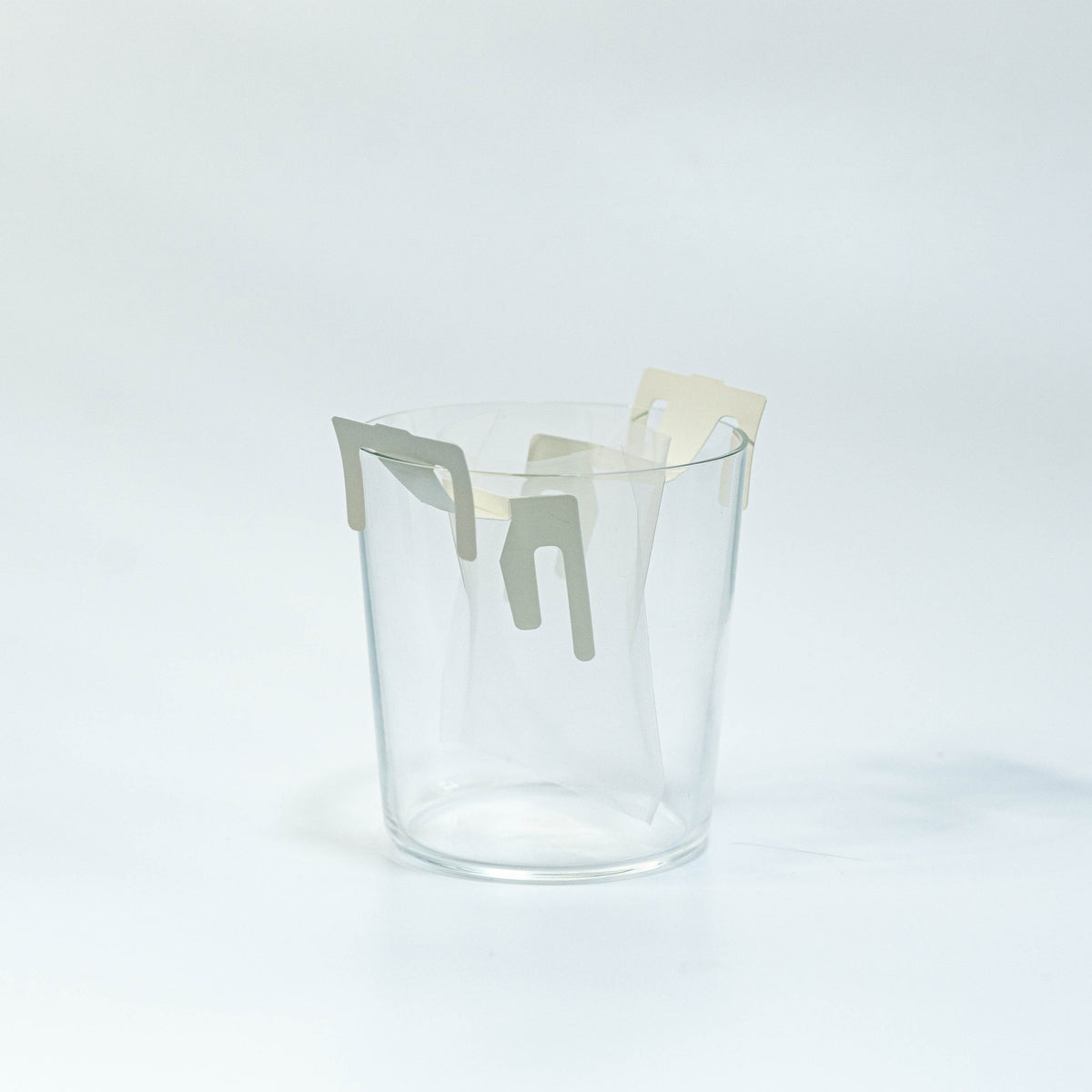
Drip bags sit between loose leaf and traditional tea bags. They look like single-serve pour-over coffee filters: you hook one over a cup, pour hot water through, and the tea brews directly into the mug. The leaf inside is usually better quality than a standard tea bag, and the open structure gives it more room to extract properly.
Drip bags are especially useful for travel and for sharing tea with people who do not own a teapot. The cup is closer to a loose leaf brew than a standard bag, and the convenience is hard to beat. You do not need a Kyusu, a scale, or any special knowledge. Just hot water and a cup. Our article on how to brew tea with a drip bag walks through the method and what to expect.
For cold brew, both bags and drip bags work well. Drop one into cold water overnight, and the slow extraction smooths out many of the differences between bagged and loose. The cold water pulls sweetness forward and leaves most of the bitterness behind, which means even a simple bag can produce a clean, pleasant cup. This is actually one of the rare contexts where bags perform nearly as well as loose leaf, because the extended extraction time at low temperature reduces the importance of leaf expansion speed. Our cold brew tea guide covers that approach in more detail.
The gap between bagged tea and loose leaf is real, but it is not absolute. A thoughtfully made tea bag can produce a pleasant cup. A carelessly brewed loose leaf tea can disappoint. What matters most is the leaf itself, the space it has to open, and the attention you bring to the water.
At FETC, we sell both formats because we think both have a place in a tea drinker's life. Loose leaf is where Japanese tea shows its full character — the layered steeps, the aroma that changes as the leaves open, the quiet ritual of pot and cup. Bags and drip bags are how that character travels into busy mornings, hotel rooms, and office desks. Many of our customers keep both on hand: loose leaf at home for the weekend pot, drip bags in the desk drawer for Tuesday afternoon. Start wherever you are, and let the tea guide the next step.
Frequently Asked Questions
Are loose leaf teas always better than tea bags?
Not always. We find the leaf quality matters more than the format. A good pyramid bag can taste respectable, while poorly stored loose leaf can still disappoint.
Why do many tea bags taste flatter than loose leaf tea?
Many flat bags use fine particles that extract all at once. Loose leaves have room to open, so sweetness, aroma, body, and astringency appear in more distinct layers.
When are tea bags the better choice?
Tea bags make sense when convenience matters most: office mornings, hotel rooms, travel, or a quick mug between tasks. Their strength is reliable, tool-free brewing.
Can loose leaf tea cost less per cup?
Often, yes. Loose Sencha may give 2 to 3 steeps from one portion, so the per-cup cost can drop below many bagged options when you brew at home regularly.
What are drip bags good for?
Drip bags sit between loose leaf and regular tea bags. They hang over a cup, give the leaf more room, and make a cup closer to loose leaf without needing a Kyusu.