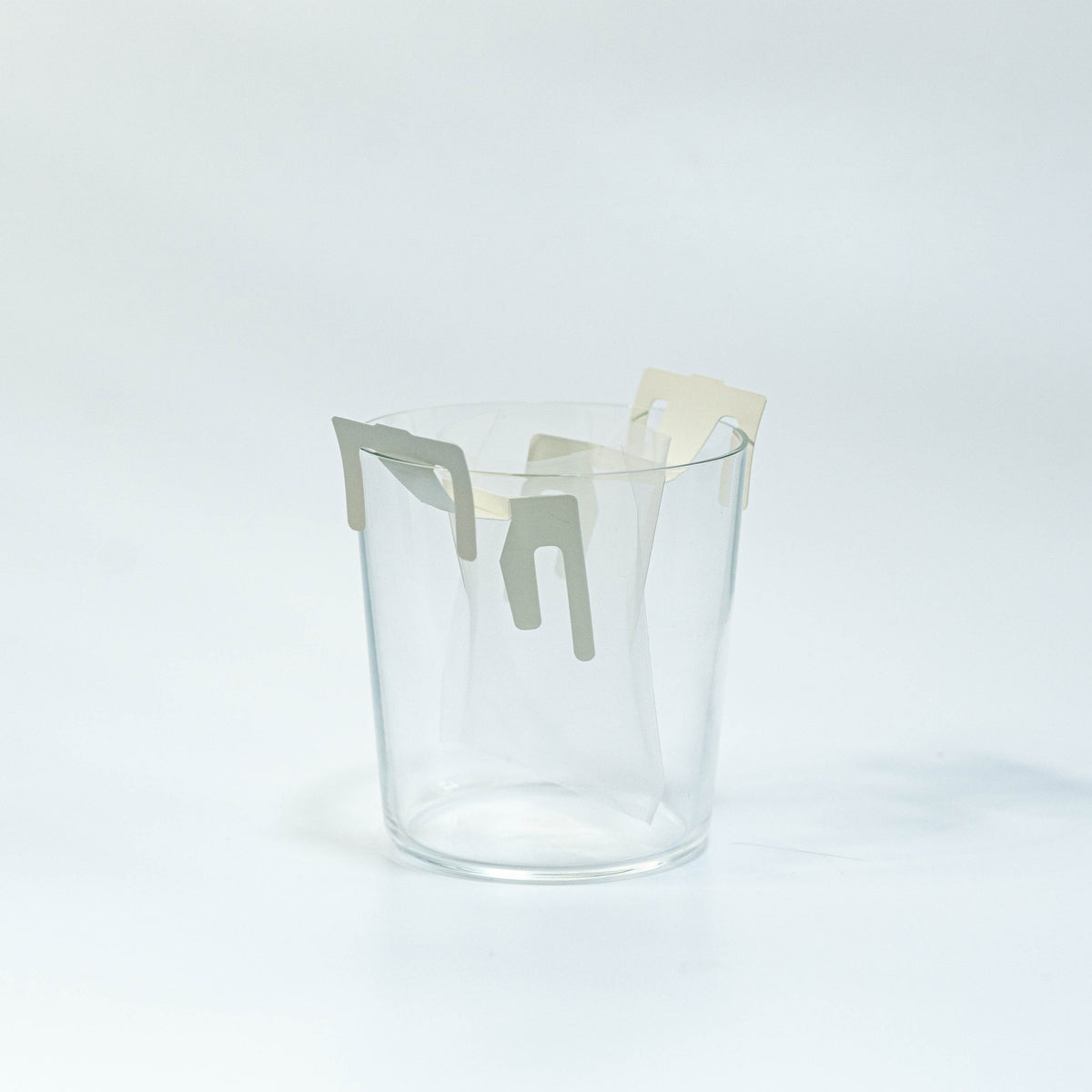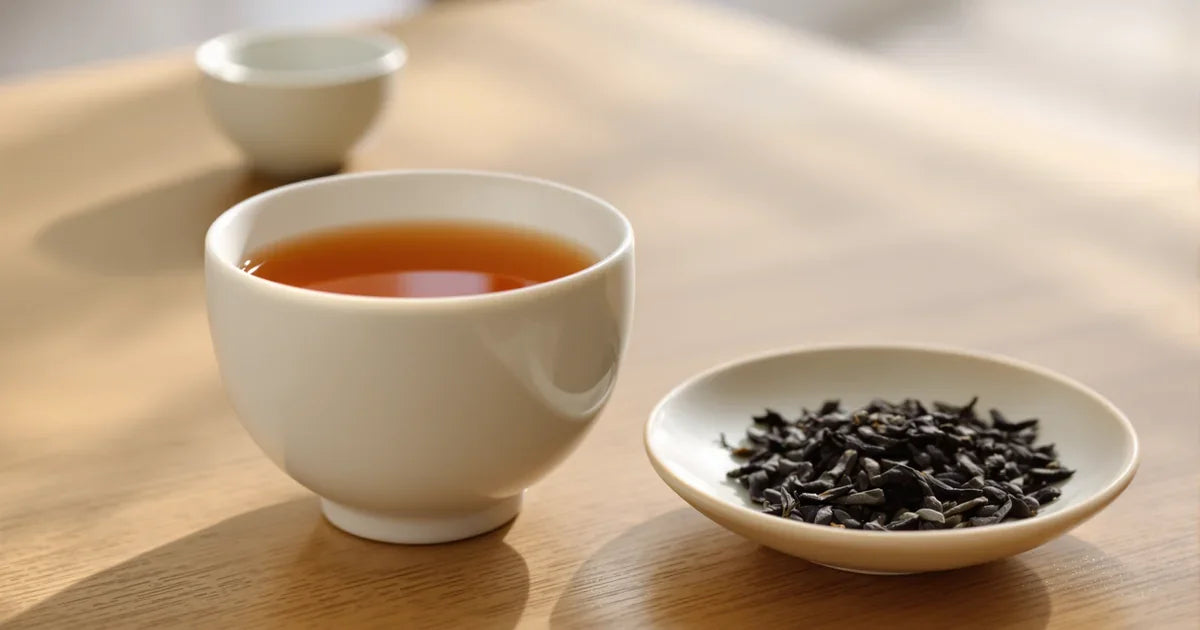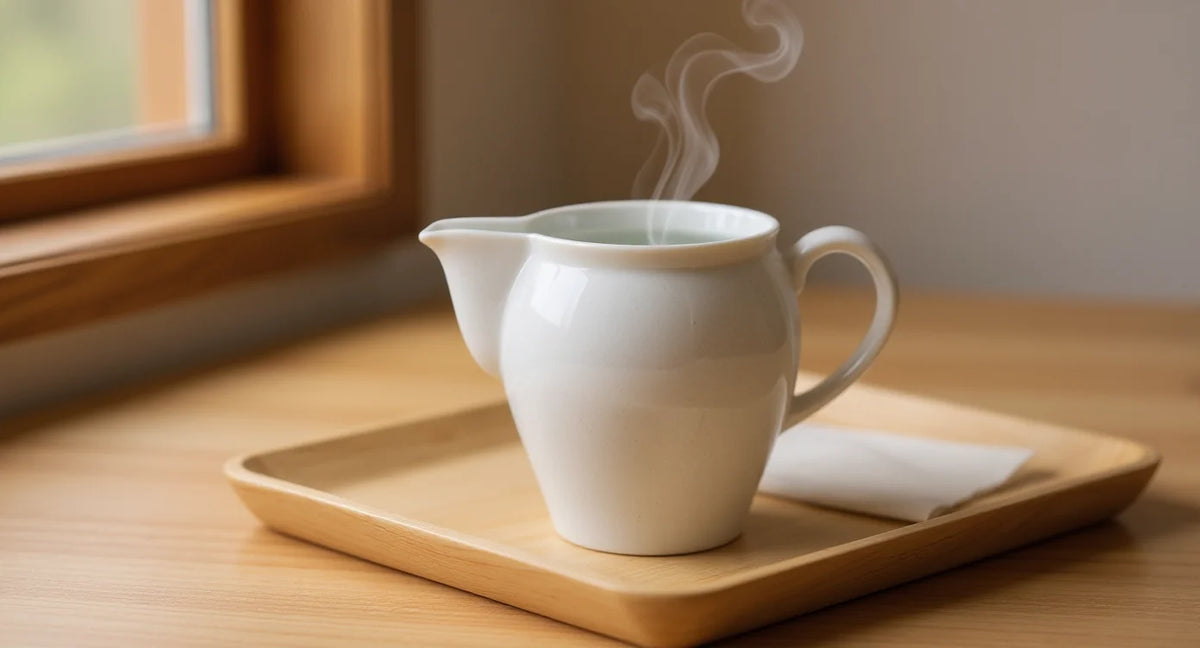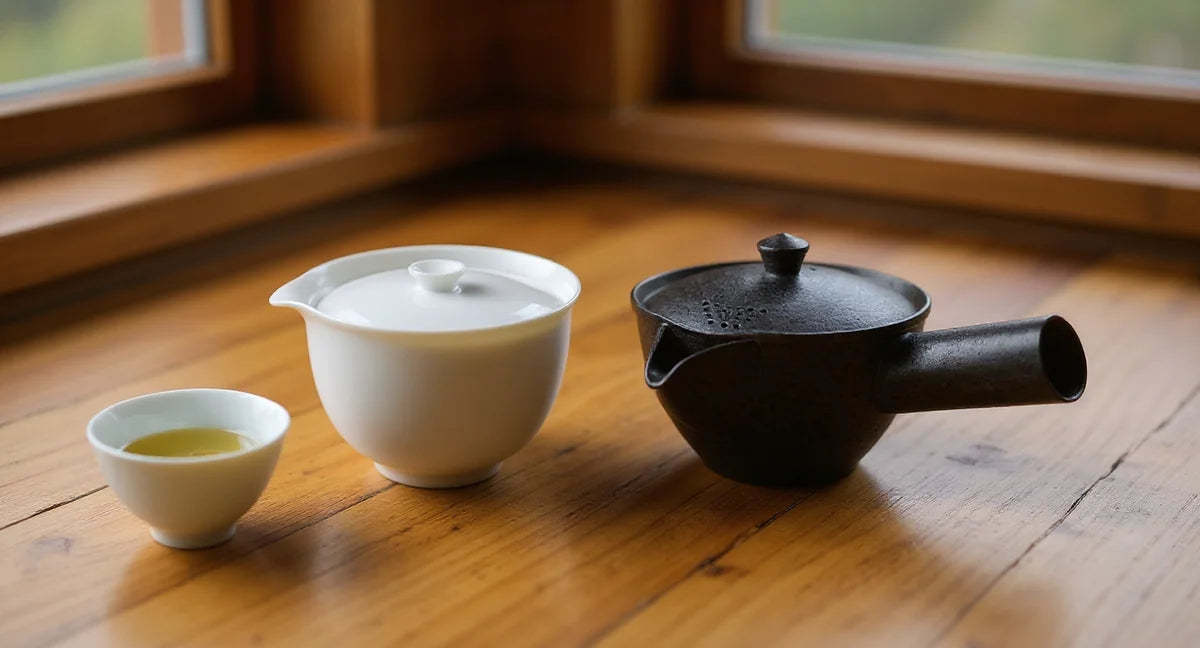
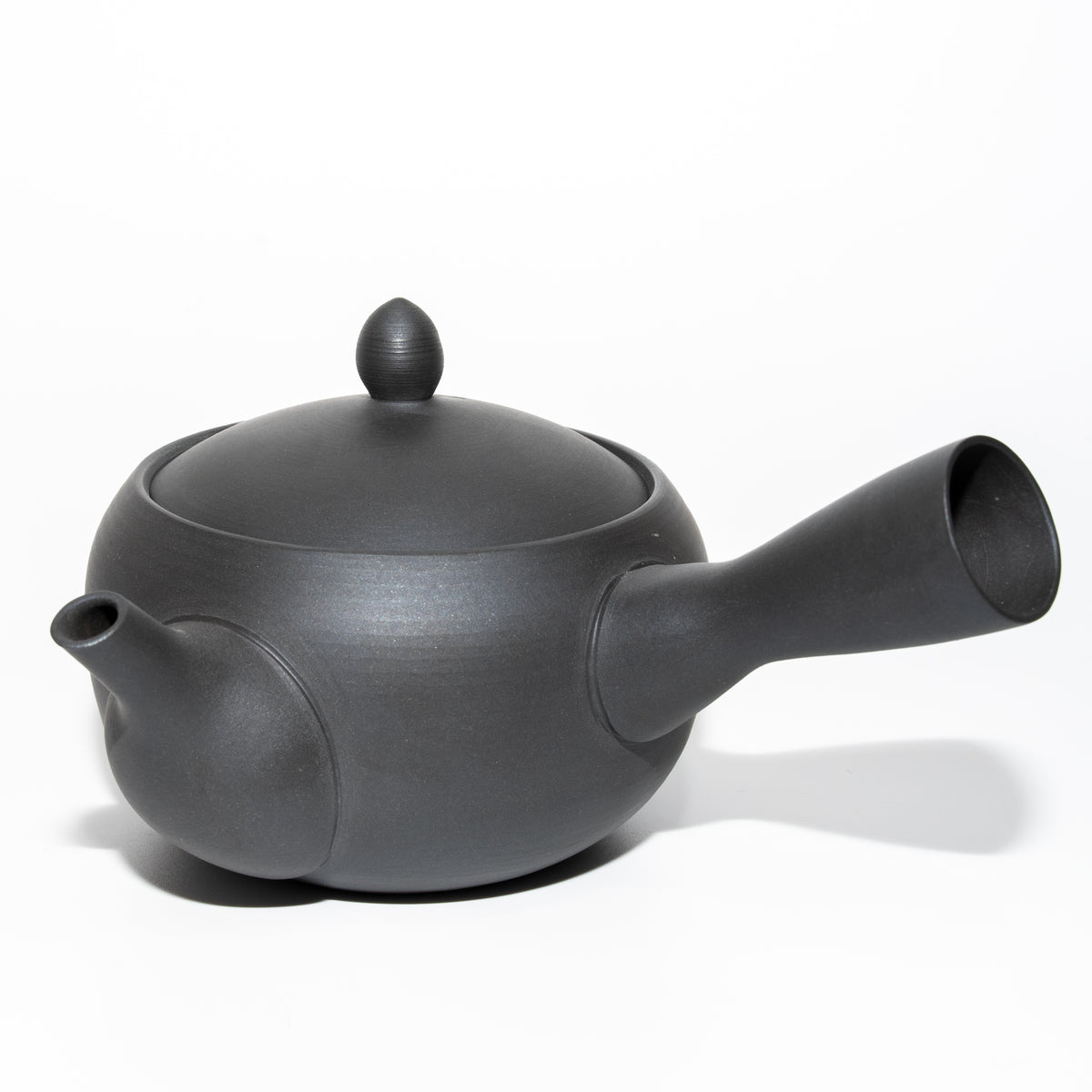
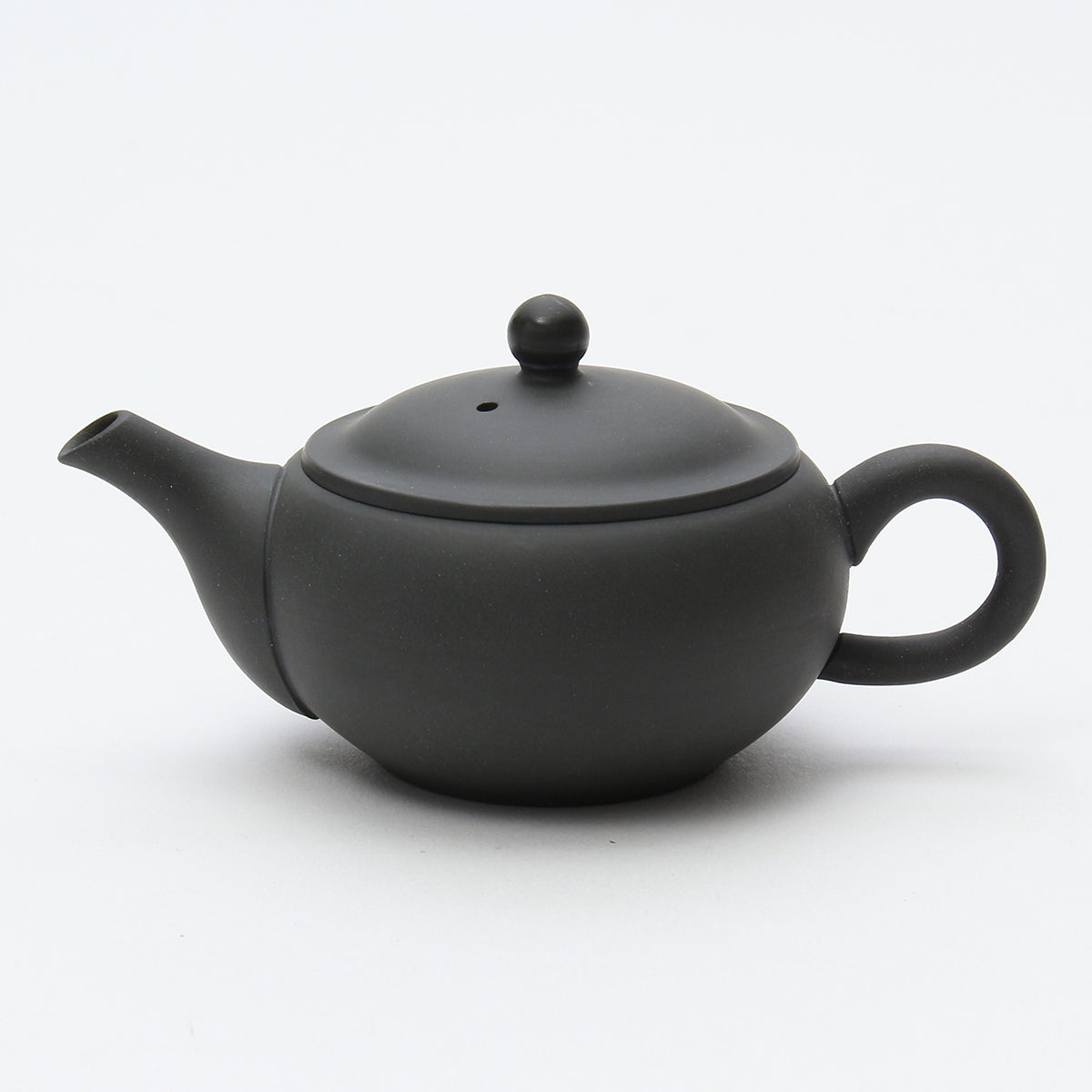

Powder in a bowl. Leaves in a teapot. A bright green latte on one side of the counter, a clear yellow-green cup on the other. The word green tea gets used so loosely that these can seem like two different drinks from two different worlds.
That is why the question keeps returning: is Matcha green tea? And why the whole Matcha vs green tea comparison feels stranger than it should. Most people grow up treating "green tea" as a brewed leaf tea, something closer to Sencha in a mug or teapot. Matcha enters from another door entirely, as powder, foam, and a denser kind of flavor.
But yes, Matcha is green tea. It comes from the same plant, and it belongs to the same unoxidized category. What separates it is everything that happens around the leaf: shade before harvest, a different processing path after harvest, and the fact that you drink the leaf itself rather than pouring off an infusion.
Three changes. Completely different cup.
It also explains why the phrase "difference between Matcha and green tea" can be misleading. The real difference is between Matcha and the leaf-brewed green tea most people imagine by default. Once you separate category from image, the picture gets much clearer.
Matcha does not sit outside green tea. It sits at the most specialized end of the spectrum.
Is Matcha green tea?
Every true tea begins with Camellia sinensis. Green tea, oolong, and black tea are not different species. They are different outcomes from the same plant, shaped by what happens once the leaf is picked. Oxidation is the big dividing line.
Black tea is allowed to oxidize deeply. Oolong moves somewhere in between. Green tea is heated early so that oxidation stops before it really begins.
In Japan, that early heat usually comes from steam. Fresh leaves are steamed soon after harvest, which keeps them in the unoxidized category and preserves the greener, more vegetal side of the leaf. That is why Sencha, Gyokuro, Matcha, and even Hojicha all belong to the broad world of green tea. The category is defined by oxidation level, not by whether the final cup looks bright green or chestnut brown.
The confusion starts because the green tea most people picture is Sencha, the everyday rolled tea brewed from whole leaves. It is what shows up in homes, restaurants, office kitchens, and thermos bottles across Japan. When someone says "green tea," Sencha is often the standard mental image. Matcha sits outside that image, so people assume it must be a separate category.
Understandable. Also incorrect.
The difference between Matcha and green tea, then, is not really a botanical difference at all. Matcha is green tea, but it takes a far more specialized route. The plant is the same. The identity of the tea changes because of three decisions: the leaf is shaded before harvest, it is processed into Tencha (the flat-dried leaf that becomes Matcha) instead of rolled leaf tea, and it is stone-milled into powder that gets whisked into water.
Same origin. Completely different path.
What shade does to a tea leaf
Tencha, the raw material for Matcha, is shade-grown for about 20 to 30 days before harvest. During that period, tea fields are covered so the plants receive far less direct sunlight. This is not a cosmetic trick. It is one of the most important flavor decisions in Japanese tea.
Sunlight pushes the leaf toward defense. As the plant receives more light, theanine, the amino acid associated with umami, is converted into catechin, the polyphenol associated with bitterness and astringency. Reduce the light, and that conversion is held back.
The leaf retains more theanine and accumulates more chlorophyll. The result is the profile most people recognize immediately in good Matcha: deeper umami, softer bitterness, and a vivid green color that looks almost illuminated.
This is why Matcha can feel sweet and savory at the same time, while ordinary leaf green tea often feels brighter and brisker. The chemistry has already tilted before the harvest even happens. If you want the broader background, our articles on covered cultivation and theanine explain how shading changes the leaf from the field onward.
The same shading principles produce Gyokuro, a high-end rolled tea shaded for about 20 days, and Kabusecha, a partially shaded tea usually covered for around 7 to 14 days with roughly 50 percent of the light blocked. Kabusecha often tastes like the middle ground its reputation suggests, somewhere between Sencha and Gyokuro.
Sencha stays mostly in full sun. Matcha and Gyokuro step into shadow. That single agricultural choice is the beginning of their shared depth.
We think this is one of the most useful ways to understand Japanese tea. Before talking about bowls, whisks, or powder, look at the field. Look at the light. Shade changes the leaf's inner balance, and that balance stays with the tea all the way into the cup.
From Tencha to Matcha, a process unlike any other green tea
Tencha leaves follow a unique path after the steaming stage: instead of rolling, they are laid flat to dry, then stripped of stems and veins to yield only the leaf flesh. This de-veined leaf flesh is stone-milled into powder — that powder is matcha. No other Japanese green tea goes through this sequence.
The crucial fork after steaming
Once the leaves are picked, Matcha and Sencha begin the same way. Both are steamed to stop oxidation. Then the paths diverge sharply.
Sencha is rolled through multiple stages until the leaves become the familiar narrow needles associated with Japanese green tea. Tencha is not rolled at all. It is dried flat, in loose leaf flakes, and that difference is the decisive fork.
That flat drying matters because Tencha is not being prepared for brewing in the usual way. After drying, stems and veins are removed so that only the softer leaf material remains. What is left is refined Tencha, built for milling rather than for infusion. If you compare finished Sencha and finished Tencha side by side, they hardly look related.
One is shaped for the pot. The other is shaped for the mill.
This is where people asking "is Matcha just ground green tea?" usually get their real answer. Matcha is not made by pulverizing any ordinary green tea leaf. Its raw material is Tencha, a leaf grown under shade, steamed, dried flat rather than rolled, and refined by removing stems and veins before grinding. The powder begins as a specialized tea long before it reaches a stone mill. Our overview of Matcha and Tencha traces that transformation more closely.
Powder, not infusion
Refined Tencha is stone-milled into Matcha, often as close to shipment as possible so the powder stays fresher. The milling is slow on purpose. Fine particles, less heat, softer texture.
Then, when it reaches the bowl, the experience changes again. You do not steep the powder and discard it. You whisk it into water and drink the whole leaf as a suspension.
That single fact separates Matcha from nearly every other tea experience people know. Sencha, Gyokuro, and Hojicha are infusions. Water passes through the leaves, extracts part of what is inside them, and the leaves are left behind.
Matcha keeps everything in the bowl. More caffeine. More nutrients from the leaf itself.
A thicker texture. A fuller, more immersive mouthfeel.
It is also why Matcha feels so different on the palate even when the underlying tea chemistry overlaps with other green teas. A brewed tea arrives clear and transparent. Matcha arrives opaque, textured, almost edible.
The leaf is not offstage. It is the drink. Our articles on how Matcha is made and how to prepare Matcha show how that processing path carries through into the bowl.
From our side, this is the point where the category becomes easy to read. Matcha is green tea, yes. But it is green tea that has been shaded, processed into Tencha, milled, and then consumed whole. A lot changes when the leaf never leaves the cup.
Matcha vs Sencha, the comparison most people are really asking about
Matcha and Sencha are both Japanese green teas from the same plant, but they arrive in the cup through entirely different routes. Sencha grows in open sunlight, gets rolled into needles, and is brewed as an infusion. Matcha grows under shade, is stone-milled into powder, and is whisked whole into water. The difference in taste — and caffeine — follows directly from that difference in process.
Why Sencha stands in for green tea
When people search Matcha vs green tea, they are usually asking Matcha vs Sencha. Sencha is Japan's everyday green tea, accounting for roughly 60 to 70 percent of Japanese tea production. It is grown in full sun, steamed, rolled into needle-shaped leaves, and brewed as an infusion. This is the taste many people mean without realizing it when they say "green tea."
That everyday status matters because it shapes the whole misunderstanding. Sencha is the default reference point, while Matcha feels ceremonial, café-like, or specialized. Put the two next to each other and the difference is obvious even before tasting.
One arrives as leaf. One arrives as powder. One asks for a teapot or kyusu. One asks for a bowl and whisk.
Two different kinds of green tea experience
The flavor contrast follows directly from cultivation and process. Sencha, grown under the sun, tends to taste bright, grassy, clean, and lightly sweet, with a refreshing astringency that gives the cup edge and movement.
Matcha is denser. More vegetal. More creamy. The sweetness sits underneath the umami, and the bitterness, when present, feels wrapped into the body rather than floating separately.
Body may be the simplest way to explain the difference between Matcha and green tea to a beginner. Sencha is transparent. You can see through it, and the flavor moves through the mouth with clarity and lift. Matcha is thick enough to feel almost plush when it is well made.
It coats rather than glides. Even before the aroma finishes opening, the texture is already telling you that you are drinking the leaf itself.
Caffeine follows the same logic. Matcha is usually the highest because the whole leaf is consumed. Sencha and Hojicha are moderate, both cited around 20 mg per 100 mL in standard infusions per MEXT tables.
These are not just chemistry facts on paper. They match the lived feeling of the teas. Matcha can feel deeper and more sustained. Sencha feels clearer and lighter on its feet.
The way each tea is prepared reinforces that difference. Sencha asks you to think about leaf quantity, water temperature, and timing across multiple infusions. The second steep may taste softer than the first. The third may turn lighter and sweeter.
Matcha is less about extraction and more about integration. Sift the powder, add water, whisk, and the whole tea arrives at once. One unfolds in rounds. The other gathers itself into a single bowl.
There is a cultural difference too. Most Japanese households are far more likely to drink Sencha every day than to whisk Matcha every day. Sencha suits meals, work breaks, ordinary afternoons.
Matcha tends to create a more intentional moment, even when prepared casually. Not because it is inherently superior. Because the format itself asks for a little more focus. If you want the everyday side of the category in fuller detail, our article on what is Sencha follows that path from field to cup.
So which one is the "real" green tea? Both. Sencha is the standard reference cup. Matcha is the most concentrated expression.
Same family. Different posture.
Matcha vs Gyokuro, shade-grown siblings
If Sencha is Matcha's everyday counterpart, Gyokuro is its closest relative. Both begin with the same core idea: shading the tea plants for about 20 days before harvest so the leaf retains more theanine, develops deeper umami, and softens its bitterness. In the field, the logic is almost identical.
The separation happens after harvest. Gyokuro is processed like a leaf tea. It is rolled, dried, and brewed. Tencha, by contrast, is dried flat, refined, and ground into Matcha.
That one manufacturing fork creates two of the richest green tea experiences in Japan, but they feel rich in different ways. Gyokuro gives the deepest umami you can draw from a brewed cup. Matcha gives the densest texture because the leaf remains in suspension.
This is why Gyokuro is often brewed in small pours, slowly, with water around 60°C. The cup can feel concentrated, savory, and almost syrupy even though it is still an infusion. Matcha does not need that extraction strategy because the leaf is already in the bowl. Whisked well, it becomes foamy, full, and direct.
Taste the two side by side and the contrast becomes unusually clear. Gyokuro feels compressed into the liquid itself, dense but still transparent, as if the field has been folded carefully into a few measured sips. Matcha feels more immediate and physical.
The umami is there in both, but in Gyokuro it is extracted. In Matcha it is carried by the suspended leaf. They are probably the closest relatives in Japanese tea, and also one of the best demonstrations of how processing can redirect the same agricultural idea.
Gyokuro is also rare. It is sometimes called the king of tea, and annual production is only around 240 tons. That scarcity is part of the romance, but the more useful point is structural: Matcha and Gyokuro are shade-grown siblings that part ways in processing.
We think tasting them side by side is one of the clearest lessons in Japanese tea. Same cultivation. Different craft. Different cup.
Our profile of Gyokuro goes deeper into that brewed side of the family.
Matcha vs Hojicha, green tea and its roasted sibling
Matcha is vivid green and whisked from stone-milled powder. Hojicha is brown and brewed from roasted leaves. Despite every surface difference — color, aroma, preparation, mouthfeel — both are classified as green tea, because Japanese tea is sorted by oxidation method, not by color. Hojicha starts its life as Sencha or Bancha before roasting; that foundational steaming step makes it green tea by category.
This is the comparison that seems impossible at first glance. Matcha is vivid green. Hojicha is brown.
One smells creamy and vegetal. The other smells toasted, nutty, warm.
Yet Hojicha is still green tea. The category is determined by oxidation, not by color, and Hojicha begins as an unoxidized tea before roasting changes its aroma and appearance.
In most cases, Hojicha is made from Sencha or Bancha, a later-harvest everyday tea, after standard green tea processing has already happened. Then the finished tea is roasted. That roast produces pyrazine, one of the compounds behind Hojicha's comforting toasty aroma, the smell people often associate with roasted nuts, warm grain, or the browned edge of bread.
Set Hojicha vs Matcha side by side and everything turns into contrast. Matcha is shaded, stone-milled, green, umami-forward, and textural. Hojicha is usually sun-grown leaf tea that has been roasted into something softer, browner, and more comfort-driven.
Matcha feels concentrated. Hojicha feels open and warm. Matcha offers an intense, vibrant cup, while Hojicha is often chosen for its comforting, toasted aroma and gentle warmth.
That does not make Hojicha lesser or simpler. It just aims somewhere else. Good Hojicha has a low-bitter, toasty sweetness that settles quickly into the body, while Matcha keeps expanding across the palate with suspended leaf and lingering umami.
If Matcha is a tea you notice from the first texture onward, Hojicha is often a tea you recognize first by smell. Aroma before sip. Comfort before concentration.
There is a useful lesson in this pair. Green tea in Japan is not a color family so much as a processing family. Hojicha proves it. Roast an unoxidized tea and the cup may turn brown, but the classification does not change.
What changes is the mood. If Matcha is the green tea that pulls you inward, Hojicha is often the green tea that lets the shoulders drop. Our article on Hojicha follows that roasted path in more detail.
If this comparison has made you curious about unshaded green tea, our guide to green tea covers the full spectrum — from light-steamed Sencha to the earthy depths of Bancha.
The phrase green tea covers an enormous range in Japan, much more than English usage usually suggests. At FETC, the more we taste across that range, the clearer the category becomes.
Matcha is the most concentrated expression. Sencha is the most universal. Gyokuro shows what shade can do in a brewed cup. Hojicha shows how far aroma can travel without leaving green tea behind.
All of them begin with the same leaf. Then the field, the factory, and the cup take over.
That is the real answer behind Matcha vs green tea. Not one being green tea and the other not. The same leaf, guided into completely different drinks.
Frequently Asked Questions
Is matcha actually a type of green tea?
Yes. Matcha comes from the same plant (Camellia sinensis) and the same family of unoxidized teas as sencha and gyokuro. It tastes and feels different because the leaves are shade-grown before harvest, processed into Tencha, and milled into a whole-leaf powder consumed instead of a brewed infusion. Same green tea family, different experience.
Is matcha closer to gyokuro than to other green teas?
In flavor profile, yes. Both matcha and gyokuro are shade-grown, which raises L-theanine and shifts the cup toward umami and sweetness. Gyokuro is still drunk as an infusion with the leaves discarded, while matcha is whisked into water as a powder. So they are close cousins in the field, but the bowl makes matcha denser in mouthfeel.
Is matcha latte still green tea?
The matcha in a latte is still green tea: it comes from Camellia sinensis and belongs to the unoxidized category. Matcha is made from shaded Tencha, stone-milled and consumed as powder.
Why does matcha feel stronger than a cup of sencha when both are green tea?
Two reasons. First, you drink the whole leaf as suspended powder, so you receive more caffeine and nutrients from the leaf than an infusion that leaves the leaf behind. Second, matcha uses shade-grown tencha leaf, which retains more theanine and accumulates more chlorophyll. Sencha is a clean, refreshing pour. Matcha is a dense bowl. Both are green tea — the format is the difference.
Where should I start if I am new to comparing them?
Start with sencha, the everyday reference cup of Japanese green tea. Then compare matcha whisked into water: the clarity of an infusion versus the density of a whole-leaf bowl. Gyokuro and hojicha each add their own dimension.