Far East Tea Company Editorial Team About 9 min read
Contents

Turn over the tin of a smooth, vivid green Matcha from Uji or Nishio, and there is a reasonable chance the cultivar listed — if the producer lists one at all — is Okumidori. It does not carry the name recognition of Yabukita, and it rarely appears in mainstream tea conversations the way ceremonial grade or single-origin Matcha do. But among Matcha producers in Japan's premium growing regions, Okumidori is quietly essential: a cultivar that grinds exceptionally well, holds its color under the stone, and delivers a rich, theanine-forward sweetness without the sharp astringency that can disrupt Matcha's characteristic softness.

Okumidori is Japan's fourth most cultivated tea variety. Its primary reputation sits in shaded and powdered tea categories, but it shows up in high-quality Sencha and Gyokuro too. This article focuses on what makes Okumidori distinct — particularly for Matcha — while covering the cultivar in full for anyone who wants to understand it beyond a single use case.

What is Okumidori?

Okumidori is a late-harvest Japanese tea cultivar best known for producing smooth, umami-rich Matcha and other shaded teas. Farmers value it for its cold tolerance, high amino acid content, and reliable performance under shade, while drinkers notice its deep green color and low astringency. In short, it is one of the cultivars behind many refined, savory cups of Japanese tea.

The name reflects its harvest timing: *oku* means "late" in Japanese, and all cultivars with "oku" in their names — Okuyutaka, Okuharuka, and Okumidori among them — share this late-ripening characteristic. Okumidori is harvested roughly seven to eight days after Yabukita in the same field. That delay matters: it allows farmers to sequence harvest operations and manage the labor-intensive spring picking season more effectively.

Japan's tea cultivation rankings put Okumidori in fourth position by planted area, behind Yabukita, Yutakamidori, and Saemidori. It is more common than the numbers suggest, however, because its concentration in premium Tencha-producing regions means it appears consistently in the higher-value tiers of the market.

Okumidori and Matcha: why this cultivar matters

Okumidori matters in Matcha because it gives producers three things they care about at once: smooth stone-mill grinding, strong umami from high theanine, and a deep green color that stays attractive after milling. That combination helps create Matcha that feels soft and full rather than harsh, which is why the cultivar appears so often in premium shaded-tea production.

First, the leaf texture. Okumidori produces leaves with a fine, relatively thin cell wall structure that grinds smoothly under a stone mill. Coarser or more fibrous cultivars can grind unevenly, producing Matcha with inconsistent particle size — which affects both mouthfeel and the stability of the foam (*awa*) when whisked. Okumidori's fine leaf quality contributes to a smooth, silky Matcha that disperses evenly in water.

Second, the theanine profile. Okumidori carries high concentrations of theanine — the amino acid responsible for the characteristic umami and sweetness of shaded green teas. When Tencha (the shade-grown, unrolled leaf that becomes Matcha after grinding) is produced from Okumidori, the elevated theanine gives the resulting Matcha a noticeably rounded, sweet character. The astringency is low; the bitterness is restrained. What comes through is a savory sweetness that sits comfortably on the palate.

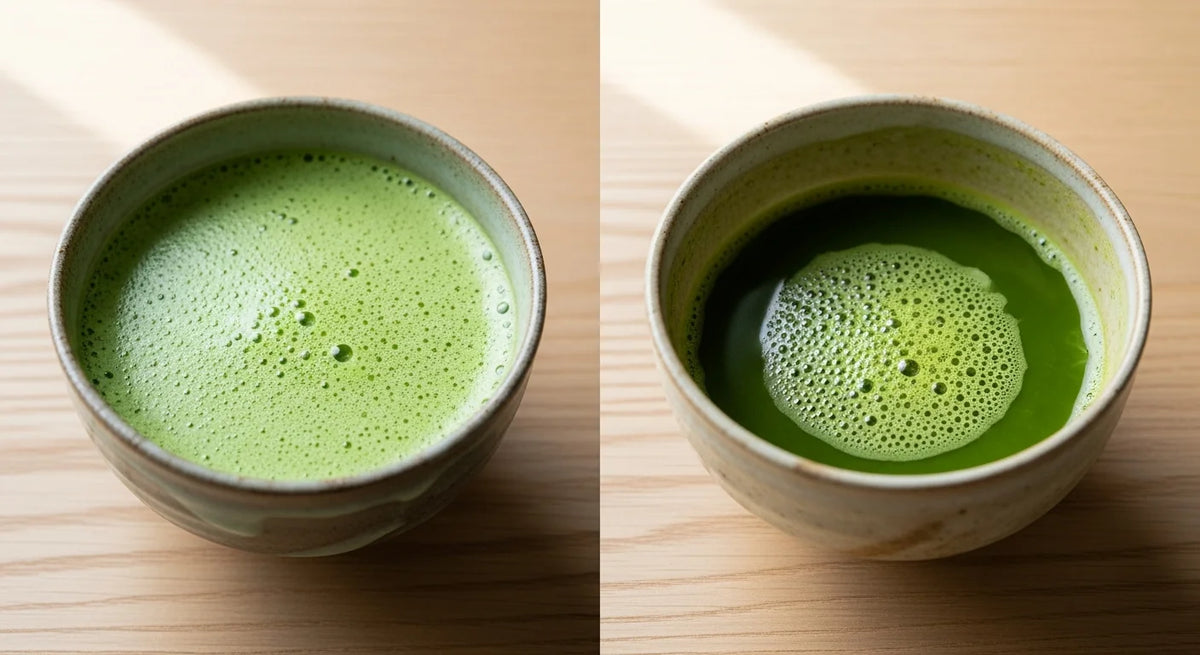
Third, color retention. After stone-grinding, Okumidori Matcha holds a vivid, deep green — the deep, vivid green that premium Matcha producers look for in the Japanese tea market. Some cultivars produce Matcha that oxidizes or dulls more quickly after grinding. Okumidori's natural pigment stability helps it stay visually striking longer.

For these reasons, Okumidori is widely used by Uji producers in Kyoto and Nishio producers in Aichi — both established centers of premium Matcha and Tencha production alongside the rapidly growing Kagoshima region. Many premium Matcha products labeled "Uji" or "Nishio" without a cultivar specification include Okumidori alongside other high-theanine varieties such as Gokou and Uji 70.

Okumidori Matcha vs other cultivars for Matcha production
Cultivar Theanine Color vibrancy Astringency Grindability
Okumidori High Excellent (deep, stable green) Low Very smooth
Yabukita Moderate Good Moderate Good
Saemidori Very high Excellent (bright green) Very low Very smooth
Gokou (Uji local) Very high Very good Low Good

What Okumidori tastes like

Okumidori usually tastes rich, smooth, and savory-sweet, with less bitterness and astringency than many better-known cultivars. The core impression is umami first, followed by a soft sweetness and a clean finish. In practice, that means Matcha feels rounded, shaded leaf teas taste deep without becoming aggressive, and even unshaded versions tend to show more body than a lighter everyday green tea.

As Matcha, the experience is rounded and full — the liquor coats the tongue with a savory-sweet weight that lingers without turning bitter. The aroma when whisked is fresh green, faintly vegetal, clean rather than sharp. It works well for both *usucha* (thin preparation, approximately 1.5–2g of Matcha in 60–70mL of water) and *koicha* (thick preparation, 3–4g in 30–40mL), where the high theanine content gives the thick preparation a noticeable depth without tipping into bitterness.

As Sencha, Okumidori is less immediately recognizable — it does not carry the intense oceanic character of a shade-grown tea, but it has more body and amino acid depth than many unshaded cultivars. The leaf color is a dark, jade-toned green, and the liquor is typically a clear, vivid emerald. When *kabuse* shading (light shading for 7–10 days) is applied, the profile shifts noticeably toward Gyokuro territory — deeper umami, softer astringency.

Where Okumidori grows

Okumidori grows mainly in Japanese regions known for shaded tea, especially places with strong Tencha, Matcha, and Gyokuro production. You see it most often in Kyoto's Uji area and in Nishio, with additional plantings in Kagoshima, Mie, and Fukuoka. Its late harvest timing and good response to shade make it a practical fit for farmers working in premium green-tea regions.

Okumidori handles shade cultivation particularly well. The shading technique — covering the plants for two to four weeks before harvest with reed screens (*yoshi-zu*) or synthetic covers — boosts theanine production by restricting photosynthesis. Cultivars that respond well to this stress produce higher-quality Tencha and Gyokuro. Okumidori is reliably one of them.

How Okumidori differs from Yabukita

Yabukita dominates Japan's tea fields, but Okumidori holds its own in shaded-tea categories where its late harvest, high theanine content, and stone-mill behaviour give it clear advantages. The table below compares the two on factors that matter most for Matcha and Gyokuro production.

Okumidori vs Yabukita: key differences
Factor Okumidori Yabukita
Harvest timing ~7–8 days later (late-ripening) Standard timing (reference)
Theanine (amino acid) High Moderate
Shade cultivation response Excellent (high theanine boost) Good
Matcha / Tencha suitability Excellent (key cultivar for premium Matcha) Good (commonly used in everyday Matcha)
Astringency Lower Moderate
Regional distribution Uji, Nishio, Kagoshima, Mie, Fukuoka Nationwide (dominant everywhere)
Primary use Matcha, Gyokuro, Tencha, Kabusecha Sencha, Hojicha, all-purpose

Okumidori as Gyokuro and Kabusecha

Okumidori is not only a Matcha cultivar; it also performs well as Gyokuro and Kabusecha because shade brings out its best traits. The plant tends to hold onto sweetness, build umami, and keep a gentle texture rather than turning sharp. For producers, that makes it a flexible choice across several shaded-tea styles, not just powdered tea.

Gyokuro production requires shading tea plants for at least three to four weeks before harvest — longer than the ten to fourteen days used for Kabusecha or Tencha. This extended shading period pushes theanine accumulation to its highest levels while significantly reducing catechin content. Okumidori's favorable response to shade stress makes it a viable Gyokuro cultivar in regions where the longer shading period is practical. The resulting tea carries the characteristic brothy umami of Gyokuro — marine, almost savory — with the lower astringency that Okumidori naturally produces even without shading.

Kabusecha (*kabuse* meaning "covered") uses lighter shading, typically seven to ten days, and sits in flavor character between standard Sencha and Gyokuro. Okumidori Kabusecha is appreciated for the clarity of its sweetness: the brief shading lifts the theanine enough to add a soft, almost honeyed quality without obscuring the clean green character that makes Okumidori Sencha pleasant on its own.

The same amino acid profile that makes Okumidori excellent for Matcha — high theanine, low astringency, stable color — translates naturally into quality across all shaded-leaf categories. That versatility, combined with the late-ripening habit that eases harvest scheduling, explains why Okumidori has maintained its fourth-place position in national cultivation rankings despite competition from newer high-theanine cultivars.

How to brew Okumidori

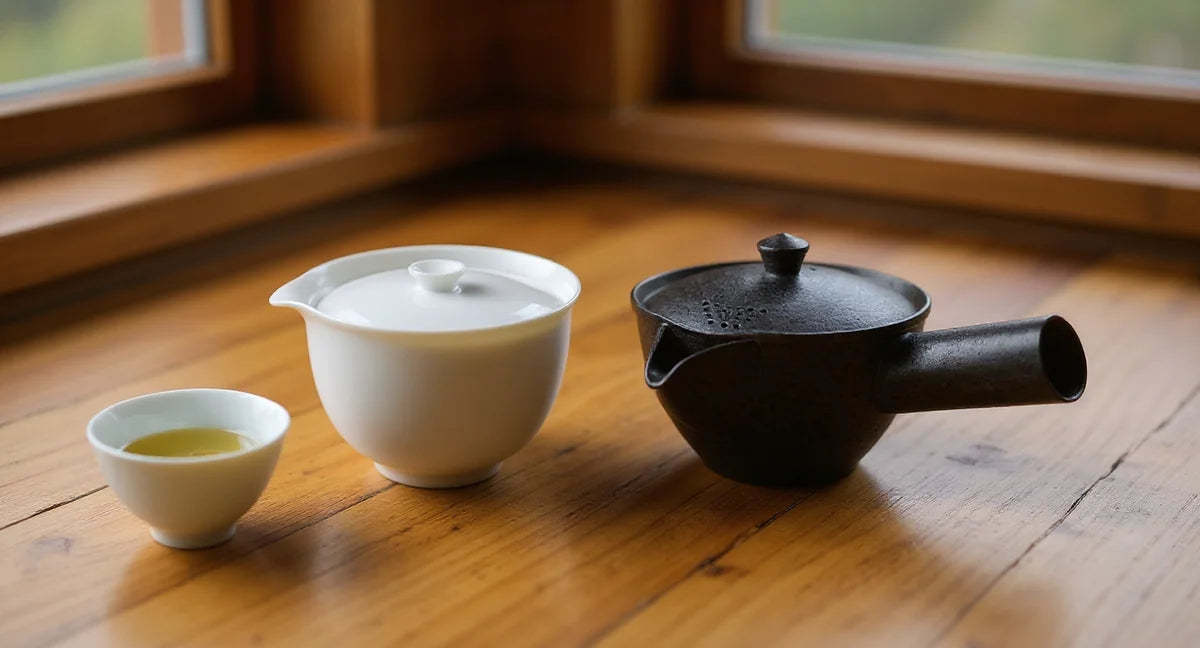
How you brew Okumidori depends on whether you have it as Matcha, Sencha, Gyokuro, or Kabusecha, but the general goal is the same: protect its sweetness and umami. Lower water temperatures and a measured hand usually work best, because they let the cultivar's round, low-astringency character come forward instead of pushing bitter notes to the front.

For Sencha or Gyokuro-style brewing, lower temperatures preserve the theanine-forward character. A 65–70°C brew for 90–120 seconds concentrates the amino acids, pulling forward the umami and sweetness while keeping astringency in the background. The second steep can move up to 75–80°C to extract the remaining character from the leaf.

FAQ

These are the Okumidori questions we hear most often from readers and tea drinkers, especially around flavor, Matcha quality, and how to identify the cultivar on a label. If you want the quick version after the deeper guide above, this section pulls the most practical answers into one place without repeating the whole article.

What does Okumidori Matcha taste like?

Smooth, savory-sweet, and full-bodied with low astringency. The characteristic theanine richness gives it a lingering sweetness that stays in the finish without turning bitter. For a cultivar-specific Matcha, it is among the rounder, more approachable profiles — less sharp than some early-season teas, less intense than the thickest koicha-specific blends. The color when whisked is a vivid deep green. Our guide to ceremonial grade Matcha has more on how to evaluate Matcha quality.

Is Okumidori the best cultivar for Matcha?

It is among the top tier, but "best" depends on what you value. Okumidori excels in smooth grinding, color retention, and umami depth. Saemidori often delivers higher sweetness and more delicate flavor. Gokou (a Uji regional specialty) can carry exceptional complexity. High-end competition Matcha frequently blends multiple cultivars to balance these qualities. Okumidori earns its reputation as a foundational cultivar in premium Matcha production — reliable, high-performing, and distinctly smooth.

How can I tell if my Matcha is made from Okumidori?

The label, if the producer specifies it. Single-cultivar Matcha is a growing niche in Japan, and some specialty producers now list the cultivar alongside the growing region. Most commercial Matcha — including reputable mid-range products — does not specify cultivar because it is typically a blend. If you are seeking cultivar-specific Matcha, look for single-origin producers from Uji or Nishio who specify *okumidori* or *品種: おくみどり* on the packaging. If you are curious about how cultivar shapes a tea, you can browse our Japanese tea collection for teas where the cultivar is part of the story.

Frequently Asked Questions

What does Okumidori Matcha taste like?

Smooth, savory-sweet, and full-bodied with low astringency. The characteristic theanine richness gives it a lingering sweetness that stays in the finish without turning bitter. For a cultivar-specific Matcha, it is among the rounder, more approachable profiles — less sharp than some early-season teas, less intense than the thickest koicha-specific blends. The color when whisked is a vivid deep green. Our guide to ceremonial grade Matcha has more on how to evaluate Matcha quality.

Is Okumidori the best cultivar for Matcha?

It is among the top tier, but "best" depends on what you value. Okumidori excels in smooth grinding, color retention, and umami depth. Saemidori often delivers higher sweetness and more delicate flavor. Gokou (a Uji regional specialty) can carry exceptional complexity. High-end competition Matcha frequently blends multiple cultivars to balance these qualities. Okumidori earns its reputation as a foundational cultivar in premium Matcha production — reliable, high-performing, and distinctly smooth.

How can I tell if my Matcha is made from Okumidori?

The label, if the producer specifies it. Single-cultivar Matcha is a growing niche in Japan, and some specialty producers now list the cultivar alongside the growing region. Most commercial Matcha — including reputable mid-range products — does not specify cultivar because it is typically a blend. If you are seeking cultivar-specific Matcha, look for single-origin producers from Uji or Nishio who specify *okumidori* or *品種: おくみどり* on the packaging. If you are curious about how cultivar shapes a tea, you can browse our Japanese tea collection for teas where the cultivar is part of the story.