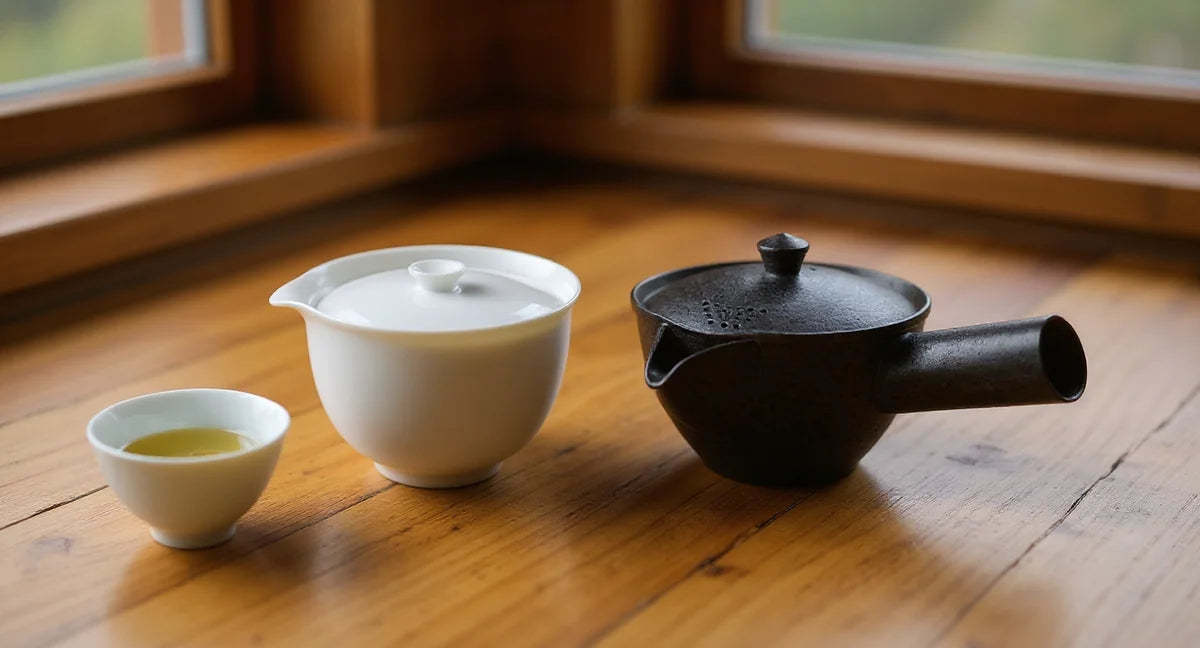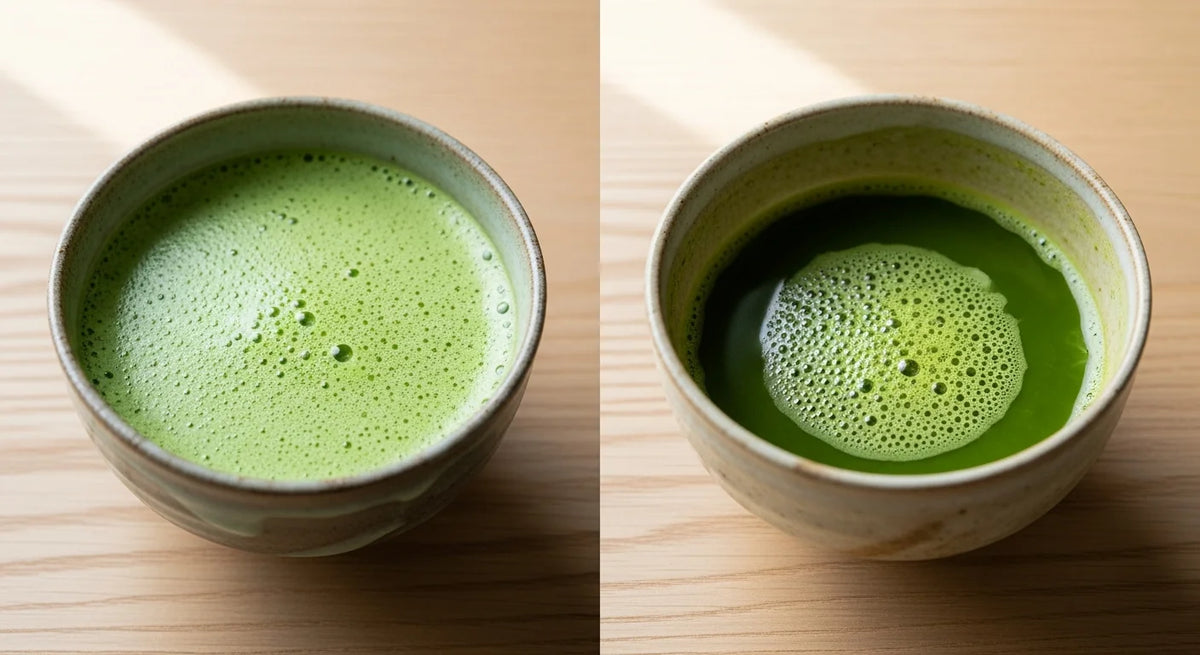

Fill a kettle in Tokyo and another in London. Same tea, same temperature, same steep time. The first cup opens clean and sweet, unmistakably green. The second is darker, flatter, and a little cloudy. Nothing went wrong with the brewing. The water told two different stories.
That difference comes down to hardness. Japanese tap water is soft, usually between 50 and 80 mg/L. Much of Europe and the United States runs harder, often 150 to 300 mg/L or more. The minerals in hard water interact with the compounds inside tea leaves, and the result is not subtle. Color shifts. Aroma retreats. The balance between sweetness and astringency tilts in a direction the leaf did not intend. If you have ever brewed good Japanese green tea abroad and wondered why it tasted ordinary, water was almost certainly part of the answer.
What makes water soft or hard
Water hardness is a measure of dissolved calcium and magnesium. The more of those two minerals the water carries, the harder it is. The scale is simple. Water below about 120 mg/L is generally called soft. Above 120 mg/L, it is hard. Some classification systems break those zones further, with very soft below 60 mg/L and very hard above 300 mg/L, but the 120 mg/L dividing line is the one most often used and the one that matters most for tea.
Japan sits firmly on the soft side. Most municipal water across the country falls in the 50 to 80 mg/L range. Rivers are short, mountains are volcanic, and rainfall moves quickly through young rock without picking up heavy mineral loads. That geological story is part of why Japanese tea culture evolved the way it did. The water was always gentle enough to let delicate leaves express themselves without interference.
In contrast, much of Western Europe, the American Midwest, and parts of the UK draw from limestone aquifers that dissolve calcium carbonate steadily into the supply. London tap water can run above 300 mg/L. Parts of Germany and France sit in a similar range. Even within the United States, hardness varies enormously by region. Coastal cities often have softer water. Inland plains tend harder.
Bottled water makes the picture more complicated. A bottle labeled "mineral water" in Europe may carry 200 mg/L or more. A Japanese brand like Suntory Tennensui sits around 30 mg/L. Reading the label matters, and for tea, the number worth checking is total hardness or the calcium and magnesium content listed on the back.
How water hardness changes your tea
When calcium and magnesium ions meet the compounds inside tea leaves, chemistry takes over. The effect is not dramatic enough to ruin every cup, but it is consistent enough to reshape what you taste, see, and smell.
| Soft water (below 120 mg/L) | Hard water (above 120 mg/L) | |
|---|---|---|
| Color | Clear, bright, true to the leaf | Darker, sometimes cloudy |
| Catechin extraction | Full | Reduced — calcium binds catechins |
| Theanine extraction | Full | Slightly reduced |
| Astringency | Present and well-defined | Muted, sometimes flat |
| Aroma | Clean, expressive | Muted, occasionally metallic |
| Best suited for | Japanese green tea, delicate teas | Robust black teas, herbal teas |
The central mechanism is binding. Calcium ions form complexes with catechins and tannins in the tea. Once those polyphenols are bound, they become less available to the palate. Astringency drops, but so does the structured, lively quality that makes a well-brewed Sencha feel clean. In hard water, the tea can taste smoother in the wrong way, as though someone turned the volume down across the entire flavor spectrum rather than selectively softening one element.
The cloudiness you sometimes see in hard-water tea is a related effect. Mineral-polyphenol complexes scatter light differently, producing a haze that is absent in soft-water brews. It does not make the tea harmful, but it does change the visual experience, and in Japanese tea culture the clarity and color of the liquor are considered part of the pleasure.
Theanine, the amino acid behind tea's umami and sweetness, is affected less dramatically than catechins, but not immune. In very hard water, theanine extraction can be slightly reduced, which means the gentle sweetness that makes Gyokuro or a good Kabusecha so compelling may not come through at its full depth. Aroma compounds behave similarly. Soft water lets volatile aromatics release cleanly into the cup. Hard water can suppress them, leaving the tea smelling thinner than it should.
Put simply, soft water lets the tea speak. Hard water edits the conversation before it reaches you.
Best water for each tea type
Not every tea responds to water hardness in the same way. Delicate, umami-driven teas show the biggest difference. Robust, heavily oxidized teas are more forgiving. The table below is a practical starting point.
| Tea type | Ideal hardness range | Why |
|---|---|---|
| Gyokuro | Very soft (ideally below 60 mg/L) | Umami and sweetness are the point; even moderate minerals suppress both |
| Sencha | 50 to 100 mg/L | Clean extraction preserves the balance of sweetness and astringency |
| Matcha | 50 to 80 mg/L | Whole-leaf consumption amplifies any mineral interference |
| Hojicha / Genmaicha | 50 to 120 mg/L | Roast flavors are more resilient; moderate hardness is tolerable |
| Black tea | 100 to 200 mg/L | Some hardness smooths astringency without losing body |
| Herbal tea | Varies | Depends on the botanical; most are fairly tolerant |
The pattern is straightforward. The more a tea depends on theanine and delicate aromatics, the more it needs soft water. That is why Japanese green teas sit at the top of the sensitivity scale. Gyokuro, shade-grown for weeks to maximize theanine content, is perhaps the single tea most dramatically affected by water hardness. Brewing it in London tap water without filtering is a bit like listening to a string quartet through a wall. You hear something, but not what the musicians intended.
Sencha is similarly sensitive, though the effect is slightly less extreme because the leaf carries more catechin-driven structure to begin with. Our guide to brewing Sencha well covers temperature and timing in detail, but even perfect technique cannot overcome a water problem. Getting the water right is the first step, not a finishing touch.
Hojicha and Genmaicha are more forgiving because roasting and blending shift the flavor profile away from the delicate umami range. In moderately hard water, a good Hojicha will still taste warm and grain-sweet. It will lose some aroma nuance, but the core character survives.
Black tea occupies an interesting middle ground. A degree of mineral hardness can actually benefit strong black teas by slightly muting harsh tannins and producing a smoother cup. This is part of why British tea culture developed around robust, malty blends. The water demanded it. A delicate first-flush Darjeeling, however, behaves more like a green tea and benefits from softer water.
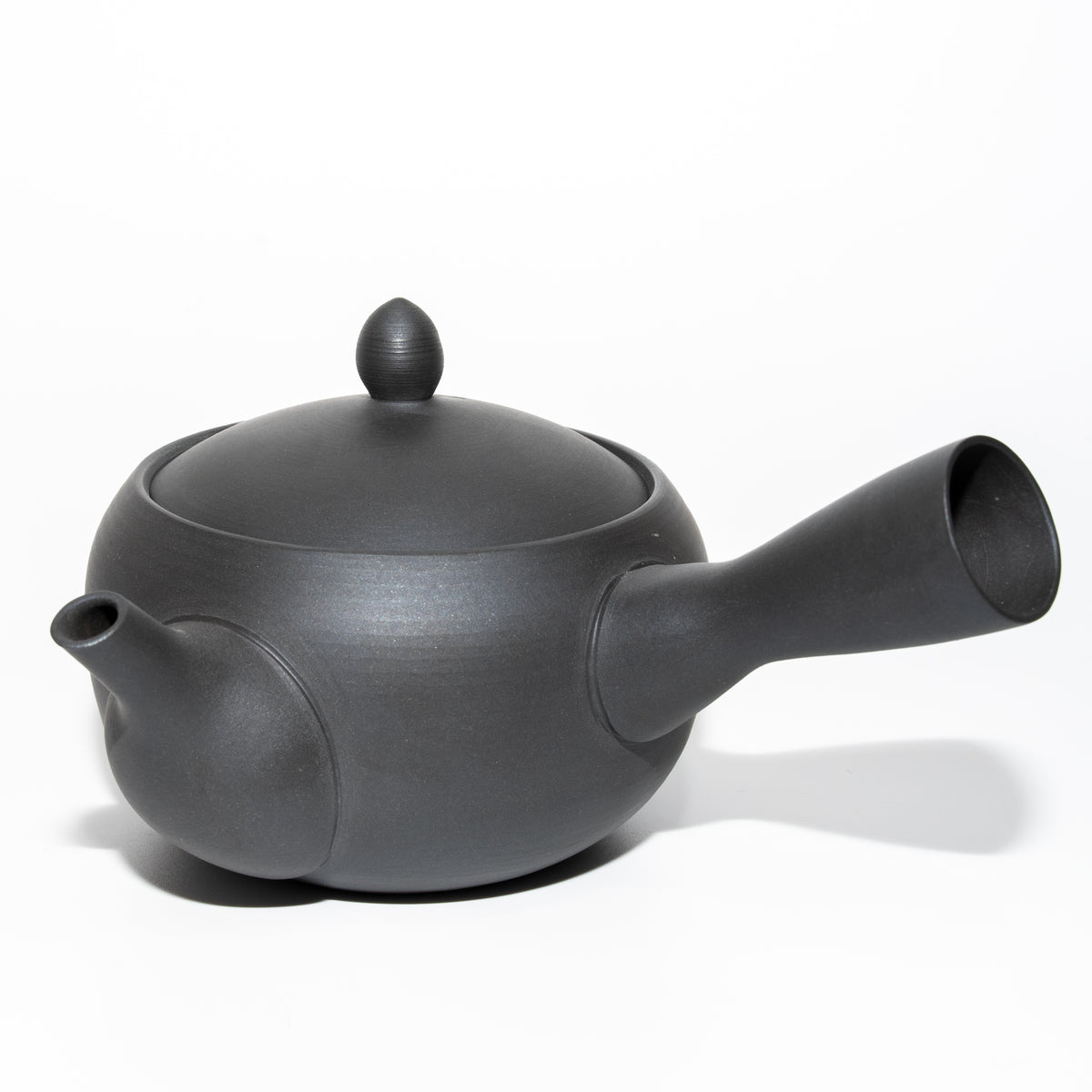
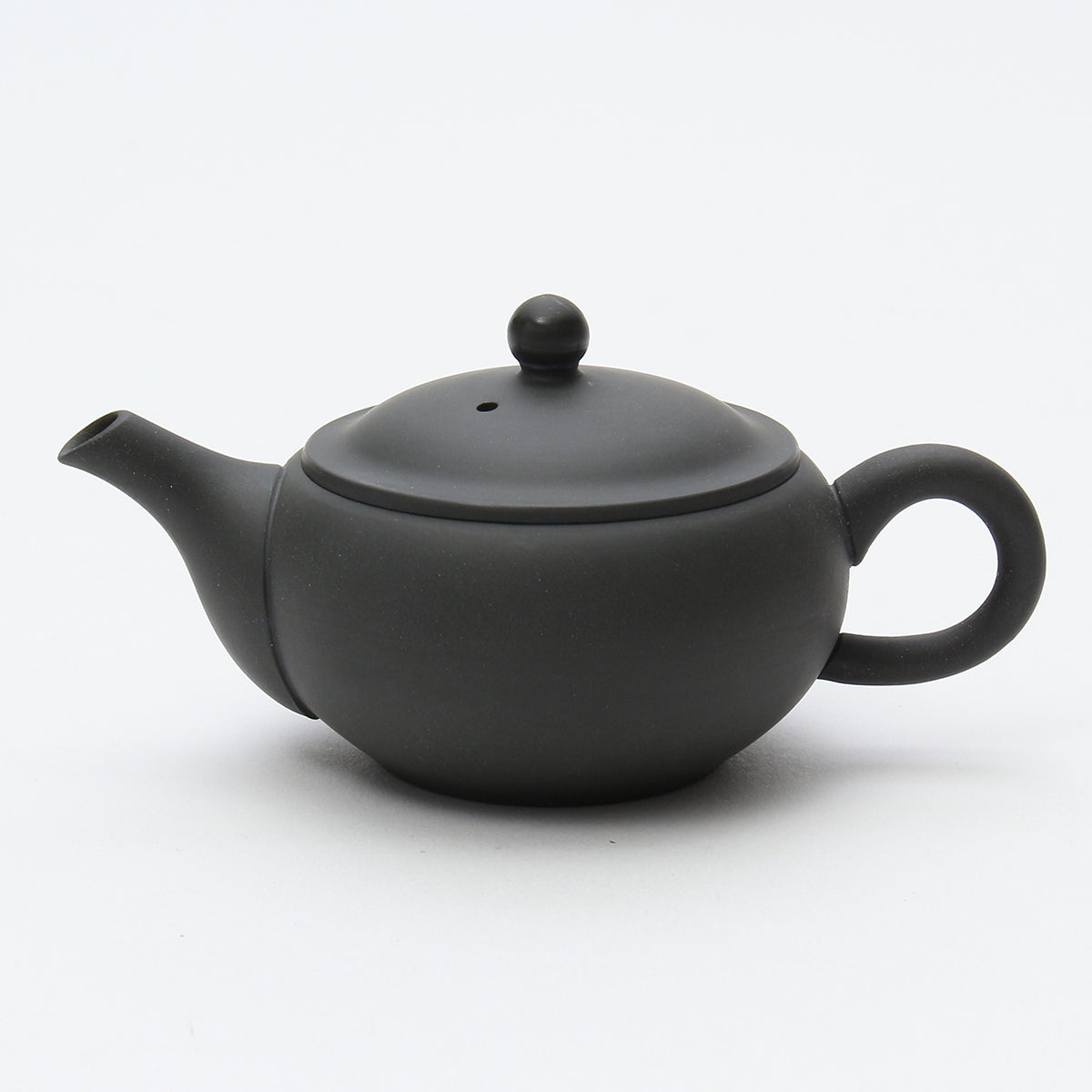
Find the right teapot for your water
Practical tips for better water
If you already live in a soft-water area, most of Japan, parts of the Pacific Northwest, Scandinavia, or other volcanic and granite-rich regions, your tap water is probably fine for tea. A simple carbon filter to remove chlorine taste is often all you need.
When your tap water is hard
If you live in a hard-water area and want to brew Japanese green tea at its best, you have several practical options.
A carbon filter alone will remove chlorine and some sediment but will not significantly reduce hardness. For actual softening, look for a filter that uses ion exchange or reverse osmosis. Brita-style pitchers with ion-exchange cartridges can lower hardness modestly. Dedicated under-sink reverse osmosis systems are more effective but represent a larger investment.
Bottled water is the simplest solution. Choose a brand with total hardness below 100 mg/L. In Europe, Volvic (about 60 mg/L) is a widely available option that works well for Japanese tea. In Japan, almost any domestic mineral water will be soft enough. The label usually lists calcium and magnesium content, and a quick calculation gives you the ballpark hardness.
When you are traveling
If you carry tea while traveling and cannot control the water, a few adjustments help. Use slightly less leaf than you would at home, steep a little shorter, and bring the temperature down a few degrees. None of these fully compensate for hard water, but they reduce the intensity of the mineral interaction. Temperature is especially useful as a lever because catechin extraction accelerates with heat. Cooler water in a hard-water environment extracts fewer catechins and fewer mineral-catechin complexes, which can keep the cup cleaner than a full-temperature brew.
Cold brewing is another route worth considering. Because cold water extracts catechins slowly, the binding problem shrinks. A cold-brewed Sencha made with moderately hard water can taste remarkably close to what the leaf was meant to offer, much closer than a hot brew made with the same water.
A note on boiling
Boiling water before brewing does remove some temporary hardness caused by dissolved calcium bicarbonate, which precipitates as scale. But it does not remove permanent hardness from calcium sulfate or magnesium compounds. If your kettle builds up white scale quickly, boiling helps a little. If the water is hard for other reasons, it will not.
At FETC, we think water is the most underappreciated variable in tea. The leaf matters. The temperature matters. The vessel matters. But the water is the medium that carries everything else, and if it arrives loaded with minerals that bind and suppress the flavors you are trying to taste, nothing downstream can fully repair the result. Start with soft water, and the tea will take care of the rest.
Frequently Asked Questions
Why does the same Japanese tea taste different in Tokyo and London?
The biggest variable is often water hardness. Japanese tap water is usually 50-80 mg/L, while London water can exceed 300 mg/L, so calcium and magnesium mute aroma, color, sweetness, and astringency.
What hardness range works best for Japanese green tea?
As a starting point, keep water below 100 mg/L for most Japanese green teas. Gyokuro is happiest under 60 mg/L, Sencha around 50-100 mg/L, and Matcha around 50-80 mg/L.
Can a regular carbon filter fix hard water for tea?
A carbon filter helps with chlorine taste and sediment, but it does not meaningfully lower hardness. For hard-water areas, look for ion-exchange filtration, reverse osmosis, or bottled water below 100 mg/L.
How should we adjust brewing when traveling in a hard-water area?
Use slightly less leaf, a shorter steep, and water a few degrees cooler than usual.
Is cloudy tea brewed with hard water a problem?
Cloudiness can happen when minerals bind with tea polyphenols and scatter light. It is not harmful, but it does dull the clear color that matters in Japanese tea.