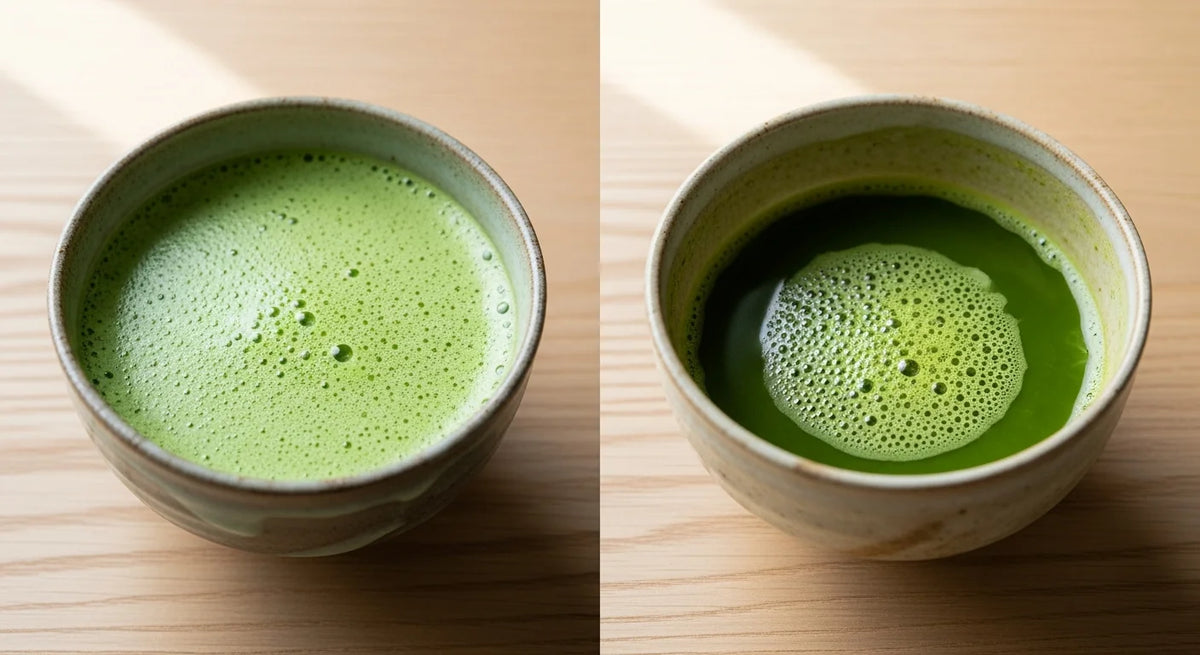

When you whisk Matcha and that layer of fine foam forms on the surface, saponin is part of why. It is not the only reason — vigorous whisking with a chasen traps air, and the protein content of powdered leaf plays a role too — but saponin is the compound that stabilizes those tiny bubbles and keeps the foam from collapsing immediately.
Saponin is a naturally occurring glycoside found in trace amounts in tea leaves. Its name comes from the Latin sapo, meaning soap, which hints at its most visible property: it lathers. In tea, it contributes a faint bitterness and has been studied for mild antimicrobial and anti-inflammatory properties. The amounts in a brewed cup are small — saponin is a minor player, not a dominant one — but it is part of what makes Matcha and other whole-leaf teas chemically interesting.
| Property | Detail |
|---|---|
| Chemical class | Triterpenoid saponin (glycoside) |
| Taste contribution | Faint bitterness, slight astringency |
| Highest concentration in tea | Tea seeds; trace amounts in leaves |
| Also found in | Soybeans, ginseng, licorice, chickpeas |
| Key property | Surfactant — foams in water |
| Daily intake from brewed tea | Trace amounts; not a meaningful dietary source |
What saponin does in the cup
Saponin acts as a surfactant — a compound that reduces the surface tension between water and air. When you whisk Matcha, or even shake a bottle of cold-brewed tea, saponin molecules arrange themselves at the air-water boundary and stabilize the bubbles that form. The result is foam that holds longer than it otherwise would.
In terms of flavor, saponin's contribution is subtle. It adds a faint bitter-astringent edge, but at the concentrations found in brewed tea, it is largely masked by the more assertive bitterness of catechins. You are more likely to notice saponin's effect in thick Matcha — prepared with a higher ratio of powder to water — where more leaf material means more saponin in the bowl. The foam there has a slight weight to it, a softness that sits on the tongue before the deeper savory notes arrive.
Matcha foams more readily than other teas for two reasons: it is ground to a fine powder, which maximizes surface area and saponin contact with water, and it is whisked vigorously rather than steeped and strained. Sencha and other loose-leaf teas contain saponin too, but because the leaves are strained out, far less reaches the cup.
Water temperature also plays a role. Saponin, like many surfactants, behaves differently as temperature changes. Cooler water produces smaller, denser bubbles that tend to persist longer; hotter water creates larger bubbles that collapse more quickly. This is one reason that Matcha whisked with water around 70–80°C develops a fine, stable foam more reliably than Matcha prepared with near-boiling water. Lower temperatures also reduce the extraction of certain bitter compounds, so the interplay between temperature, foam quality, and flavor is worth paying attention to even at this small chemical scale.
Saponin in tea versus other plants
Tea is not the richest source of saponin in the plant world. Soybeans, ginseng, licorice root, quinoa, and chickpeas all contain saponin at considerably higher concentrations. What makes tea saponin structurally distinct is its triterpenoid backbone — a molecular configuration that differs from the steroidal saponins found in some other plants and contributes to its particular surfactant behavior.
Within the tea plant itself, saponin concentrates most heavily in the seeds, not the leaves. Tea seed oil — pressed from camellia seeds and used in East Asian cooking and cosmetics — carries a noticeably higher saponin load than brewed tea. The leaves that end up in your cup contain saponin in much smaller quantities, which is why its taste contribution stays mild.
The foam you see on a well-whisked bowl of Matcha is a tangible reminder that tea is a complex whole-leaf food, not just flavored water. For a broader look at what the leaf contains, our guide to green tea ingredients covers the full range of compounds — catechins, theanine, caffeine, vitamins — alongside saponin.
What the research says
Studies on saponin — particularly extracts from tea seeds and other saponin-rich plants — have pointed to potential antimicrobial, anti-inflammatory, and cholesterol-modulating properties. Research suggests these effects are real in laboratory and animal-study contexts. The important qualifier is concentration: these findings typically come from saponin extracts, not from drinking brewed tea. A cup of Sencha or a bowl of Matcha delivers saponin in amounts too small to act as a meaningful source of these effects on their own.
That is not a reason to dismiss saponin's presence in tea. It is one part of a complex whole — alongside catechins, theanine, caffeine, and dozens of other compounds — that together give tea its character. The foam on a bowl of Matcha is a small, visible sign of that complexity.
If you want to experience that foam for yourself, our tea leaves collection includes Matcha ground to a fineness that whisks well. The chemistry is already there in the leaf.
The health-related information provided here is drawn from published research and is provided for educational purposes. It is not medical advice. If you have specific health concerns, please consult a qualified healthcare professional.
References
- Koczurkiewicz et al., PubMed — review article on triterpene saponins and cancer cell research.
- Shi et al., PubMed — review article on edible legume saponins, chemistry, and processing.
- USDA Agricultural Research Service — publication page for tea phytochemical composition data.
Frequently Asked Questions
Is saponin in tea safe?
Yes. The trace amounts of saponin in brewed tea are far below any threshold associated with adverse effects in the research literature. Saponin is also present in everyday foods — soybeans, chickpeas, oats — that most people eat without concern. The health-related findings described here are drawn from published research on saponin compounds broadly; the amounts in a typical cup of tea are too small to make brewed tea a meaningful source on its own.
Does roasting reduce saponin in tea?
Roasting at high temperatures does degrade some heat-sensitive compounds in tea, and saponin is partially affected. Hojicha, which is roasted at temperatures between 180 and 220°C, likely contains less saponin than unroasted Sencha. However, because saponin is already present in small amounts in tea leaves, the practical difference in your cup is minimal. Hojicha's characteristic low bitterness comes primarily from the reduction of catechins and chlorophyll during roasting, not from changes in saponin.
Why does Matcha foam better than other teas?
Three factors work together. First, Matcha is a whole-leaf tea: the entire leaf is ground to a fine powder rather than steeped and discarded, so every saponin molecule in the leaf ends up in the bowl. Second, that fine grind dramatically increases surface area — more surface means more saponin in contact with water at once. Third, whisking with a chasen introduces air rapidly and in fine streams, giving saponin molecules more air-water boundaries to stabilize. The result is a foam that other brewing methods, including those using loose-leaf green tea with comparable saponin content in the raw leaf, cannot easily replicate. Cold brew tea shaken in a bottle produces a modest head for the same surfactant reason, but nothing close to the dense layer on a well-whisked bowl of Matcha.