
Hasami Porcelain: Japan's Most Versatile Teaware Tradition
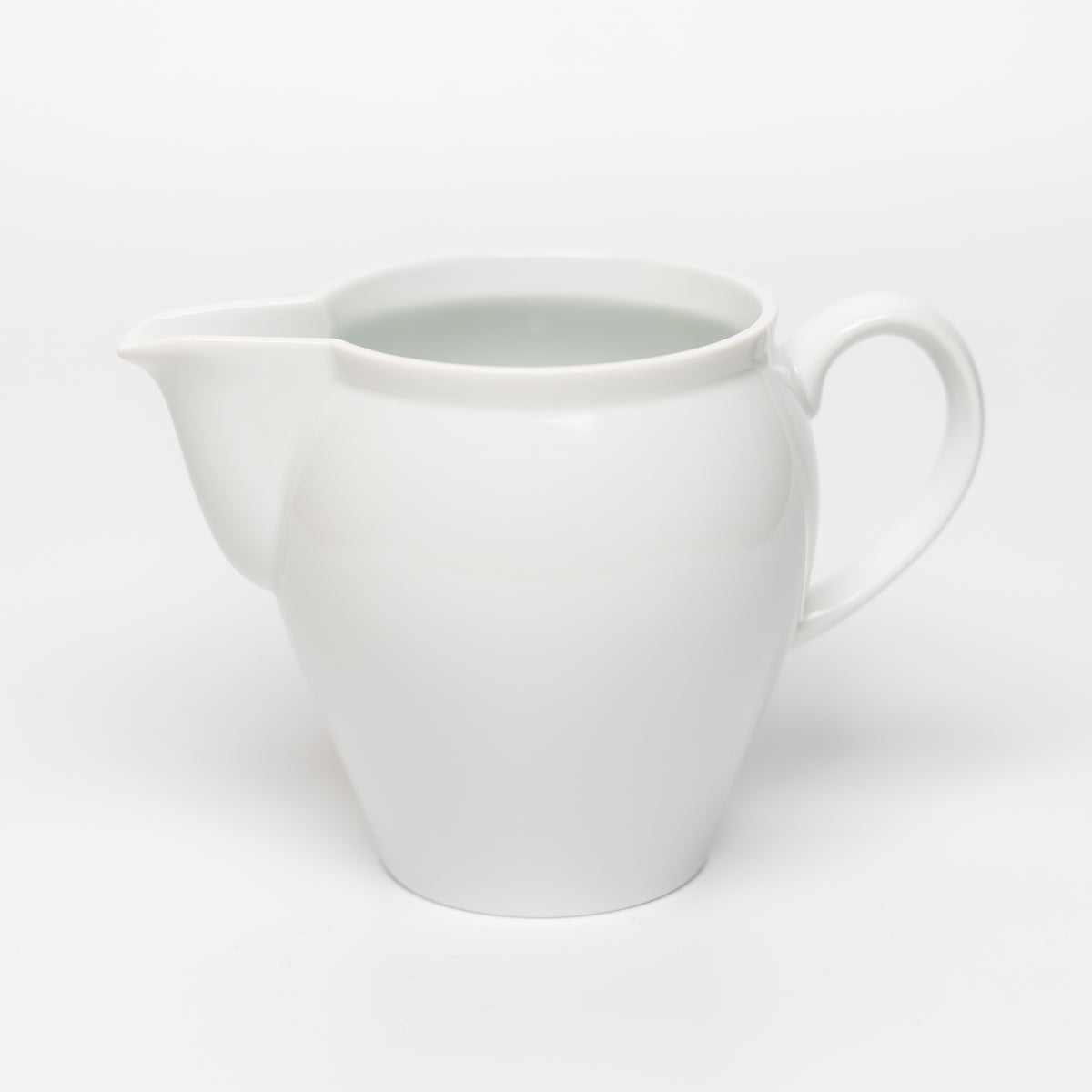
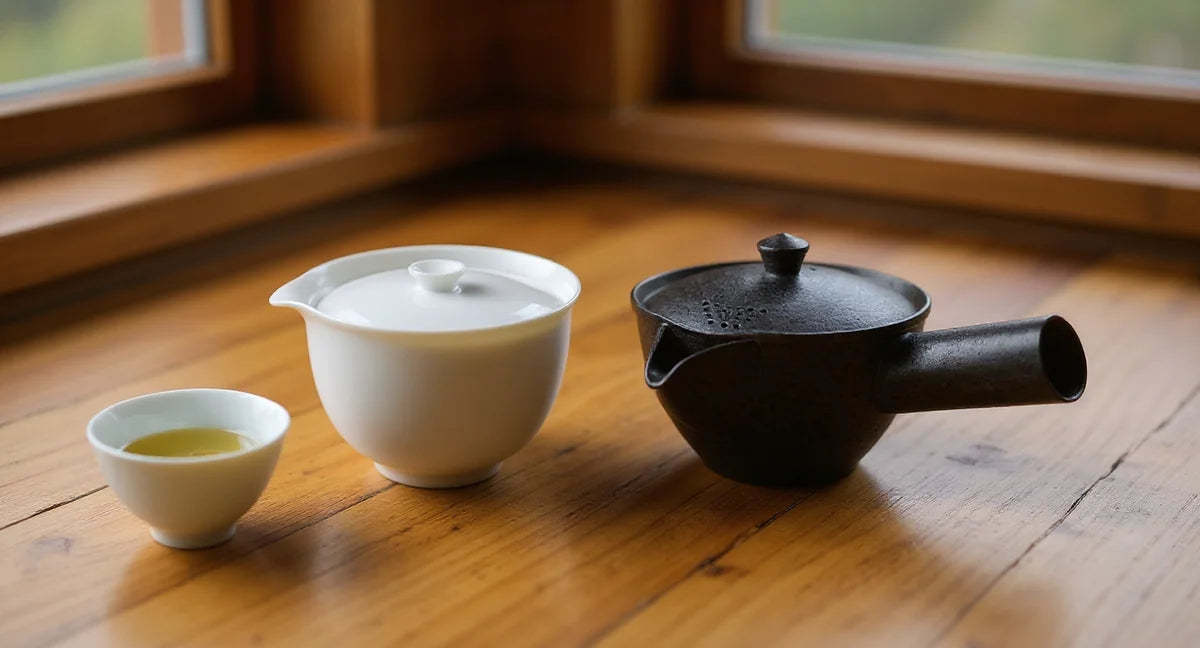
Lift a Hasami yunomi and you notice the weight first — or rather, the absence of it. The walls are thin enough that the cup feels almost fragile, but the porcelain holds up to daily use without complaint. The glaze is smooth and cool against the lip. The colour is clean white, with just enough warmth to keep it from feeling clinical. This is what Hasami porcelain has always done: make the everyday feel considered.
Hasami is a small town in Nagasaki Prefecture with a population of about fifteen thousand. At its peak, roughly seventy percent of the town's residents worked in ceramics. Today the ratio is smaller, but the output remains significant — Hasami accounts for a large share of Japan's everyday porcelain tableware, including teaware. It is not as famous as Arita or Kutani, but for functional beauty in daily use, it is hard to beat.
What makes Hasami porcelain distinctive
Hasami is a porcelain town, not a decorative one. Where Arita and Kutani lean into ornate painting, Hasami chose a different direction: thin walls, clean lines, and a focus on how the piece feels and functions rather than how it looks at a distance.
The walls on a Hasami yunomi can be as thin as 2–3mm. That thinness is not fragility — it comes from the local clay's composition and a precise firing technique. The porcelain is dense, the glaze tight, the form controlled. You can put many Hasami pieces through a dishwasher without worry, which distinguishes it from the more delicate painted porcelains of Arita or the gold-accented work of Kutani.
| Feature | Detail | Tea pairing |
|---|---|---|
| Material | White porcelain (磁器), kaolin and Amakusa stone clay | Green teas, Sencha, Gyokuro |
| Surface | Thin, smooth, non-porous glaze | Delicate teas where aroma preservation matters |
| Wall thickness | Among the thinnest in Japanese porcelain (2–3mm) | Short-steep green teas |
| Origin | Hasami Town, Nagasaki Prefecture | — |
The contrast with nearby Arita is worth holding in mind. Arita and Hasami share geological roots — both regions use similar feldspathic clay — but they developed distinct identities. Arita became the prestige ware, associated with the Dutch East India Company's exports, Imperial patronage, and collector-grade painting. Hasami became the people's porcelain: produced at scale, priced for daily use, designed to actually work in a kitchen or at a tea table.
History: from Edo-era kiln town to modern design icon
Hasami's ceramic history runs alongside Arita's from the seventeenth century. When Korean potter Yi Sam-pyeong discovered kaolin clay in the Arita region in 1616, kilns spread quickly across the surrounding area, including what is now Hasami. For much of the Edo period, Hasami ware was produced under the shadow of the more prestigious Arita name — and in some cases, Hasami ceramics were literally shipped through Imari port and sold as Arita ware.
The post-war period changed things. Japan's ceramic industry reorganised after 1945, and Hasami developed a cooperative kiln system (kyōdō-gama) that allowed multiple small workshops to share firing infrastructure. This efficiency enabled Hasami to produce high-quality porcelain at a price point that made it genuinely accessible — not just aesthetically but commercially.
The bigger transformation came in the 1990s and 2000s. A generation of Japanese designers and brands started working directly with Hasami kilns, applying contemporary aesthetics to the traditional thin-walled form. Collaborations with Moomin and projects from brands like Kinto brought Hasami to a new audience that may not have known the name but recognised the aesthetic: clean, functional, quietly beautiful. The H series and ON THE TABLE project from Hasami's Craft Store became particularly well-known in design circles.
The clay and firing: what makes Hasami different from Arita
Both Hasami and Arita porcelain draw on the same broad geological region, but Hasami developed its own clay blend over centuries. The key ingredient is Amakusa stone (amakusa-toseki, 天草陶石), a feldspar-rich mineral found on Amakusa island in Kumamoto Prefecture. When ground and blended with local clay, it produces a body that fires extremely dense and white — the foundation of Hasami's signature thinness.
The firing temperature runs around 1,300°C in an oxidising atmosphere. At this temperature, the clay body vitrifies — essentially becomes a kind of glass — while retaining enough plasticity during forming to allow very thin walls. The result is a piece that rings clearly when tapped (a sign of full vitrification) but is lighter than you might expect for its strength.
The non-porous surface that results is exactly what makes Hasami suitable for green tea. Nothing from the cup wall crosses into the brew. No absorbed oils, no residual aromas from previous sessions. Each cup of Sencha or Gyokuro tastes like itself, not like the vessel.
Choosing and caring for Hasami porcelain teaware
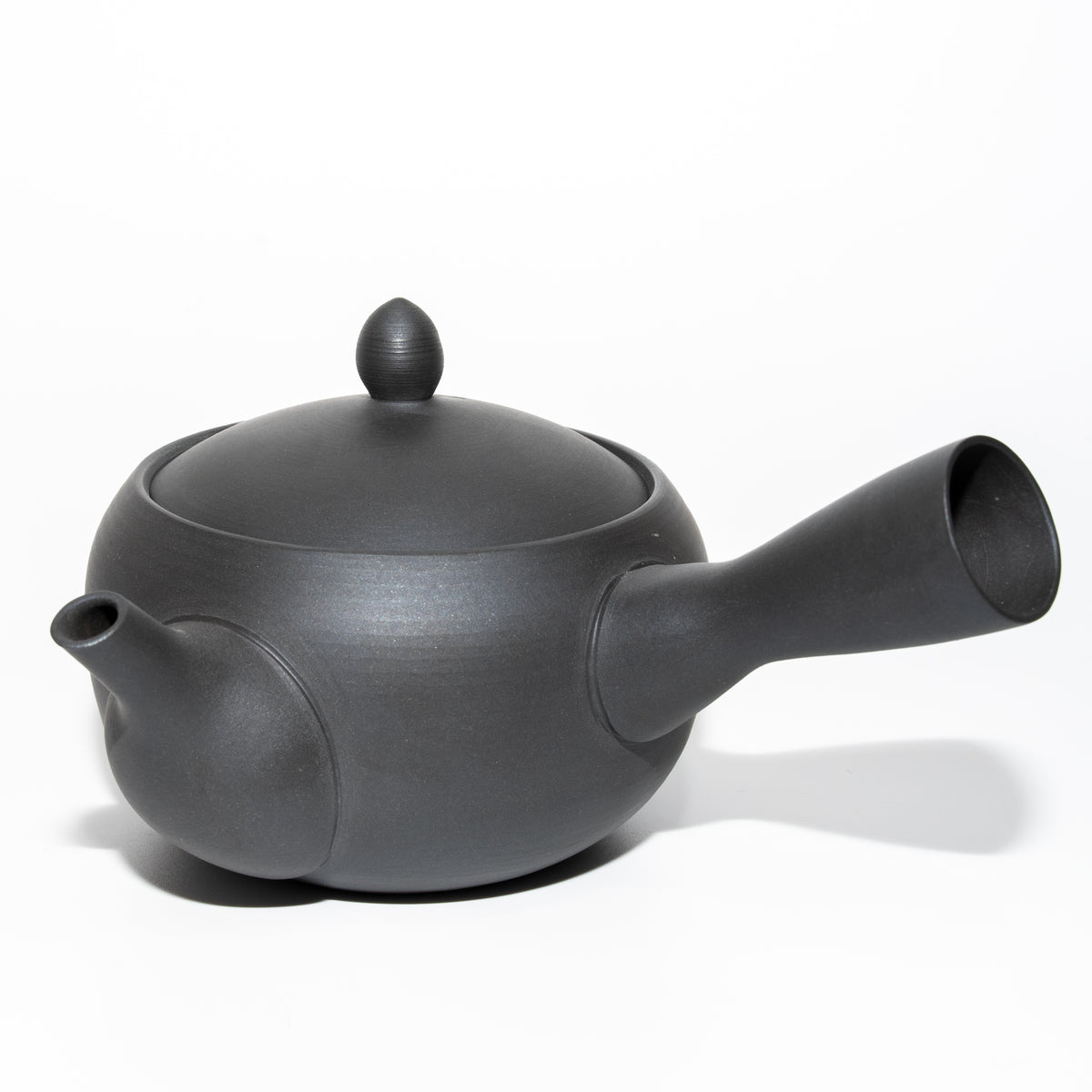
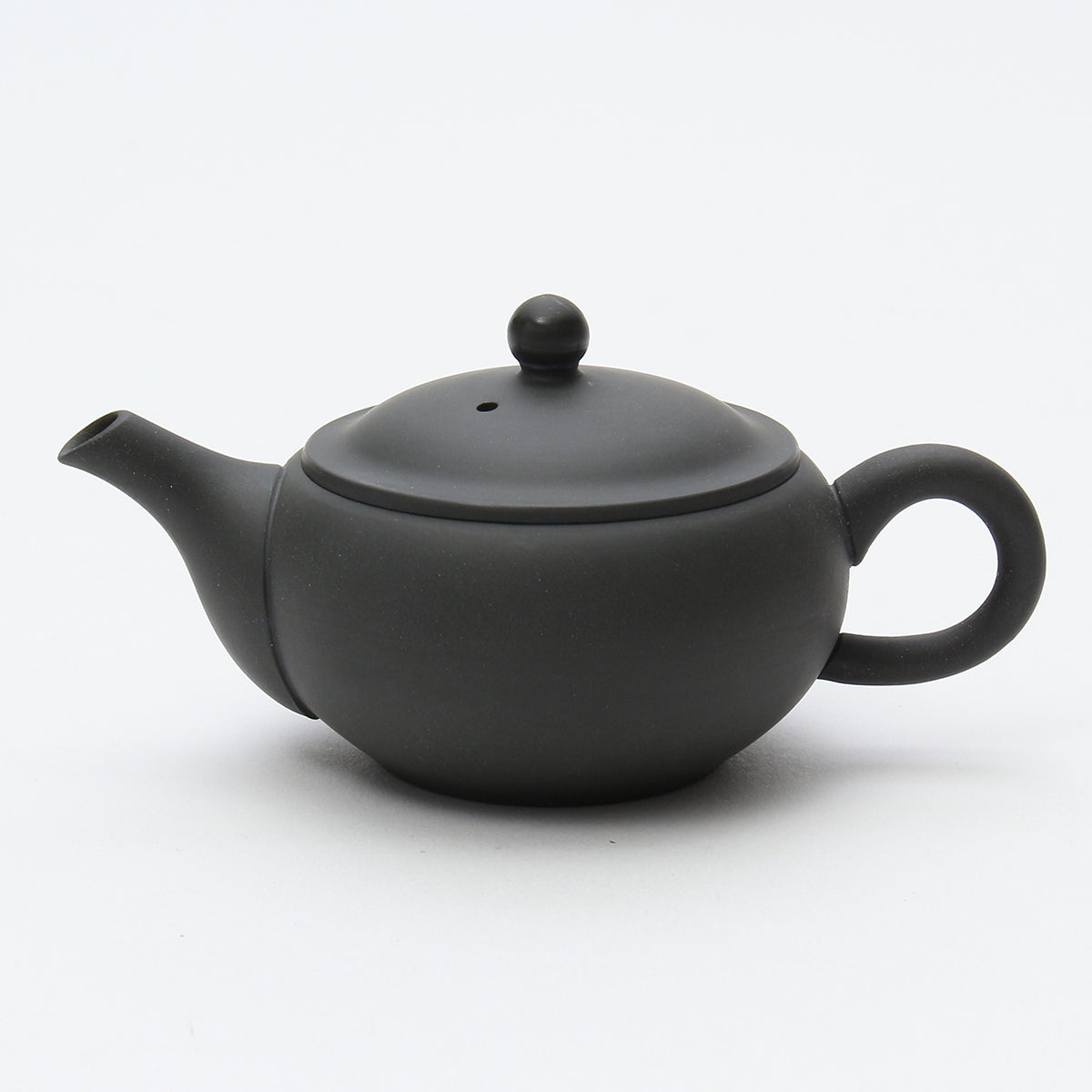
When selecting a Hasami kyusu or yunomi, the practical criteria are straightforward. Check the lid fit on a teapot — it should sit snug without rattling, yet lift cleanly. The spout should pour cleanly without dripping; run a finger across the spout tip to feel whether it has been trimmed precisely. The strainer holes (if any) should be consistent in size. On a yunomi, check that the foot ring sits level — an uneven base suggests inconsistent forming.
Most modern Hasami porcelain is dishwasher-safe. The glaze is tight, the body dense, and there are no gold or enamel decorations to protect. That said, the thin walls do carry some chip risk if cups knock against each other. Storing yunomi with something between them — cloth, cork trivets — is good practice.
Hasami does not need seasoning, soaking, or special drying protocols. Rinse with hot water before first use, and you are ready to brew. For a guide on teapot forms — yokote, ushiro-de, ue-de — see our kyusu guide.
To compare Hasami with other Japanese ceramic traditions, see our Japanese teaware materials guide.
We carry a selection of Hasami porcelain teaware, including yunomi and kyusu suited to everyday green tea.
Frequently Asked Questions
Is Hasami the same as Arita?
Hasami and Arita are distinct wares from neighbouring areas of Kyushu, both rooted in the same seventeenth-century porcelain tradition but with different identities today. Arita is associated with decorative, collector-quality pieces and specific named styles (Kakiemon, Nabeshima, Old Imari). Hasami is known for functional, everyday porcelain — thinner walls, simpler aesthetics, generally more accessible pricing. They are related but not interchangeable.
Why is Hasami porcelain so thin?
The thinness comes from two things: the Amakusa stone clay composition, which fires to a very dense body, and generations of accumulated craft knowledge in the Hasami kilns. Dense clay holds thin walls during firing without slumping. The technique requires precise moisture control during forming and consistent firing conditions. It is not an accident — it is the result of choosing thinness as an aesthetic and technical priority over centuries of production.
Can Hasami porcelain go in the dishwasher?
Most modern Hasami porcelain — the everyday yunomi and kyusu, especially from contemporary design ranges — is dishwasher-safe. The exception is any piece with gold or enamel decoration, which should be hand-washed. If you are unsure about a specific piece, check the product information or ask the seller. To compare Hasami with other Japanese ceramic traditions, see our Japanese teaware materials guide . We carry a selection of Hasami porcelain teaware, including yunomi and kyusu suited to everyday green tea. Browse Teaware →
What teas suit Hasami porcelain best?
The non-porous white porcelain works well with all types of green tea. Sencha, Gyokuro, and kabusecha — teas defined by delicate aroma and pale liquor — show at their best against white porcelain. The pale golden colour of sencha in a Hasami yunomi is a particular pleasure. Hojicha and bancha are fine in Hasami ware too, though some people prefer a stoneware or earthenware cup for those, valuing the extra warmth retention.
Is Hasami porcelain easy to care for?
Yes, Hasami porcelain is straightforward to care for. Unlike unglazed earthenware, it does not absorb aromas or require seasoning before first use. Rinse with hot water before the first brew, then wash as normal after each use. Most everyday pieces are dishwasher-safe; pieces with delicate decoration or gold accents should be hand-washed. After washing, dry thoroughly. The dense, vitrified body means no special drying rituals are needed — just the basics will keep it in good condition.