
Every year, the first Shincha — Japan's eagerly anticipated new-season tea — comes from Kagoshima. Specifically, it tends to come from fields planted with Yutakamidori. In the calendar of the Japanese tea year, Yutakamidori marks the beginning: it ripens before Yabukita, sometimes by more than a week, which means the first cups of the season are usually Yutakamidori cups.
That early arrival is part of what defines this cultivar. But the flavor is the other part — bold, full, unmistakable. Yutakamidori does not ask to be mistaken for something delicate.
What Is Yutakamidori?
Yutakamidori is Japan's second most cultivated tea variety after Yabukita, registered in 1966. It is especially dominant in Kagoshima prefecture, where it accounts for a significant share of the prefecture's tea plantings — far higher than its national share of around 5-6%. That concentration in Kagoshima is not coincidental: the cultivar's early-ripening character suits the prefecture's warm winters and mild spring conditions, enabling Japan's earliest regular Shincha harvests.
The name means "abundant green" — *yutaka* for abundant or rich, *midori* for green. The name fits both the cultivar's color and its character: deep, vivid, and substantial. It is primarily grown as Sencha, though the leaf quality also suits Gyokuro and other shaded styles. For context on how Kagoshima became a major tea region, our article on Kagoshima's tea-growing region covers the history in more detail.
Flavor profile
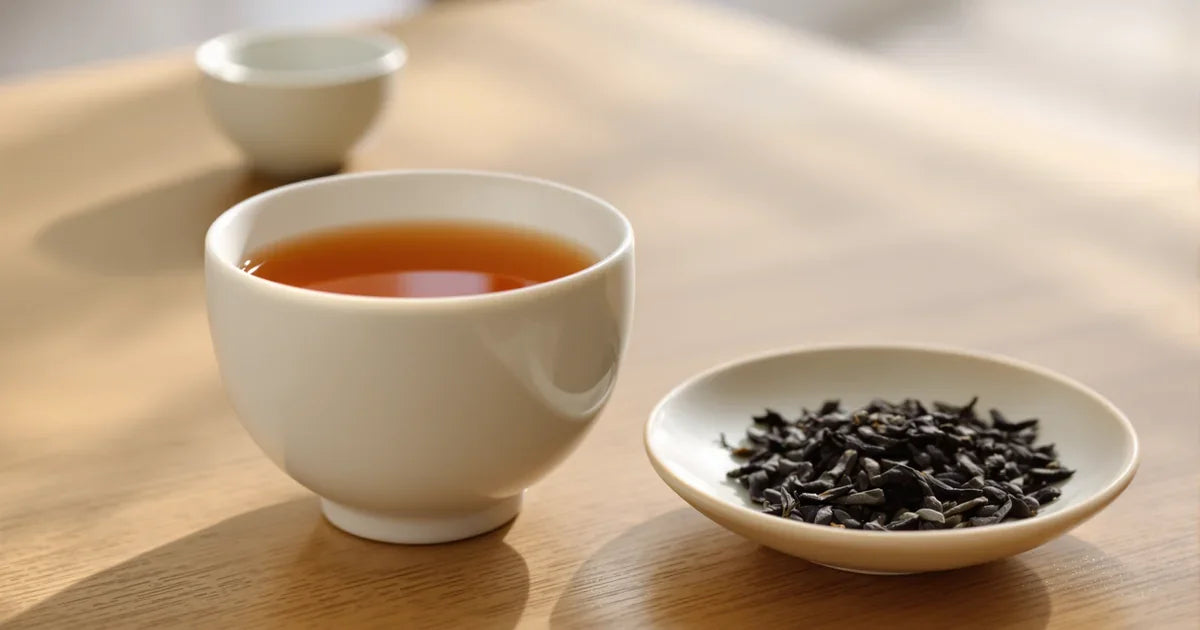
Strong and bold. Those are the words that come up most consistently in descriptions of Yutakamidori. The flavor is full-bodied and deep-colored in the cup — a vivid, dark green liquor that signals its catechin content before you have taken a sip. The astringency is more present than in cultivars like Saemidori or Asatsuyu, though not harsh when brewed correctly. The sweetness is real but secondary to the overall intensity of the cup.
That intensity is actually why Yutakamidori and deep-steaming (*fukamushi*) make such a good pairing. Fukamushi processing breaks down the cell structure of the leaf more thoroughly than standard steaming, softening the astringency and bringing out a rounder sweetness while keeping the deep green color and full body. Many Kagoshima producers process Yutakamidori this way precisely to balance its naturally assertive character. For more on how fukamushi processing works, our guide to brewing fukamushi Sencha explains the details.
| Characteristic | Yutakamidori | Yabukita |
|---|---|---|
| Harvest timing | ~7-10 days before Yabukita | Standard baseline |
| Flavor intensity | Strong, bold | Balanced, moderate |
| Astringency | Moderate to strong | Mild |
| Liquor color | Deep, vivid green | Clear green |
| Cold tolerance | Low | Excellent |
| Suited to fukamushi | Yes — excellent match | Yes, but not required |
| Primary region | Kagoshima | Nationwide |
Where Yutakamidori grows
Kagoshima is the natural home for Yutakamidori. The prefecture's warm, mild winters — warmer than most of the Japanese mainland — match the cultivar's early-ripening needs and its susceptibility to cold. Kagoshima's tea fields benefit from long hours of sunshine and relatively moderate temperature fluctuations, conditions that support the deep flavor development Yutakamidori is known for.
Miyazaki prefecture, also in southern Kyushu, is the next significant growing area. Beyond southern Kyushu, the cultivar is rarely planted, as its low cold tolerance rules out most of the cooler tea-producing regions like Shizuoka or Mie. That geographic concentration is part of what makes early-season Kagoshima Shincha so identifiable: when the calendar says late March or early April and the first new-season teas arrive, they are almost certainly Yutakamidori.
For context on Shincha and the significance of the first-harvest season, see our article on first and second-flush teas.
In the town of Ei in Kagoshima, Segawa Tea Farm specializes in single-origin tea crafted from Yutakamidori.
How to brew Yutakamidori
Standard Sencha brewing parameters work well as a starting point — around 70-75°C water temperature, 3g per 150mL, 60-90 seconds — but with a slightly shorter steep to keep the astringency in check. Yutakamidori has enough catechin content that extended steeping at higher temperatures can tip the balance toward bitterness.
For fukamushi-processed versions, you can use slightly lower temperature (65-70°C) and still get a full, rich cup. The deep-steaming has already done some of the extraction work during processing, so the brewed tea releases flavor quickly. Shorter steeps — 45-60 seconds — often work better than longer ones to avoid muddiness. The deep green, slightly opaque liquor from fukamushi Yutakamidori is one of its most distinctive visual qualities; expecting that appearance tells you the processing was right.
Yutakamidori is the cultivar that opens the Japanese tea year. It is bold, it is early, and in Kagoshima's hands it has helped define what southern Japanese Sencha tastes like. If the first Shincha of the season matters to you, the cup in your hand is probably Yutakamidori.
To explore our range of Japanese teas, including seasonal and region-specific selections, you can browse our tea collection.
Frequently Asked Questions
What is Yutakamidori?
Yutakamidori is a Japanese tea cultivar registered in 1966 and grown mainly for Sencha. It is known for its early ripening, deep green cup, and bold body.
Why is Yutakamidori so closely tied to Kagoshima?
Kagoshima’s warm winters and mild spring suit Yutakamidori’s early shoots and low cold tolerance. That lets producers harvest Shincha around late March or early April, often before cooler regions.
How does Yutakamidori taste compared with Yabukita, Saemidori, or Asatsuyu?
Yutakamidori has stronger flavor and deeper green liquor than Yabukita. It is more astringent than Yabukita, Saemidori, or Asatsuyu. Sweetness is present, but the main impression is full body and firm intensity.
How should we brew Yutakamidori Sencha?
Start with 3g leaf per 150mL water at around 70-75°C for 60-90 seconds, favouring a slightly shorter steep to keep the astringency in check. Extended steeping at higher temperatures can tip the balance toward bitterness.
Why is fukamushi processing common for Yutakamidori?
Deep steaming softens Yutakamidori’s assertive astringency while keeping its vivid green liquor and rich body. For fukamushi versions, 65-70°C and 45-60 seconds are a good starting point.