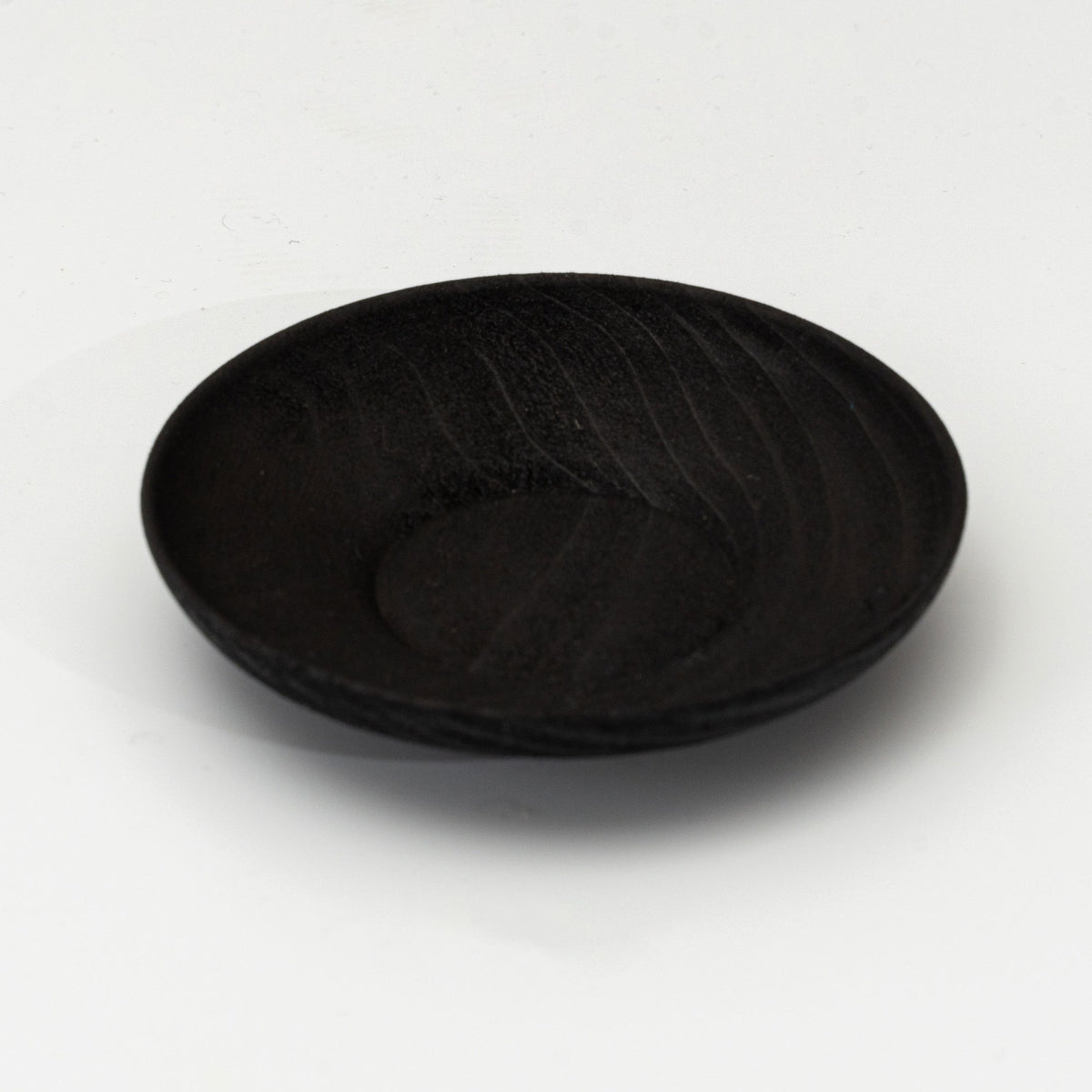
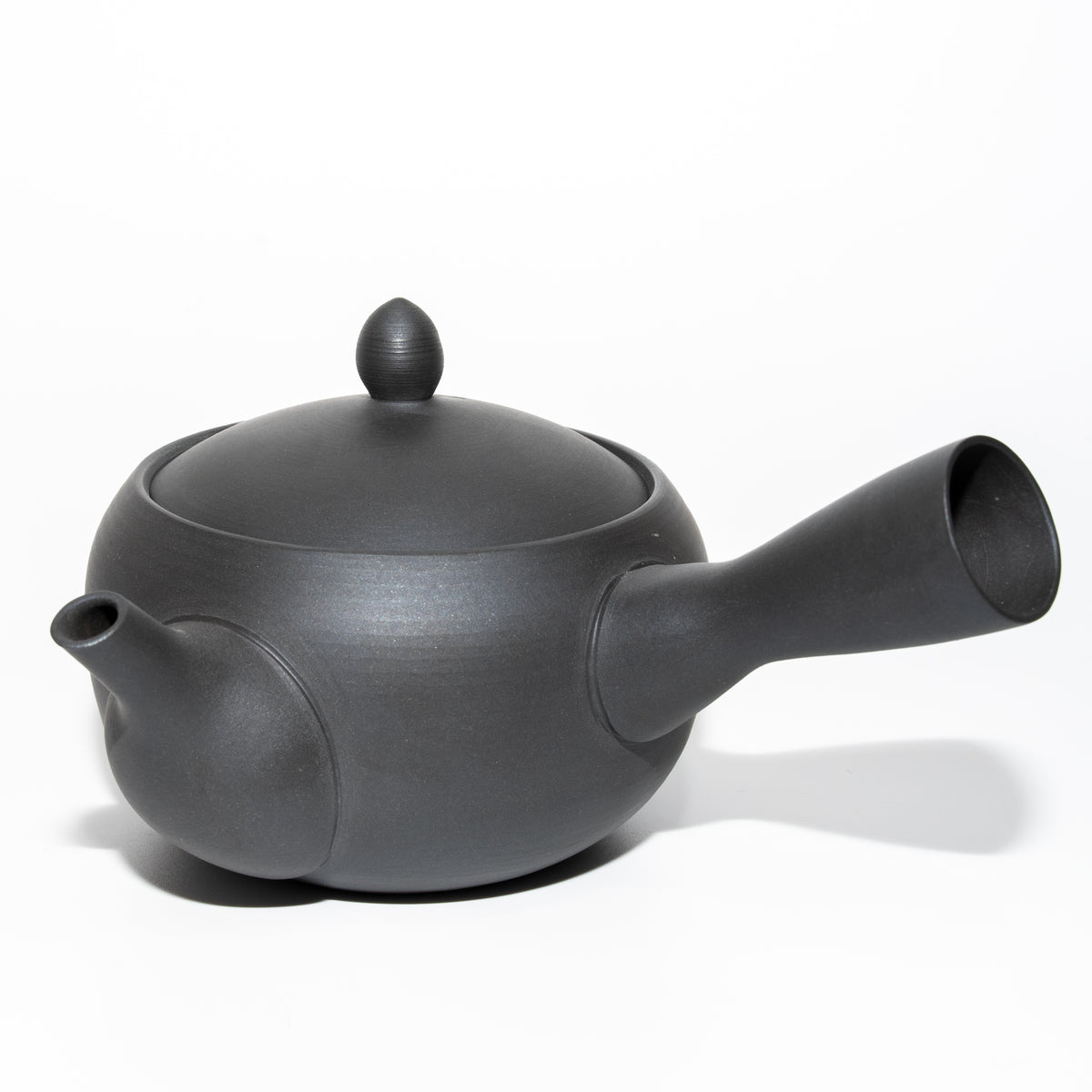
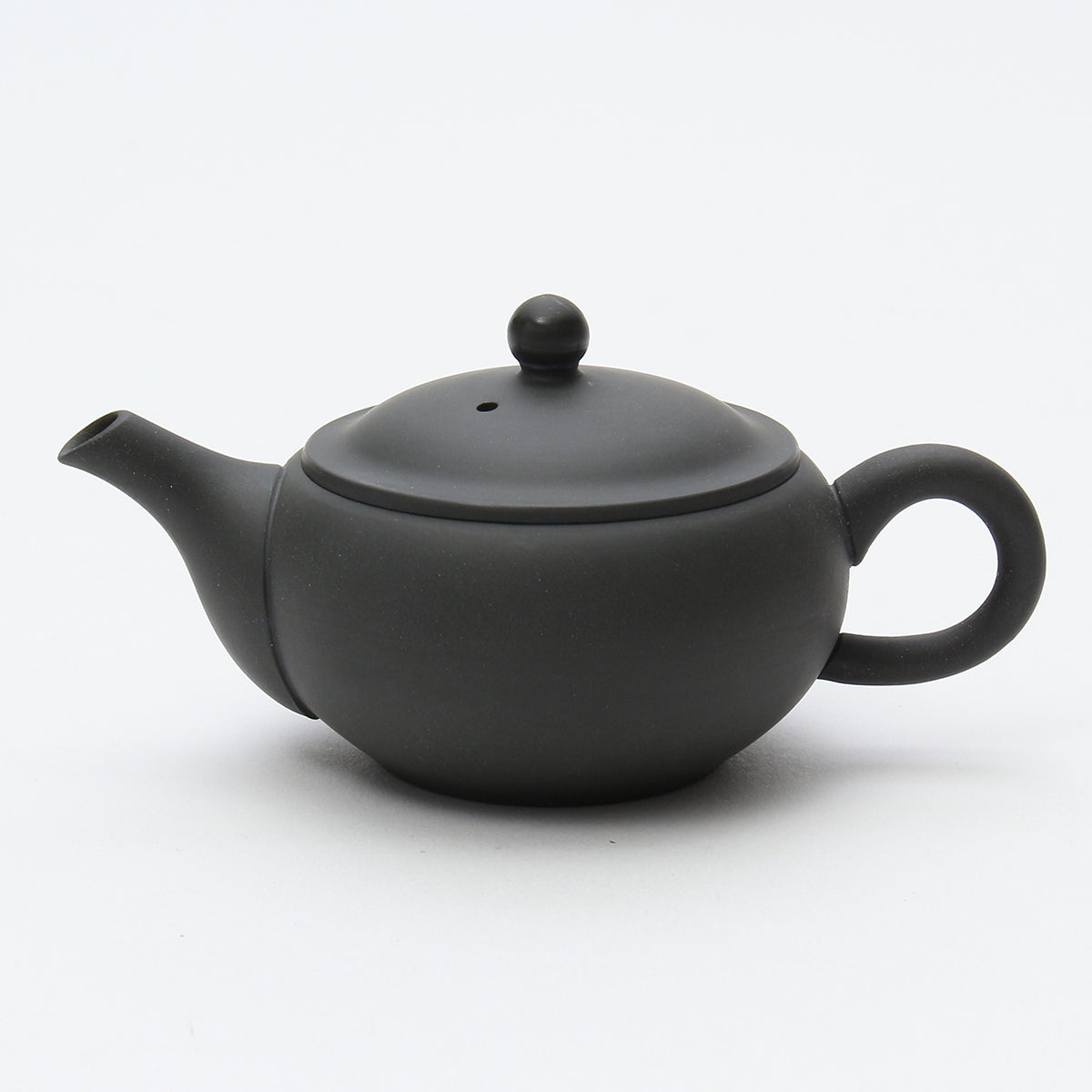


Eichel-Dobin/Teekanne (Sandschwarz)
NANKEI POTTERYYokkaichi, Mie
Versand aus Japan. Lieferung in der Regel innerhalb von 1–2 Werktagen. Kostenloser Versand ab einem Mindestbestellwert – der genaue Betrag variiert je nach Zielland.
Die Acorn Dobin ist eine klassische Teekanne im Sharing-Format von NANKEI POTTERY (南景製陶園) in Yokkaichi, Mie, gefertigt in der Tradition des Banko-yaki. Die „Dobin“-Form verbindet einen runden Steinzeugkörper mit einem abnehmbaren Rattangriff, der sich bogförmig über den Deckel wölbt — die alte Art, die Hand von der Hitze fernzuhalten. Gebrannt im yakishime-Verfahren, einer glasurfreien Methode bei hoher Temperatur, trägt die Oberfläche die ehrliche Textur der Erde: sandig, leicht rau, still lebendig. Das Eisen im Ton vertieft die Farbe mit jedem Aufguss und zieht die Tannine des Tees in einen runderen Abgang.
Die Sand-Black-Engobe-Technik schichtet dunklen Tonschlicker vor dem Brand auf den Körper auf und verleiht ihm eine warme, erdige Tiefe — satt und ohne Glanz. Mit 600 ml brüht sie großzügig — stellen Sie sie in die Mitte des Tisches und lassen Sie jeden selbst einschenken.
Nur Handwäsche
- Nicht spülmaschinenfest. Bitte nur von Hand waschen.
- Nicht mikrowellengeeignet.
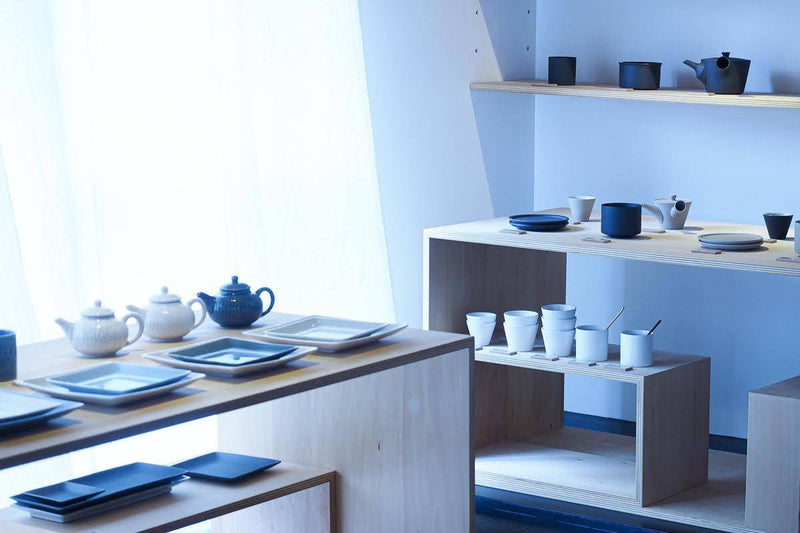
Der Handwerker
NANKEI POTTERY — Banko-yaki, Yokkaichi, Mie
Gefertigt von NANKEI POTTERY – einer japanischen Werkstatt, deren Stücke wir täglich in unserem eigenen Teeraum verwenden.
Das könnte Ihnen auch gefallen