
Note: This article is for informational purposes only and does not constitute medical advice. Research on methylated catechins and allergy symptoms is ongoing. If you have health concerns or a diagnosed allergy condition, please consult a qualified healthcare professional before changing your diet or supplementation.
The first sip surprises. Benifuuki green tea is notably more astringent than the Sencha most people are used to — firmer, almost gripping — and that quality is not a flaw. It is the catechins doing exactly what they are supposed to do. Benifuuki is a Japanese tea cultivar rich in methylated catechins, with research on this component dating to 1999 in NARO's research account.
Originally developed for black tea production, Benifuuki found a second life when researchers at NARO (Japan's National Agriculture and Food Research Organization) identified its exceptional methylated catechin content. Green tea processing preserves EGCG3"Me; lightly semi-fermented tea can retain it too, while black tea processing causes it to disappear in the 2001 processing study.
What is Benifuuki?
Benifuuki is a Japanese tea cultivar developed at the then Vegetable and Tea Research Institute, with naming registration in 1993 and cultivar registration under the Seed Act in 1995 (NARO research information). Its mother, Benihomare, is an Assam hybrid bred for black tea; its father, Makura Cd86, is a line introduced from Darjeeling, India (NARO, 2005). Benifuuki has pronounced astringency and a high methylated catechin content; its parentage alone does not establish why those traits occur.
Benifuuki was originally developed for Japanese black tea.
The pivot to green tea production came in the 2000s, after research began linking Benifuuki's methylated catechins to potential benefits for seasonal allergy symptoms. Today, Benifuuki occupies a narrow but interesting position in Japanese tea: a cultivar bred for one purpose that found a more prominent role serving another.
Why Benifuuki is different: methylated catechins
Most green tea catechins are well-known: EGCG, EGC, ECG, EC. Benifuuki contains all of these, but also produces a structurally distinct compound called EGCG3"Me — epigallocatechin-3-O-(3-O-methyl) gallate, also called methylated EGCG or methylated catechin. In the cultivars examined in the 2001 study, Benifuuki was rich in EGCG3"Me; NARO reports that this compound is absent in Yabukita green tea.
The 2004 study by Maeda-Yamamoto and colleagues found that O-methylated tea catechins inhibited protein kinase activity in mouse mast cells, which are cells involved in allergic responses; this was laboratory research rather than a human symptom trial.
Research led by Dr. Mari Maeda-Yamamoto and colleagues at NARO has investigated whether EGCG3"Me may play a role in modulating allergic responses. In that mouse mast-cell study, researchers also examined inhibition of histamine release; this mechanism does not by itself establish relief of human pollen allergy symptoms. A 2009 open-label randomized trial in 38 people with Japanese cedar pollinosis used 34mg of methylated catechins daily and compared starting 1.5 months before pollen exposure with starting after cedar pollen dispersal. A 2014 double-blind randomized trial in 51 adults with the same condition used 700mL of tea daily from December 2007 to March 2008 and evaluated symptoms. These are trial conditions and findings, not a drinking schedule or a guarantee for other allergies, products or amounts.
The hedging in that sentence is intentional. Research suggests potential benefit; it does not confirm a cure or guarantee results for any individual. The human studies used specific daily amounts and periods; separately, the 2001 processing study reported that EGCG3"Me disappeared during black tea processing. That study found similar EGCG3"Me levels in green tea and lightly semi-fermented pouchong tea, so green tea and steaming are not the only ways to retain it.
The relationship between Benifuuki's catechin structure and its potential anti-allergic properties is one of the more compelling areas of Japanese tea research. It is also a good reason to understand what you are buying when you see "Benifuuki" on a label — cultivar, processing method, and leaf form all matter.
What Benifuuki tastes like
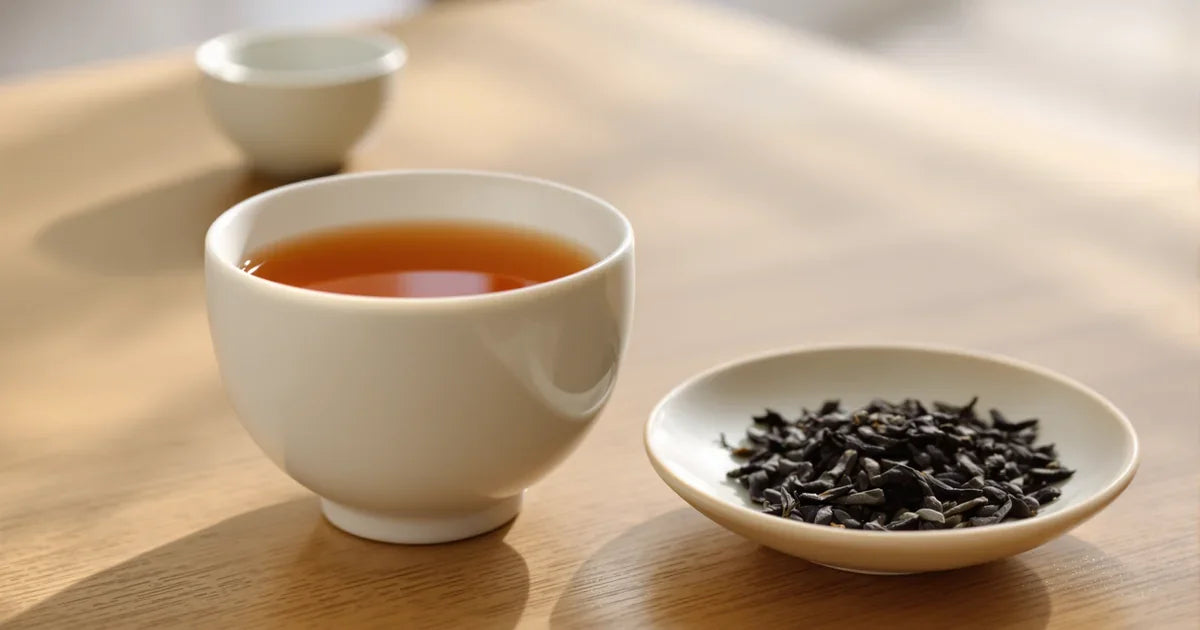
Astringency first. That is the honest description of Benifuuki green tea. Where Yabukita delivers a balanced interplay of umami, mild sweetness, and moderate astringency, Benifuuki leads with grip. The catechin load — both methylated and standard — produces a firm, almost brisk quality that most green tea drinkers will notice immediately.
Underneath the astringency there is body. The liquor is not thin; it sits with some weight on the tongue. The aroma is grassy and clean, without the deep seaweed or oceanic notes of a shaded tea. The umami is more restrained than the deep savory impression of Gyokuro — present but not the defining characteristic; this is a tasting description rather than a comparison of theanine measurements.
Benifuuki grown as a steamed green tea (Sencha style) tends to have a brighter, greener flavor than when processed with longer steaming. Some producers offer it as whole-leaf powder, so the leaf itself is consumed; grinding does not by itself concentrate catechins.
| Characteristic | Benifuuki | Yabukita | Standard Sencha blend |
|---|---|---|---|
| Astringency | High | Moderate | Moderate |
| Umami | Low–moderate | Moderate–high | Moderate |
| Body / weight | Full | Medium | Light–medium |
| EGCG3"Me (studied samples) | High | Absent (NARO) | Blend content not established here |
| Aroma profile | Grassy, clean | Fresh, balanced | Grassy–vegetal |
How Benifuuki is grown and processed
NARO material from 2005 describes Kagoshima as a center of Benifuuki production (historical account). The 2005 cultivation manual identifies tea-growing areas from Shizuoka westward as suitable; this is a historical description of cultivation suitability, not current production shares.
Harvest timing matters for methylated catechin content. The 2004 leaf study found higher EGCG3"Me in fully mature leaves late in the first crop and lower leaves of the second crop, under the conditions studied. The 2001 study also reported increases from the second crop onward; origin, leaf position and maturity matter, so the first young shoots cannot be assumed to have the highest levels.
Processing is where the Benifuuki story turns on a crucial detail. Methylated catechins are preserved by steaming — the standard Japanese green tea process that halts oxidation immediately after harvest. If the same leaves are oxidized for black tea production, the methylated catechins break down. The resulting cup may be excellent Japanese black tea — and Benifuuki black tea is genuinely good — but it no longer carries the compounds associated with the allergy research. Green tea processing. That distinction is worth holding onto.
Some producers also offer Benifuuki as whole-leaf powder; a comparison with infused leaves would require the product content, amount used and extraction rate, rather than assuming more catechins per cup.
How to brew Benifuuki
We use the loose-leaf figures below as starting points for adjusting taste, not as NARO recommendations or amounts shown to affect symptoms. Gyokuro brewing guidance from JA Kyoto Ninokuni uses 50–60°C, while 80–90°C here is a taste adjustment for Benifuuki. Extraction experiments examined temperature together with time and water volume; their findings do not turn these taste settings into a method for obtaining a health effect.
| Parameter | Loose leaf | Powder form |
|---|---|---|
| Water temperature | 80–90°C (taste starting point) | Follow the product instructions |
| Leaf / powder amount | 3–4g per 200mL (adjust for taste) | Follow the product instructions |
| Steep time | 2–3 minutes (adjust for taste) | Disperse the powder by stirring; follow the product instructions |
| Notes | Expect firm astringency — this is normal | Whole leaf is consumed; more catechins per serving cannot be assumed |
The astringency at these parameters is real — noticeably more gripping than a standard Sencha. This is not an error in brewing; it is the cultivar expressing its character. If the intensity is too much, shortening the steep time or reducing water temperature will soften it, though this also reduces catechin extraction.
In the 2009 Japanese cedar pollinosis trial, one group began 1.5 months before pollen exposure and the other after dispersal (trial report); this comparison is not general timing advice. For powder, check the product instructions: NARO research information describes stirring in boiling water and drinking promptly, and warns against preparing lightly steamed powder in water and carrying it around for a long time. This warning concerns that preparation and storage condition, not every powder product or every immediate cold-water use.
Benifuuki vs Yabukita
| Factor | Benifuuki | Yabukita |
|---|---|---|
| Parentage | Mother: Benihomare (Assam hybrid); father: Makura Cd86 (Darjeeling line) | — |
| Primary registered use | Black tea / semi-fermented | Green tea (Sencha) |
| EGCG3"Me (studied samples) | High | Absent (NARO) |
| Flavor profile | Astringent, full-bodied, grassy | Balanced, fresh, moderate umami |
| Cold tolerance (cultivar description) | Somewhat strong | Strong |
| Best used as | Green tea (methylated catechin focus), Japanese black tea | Sencha, Hojicha, everyday blends |
References
- Maeda-Yamamoto et al., 2004, PubMed — study on O-methylated catechins from tea leaves and mast-cell protein kinase activity.
- MAFF/NARO cultivar description — processing and cold-tolerance comparison.
- Maeda-Yamamoto, 2013, PubMed — a review of tea polyphenols and allergy-related immune research, rather than a new human intervention trial.
Frequently Asked Questions
Does Benifuuki help with allergies?
Research suggests potential benefit for Japanese cedar pollinosis; it does not confirm a cure or guarantee results for any individual. Dr. Mari Maeda-Yamamoto and colleagues at NARO have investigated whether EGCG3"Me may play a role in modulating allergic responses. In a mouse mast-cell study, researchers also examined inhibition of histamine release; this mechanism does not by itself establish relief of human pollen allergy symptoms. Human trials studied Japanese cedar pollinosis under specific daily amounts and study periods; these are trial conditions and findings, not a drinking schedule or a guarantee for other allergies, products or amounts. That said, research is ongoing, and this information does not constitute medical advice. People with diagnosed allergic conditions should consult a qualified healthcare professional.
When should I start drinking Benifuuki for hay fever season?
Human trials in people with Japanese cedar pollinosis used specific daily amounts and periods, and one trial compared starting before pollen exposure with starting after cedar pollen dispersal; these are trial conditions and findings, not a drinking schedule or general timing advice. Research does not guarantee results for any individual, and this is not a medical recommendation. If you are considering Benifuuki for allergy-related concerns, consult your doctor before changing your diet.
Can I drink Benifuuki as black tea — and why does processing matter?
Yes — Benifuuki can make excellent Japanese black tea. However, oxidation during black tea processing breaks down the methylated catechins, so the black tea version will not carry the same compounds. If you want Benifuuki for its EGCG3"Me, choose green tea or lightly semi-fermented tea: a 2001 processing study found similar levels in green tea and in lightly semi-fermented pouchong tea.
How does Benifuuki differ from Yabukita?
Key differences include parentage, catechin profile and flavor. Benifuuki's mother, Benihomare, is an Assam hybrid bred for black tea; its father, Makura Cd86, is a line introduced from Darjeeling, India. In the cultivars examined in the 2001 study, Benifuuki was rich in EGCG3"Me; NARO reports that this compound is absent in Yabukita green tea. Benifuuki has pronounced astringency and a high methylated catechin content. In terms of flavor, Yabukita balances umami, mild sweetness, and moderate astringency, while Benifuuki leads with astringency and has body underneath it.