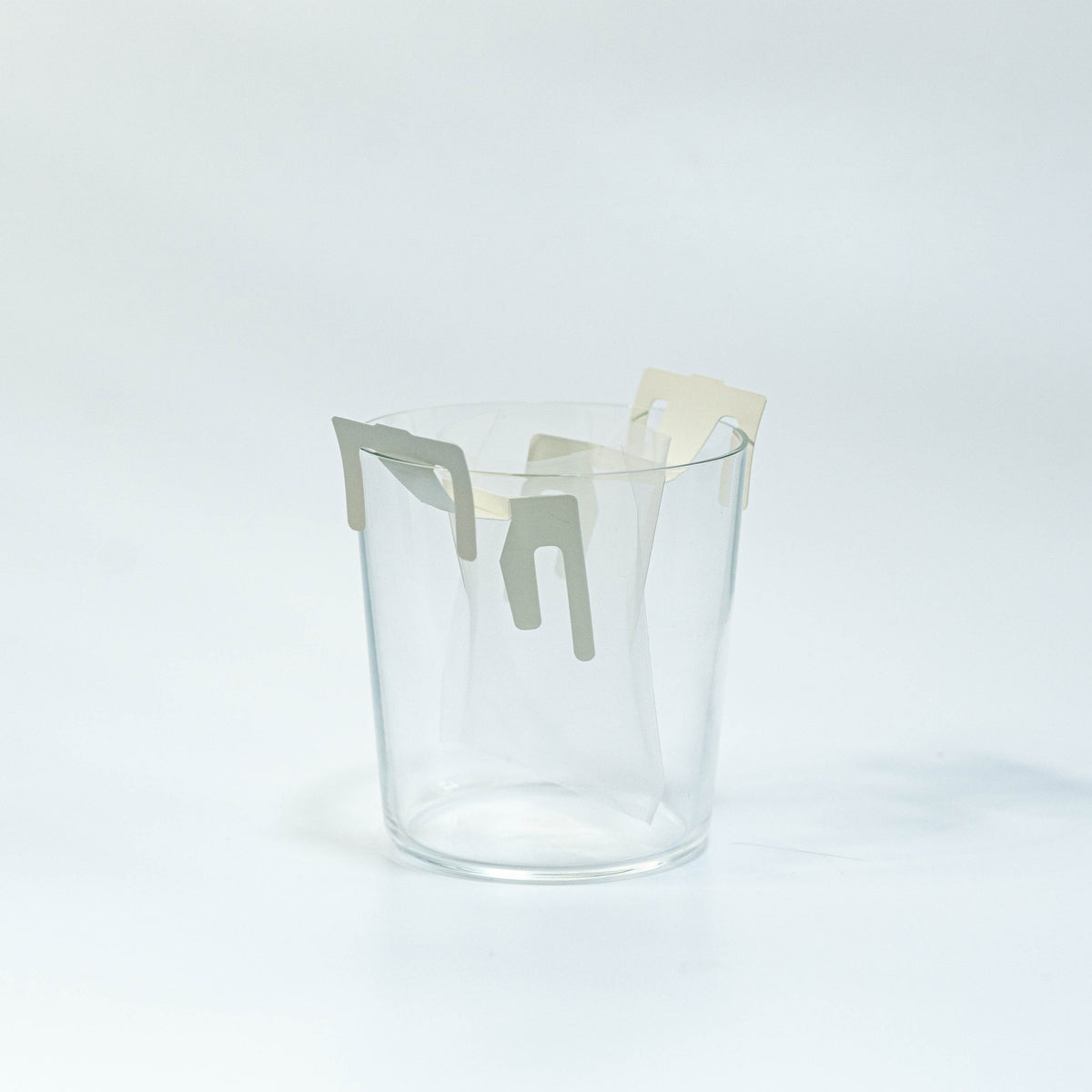

A paper filter hooked over the rim of your cup, a few grams of loose leaf inside, hot water poured slowly. No teapot needed. That is a tea drip bag — and if you have only seen the coffee version, the tea version works quite differently.
What is a tea drip bag?
A tea drip bag is a single-serve paper filter that hangs over a teacup or mug and lets loose tea leaves steep directly in the water. Think of it as a portable Kyusu: the leaves have room to open, the liquor stays clear, and cleanup is easy because the spent leaves come out with the bag.

We pay close attention to the filter paper because it affects flow, aroma, and aftertaste. Good paper stays neutral in hot water, opens wide enough for the leaves to unfurl, and keeps its shape while you pour. We also use single-origin teas in this format rather than anonymous blends, so the cup still reflects a specific farm, cultivar, season, and finishing style.
In our tasting notes, Shimokubo Isao Seicha's Asanoka brewed in a Yamanaka Sangyo drip bag came close in flavor to a Kyusu brew, with slightly less body. For anyone without a teapot at home - or anyone brewing in an office, at a park, or in a hotel - this is one of the simplest ways to make genuinely good Japanese tea. The format lowers the barrier without lowering standards.
Tea drip bags vs. coffee drip bags
Coffee drip bags and tea drip bags may look similar, but they extract flavor in different ways. Coffee relies on percolation: hot water passes through the grounds and keeps moving. Tea relies on immersion: the leaves sit in the liquor and release flavor over time, just as they would in a teapot.
That is why tea drip bags are designed deeper than coffee ones. The leaves need to be fully submerged, not just splashed by fresh water for a few seconds. Tea extraction also follows a different sequence: sweeter amino acids and top aromatics show early, while catechins and other polyphenols build more quickly when the water is hotter or the agitation is rougher. Many drinkers describe that late-stage dryness as tannic bitterness.
Coffee grounds are milled to expose a great deal of surface area, so fast percolation works in their favor. Whole tea leaves need time to hydrate, soften, and open from the outside in. If you force tea through a coffee-style drip, the outside of the leaf extracts too quickly before the inner leaf has opened, and the cup tastes sharper and less layered. Immersion gives you better control over sweetness, umami, and aroma.
How to brew great tea with a drip bag
A drip bag can make tea that comes close to a teapot brew if you control three things: leaf-to-water ratio, temperature, and full submersion. We use about 4g of tea with 120mL of water, then adjust slightly by tea type. Watch the cup as much as the timer: color, aroma, and the way the leaves open will tell you whether the extraction is on track before you take the first sip.
1. Set the bag and add tea leaves

Hook the drip bag over your cup and add about 4g of loose leaf tea. Use a cup that is wide enough for the paper arms to sit securely and shallow enough that the leaves will sit below the waterline once you pour. Before adding water, tap the side of the filter lightly so the leaves settle evenly rather than bunching in one corner. If you smell the dry leaf first, you will have a useful reference for how the aroma changes once the leaves are wet.
2. Pour water at 60–80°C

Slowly pour 120mL of heated water directly over the leaves. For Sencha, aim for 70°C; for Gyokuro, go lower, around 60°C. Start with a small pour to wet all the leaves, pause for a few seconds, then continue with the rest of the water. The brewing temperature matters more than most people expect: a clear pale green or amber liquor and a sweet rising aroma usually mean you are in the right range.
3. Steep for two minutes, then gently swirl

After about two minutes, lift the bag slightly and swirl it two or three times in the water - but keep the bag open. Closing it presses the leaves together and can release harsh, astringent flavors. By this stage the leaves should look larger and softer than when dry, and the aroma should move from light top notes to a fuller, sweeter scent. If the liquor already looks deep and opaque before two minutes, shorten the time on the next cup.
4. Lift and wait for the last drop

Raise the drip bag and hold it over the cup until the last drop falls. That final bit of liquid carries concentrated umami - often the richest part of the brew. Hold it for a few seconds rather than shaking or squeezing the paper, since pressure forces out rougher compounds and muddies the finish. Once the bag is out, sip while the tea is still warm enough to carry aroma but not so hot that it hides sweetness. With high-quality leaves, you can often make a second cup with slightly hotter water and a shorter steep.
Adjusting for different tea types
The four steps above stay the same for most teas. What really changes is the water temperature and steep time, and those two variables shape the cup more than anything else. Gyokuro steeped in boiling water will taste nothing like it should; a Hojicha brewed at 70°C will come out thin. Here is a quick reference for the teas we work with most.
| Tea type | Water temperature | Steep time | What to expect |
|---|---|---|---|
| Gyokuro | 50–60°C | 90–120 sec | Concentrated umami, almost no bitterness |
| Kabusecha | 60–70°C | 60–90 sec | Rich umami, gentle sweetness |
| Sencha | 70–80°C | 60–90 sec | Balanced, bright green, clean finish |
| Genmaicha | 80–90°C | 60 sec | Nutty, toasty rice, mellow |
| Hojicha / Bancha | 90–100°C | 30–60 sec | Roasted, bold, low bitterness |
| Black tea | 95–100°C | 3–5 min | Brisk, full-bodied, malty |
Sencha, Kabusecha, Hojicha, and Genmaicha all work well in drip bags because the filter gives them enough room to infuse cleanly. Gyokuro is the main exception worth noting: a traditional serving is only 30-50mL, and most standard drip bags are sized for a fuller cup. You can still make it work by using less water and a slightly longer steep, but a small Kyusu will serve Gyokuro more faithfully if you want the classic concentrated texture.
If you do not own a variable-temperature kettle, a few simple tools help. A small kitchen thermometer is the most direct option, but you can also pour boiling water into a cooling pitcher or empty cup first, then into the drip bag cup once the temperature drops. After a few sessions, you will learn practical cues: steam softens, the cup becomes comfortable to hold near the rim, and the aroma from the water feels gentler. That small bit of control matters more than buying complicated equipment.
When drip bags make the most sense
Drip bags make the most sense when convenience matters but quality still matters too. They are not a replacement for a good Kyusu at home, yet they solve real situations: brewing in a hotel room, making tea at a desk, packing light for a train ride, or introducing loose leaf tea to someone who is not ready to buy equipment.
For travel, a few folded filters and measured portions of tea take almost no space, and all you need is a cup and hot water. At the office, they keep the leaves contained, which matters when you are sharing a sink or making tea between meetings. They also make portioning consistent, so you do not have to guess how much tea to carry in a small tin. When we send tea home with people who are new to loose leaf, this format is often the easiest first step.
If you would like to try cold brewing instead, that is another equipment-free method worth keeping in mind, especially in warmer months or when hot water is not convenient. Drip bags and cold brew serve different moments, but both make it easier to fit good tea into an ordinary day.
If you are choosing your first tea for this method, start with Sencha, Hojicha, or Genmaicha. They are forgiving, expressive, and easy to compare side by side as you refine your timing and temperature.
Frequently Asked Questions
What makes a tea drip bag different from a coffee drip bag?
A coffee drip bag works by percolation, while tea needs immersion. We want the leaves fully submerged so they can hydrate, open, and release sweetness, umami, and aroma more evenly.
What starting ratio should we use for a tea drip bag?
We use about 4g of loose tea with 120mL of water as a starting point. Adjust to taste by tea type, cup depth, and how strong or gentle you like the finished brew.
What water temperature and steeping time work best?
For Sencha, start around 70°C and steep 60–90 seconds; for the basic method, about two minutes works well. Gyokuro likes 50–60°C, while Hojicha and Bancha prefer 90–100°C.
What cup or vessel works best with a drip bag?
Use a cup wide enough for the paper arms to sit securely and shallow enough for the leaves to stay below the waterline. Full submersion matters more than the cup looking special.
What beginner mistake makes drip bag tea bitter or rough?
Squeezing or closing the bag pushes the leaves together and can bring out harsh astringency. Keep the bag open, swirl gently two or three times, then let the last drop fall naturally.