
Susuri-cha is a traditional Japanese way of drinking tea directly from a small, lidless cup — or from a lidded yunomi with the lid held slightly ajar — sipping slowly to aerate the liquid and experience the full aroma as it changes with each small pull. The name comes from susuru, meaning to sip or slurp. It is considered the finest way to drink Gyokuro.
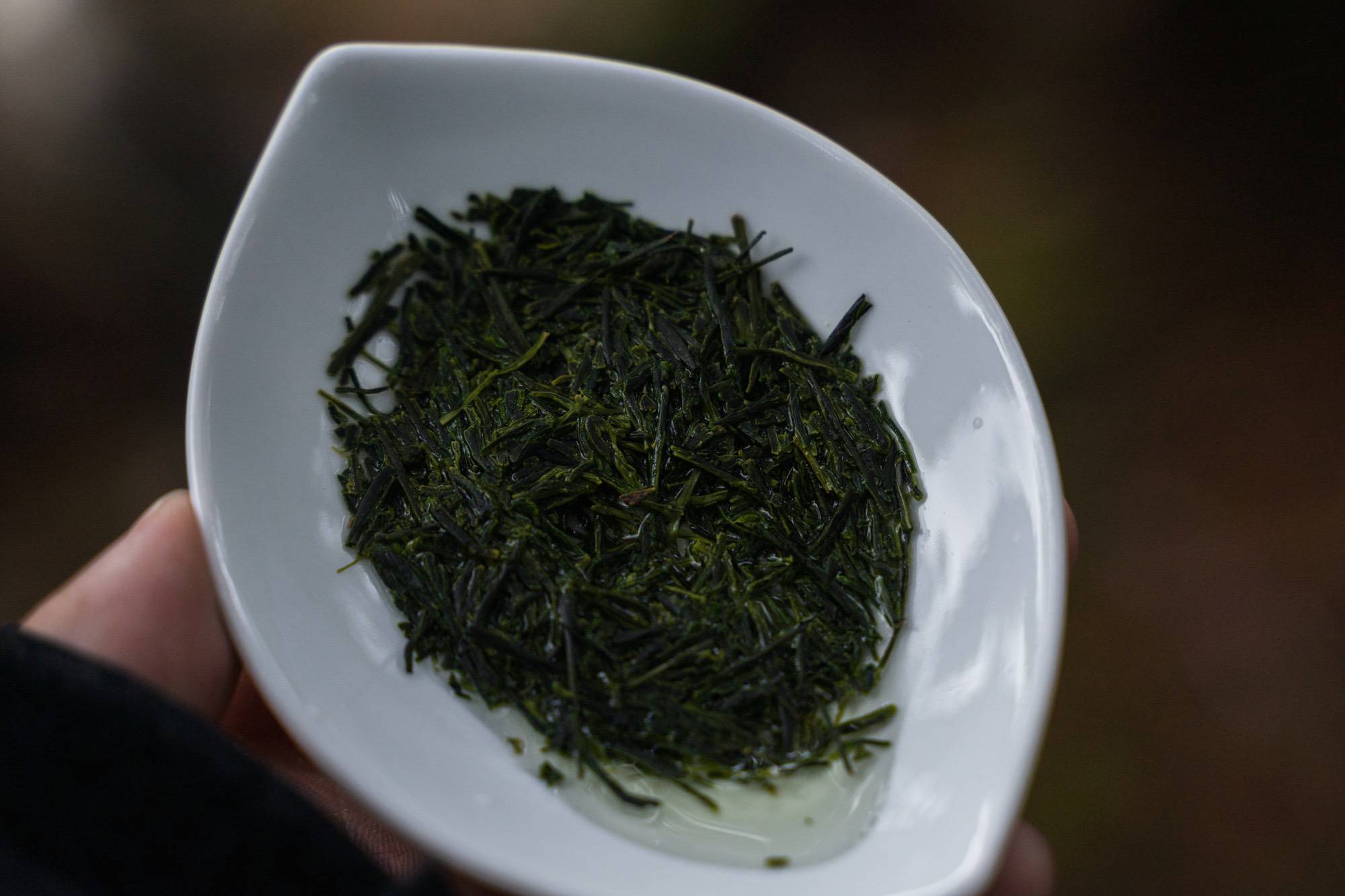
What is susuri-cha
Susuri-cha is a direct-in-the-cup way of brewing and drinking fine tea, usually Gyokuro, without transferring it from teapot to cup. A small amount of hot water — or cold water, or ice — is poured directly over tea leaves sitting in the cup. The drinker holds the lid at an angle so only tea passes through the gap, not leaves. Each sip is small, perhaps a tablespoon at a time.
What makes this method unusual is how it changes the experience. Because so little water is used, the flavor becomes intensely concentrated — the umami that a standard Gyokuro brew delivers over a full cup is present in a single sip. And because you are taking small amounts over several minutes, you taste the tea as it evolves: first the pure sweetness and marine note, then a slight deepening as more compounds dissolve, then a long, clean finish that lingers on the palate. The slow pace also lets the aroma travel upward into the nose as you inhale across the surface. The technique resembles wine tasting in that deliberate aeration — that slight slurp — draws air in with the liquid and opens the fragrance.
The sensory progression is part of why susuri-cha has been valued for high-grade shaded tea. The first sip often seems almost quiet: soft sweetness, a cool green aroma, and a smooth texture that coats the tongue. By the second and third sip, the fragrance becomes more layered. You may notice seaweed-like notes, fresh-cut greens, warm rice, or a faint sweetness that gathers in the back of the nose after you swallow. Near the end, when the liquor is slightly richer, the aroma can feel rounder and more savory. Rather than giving everything at once, the tea opens gradually from first sip to last, which is exactly why the method rewards patience.
Drinking without a lid
You do not need a lidded cup to practice susuri-cha. Pour a small amount of water directly over the leaves in any small cup, then sip carefully with slightly pursed lips, letting the liquid pass through while holding the leaves back with the angle of the cup. The result is the same: concentrated, umami-forward, deeply aromatic. A handleless vessel — a small yunomi or even a small ceramic bowl — works well here. The right cup for susuri-cha is small. See our tea cups if you are building a setup.
Which teas suit susuri-cha
Teas with strong umami are the natural fit. Gyokuro is the classic choice — the high theanine content from shade cultivation creates exactly the concentrated sweetness that this method extracts best. High-grade Sencha and Kabusecha (partially shaded Sencha) also work well. Lower-grade teas or roasted teas like Hojicha are less suited — the method amplifies whatever character the tea has, and if that character is astringency or bitterness, the concentration only makes it more pronounced.
For more on why shade-grown teas produce such concentrated umami, see our guide to covered cultivation and how brewing temperature changes what comes out of the leaf. The full guide to brewing Gyokuro covers the parameters in detail.
The right vessel for susuri-cha
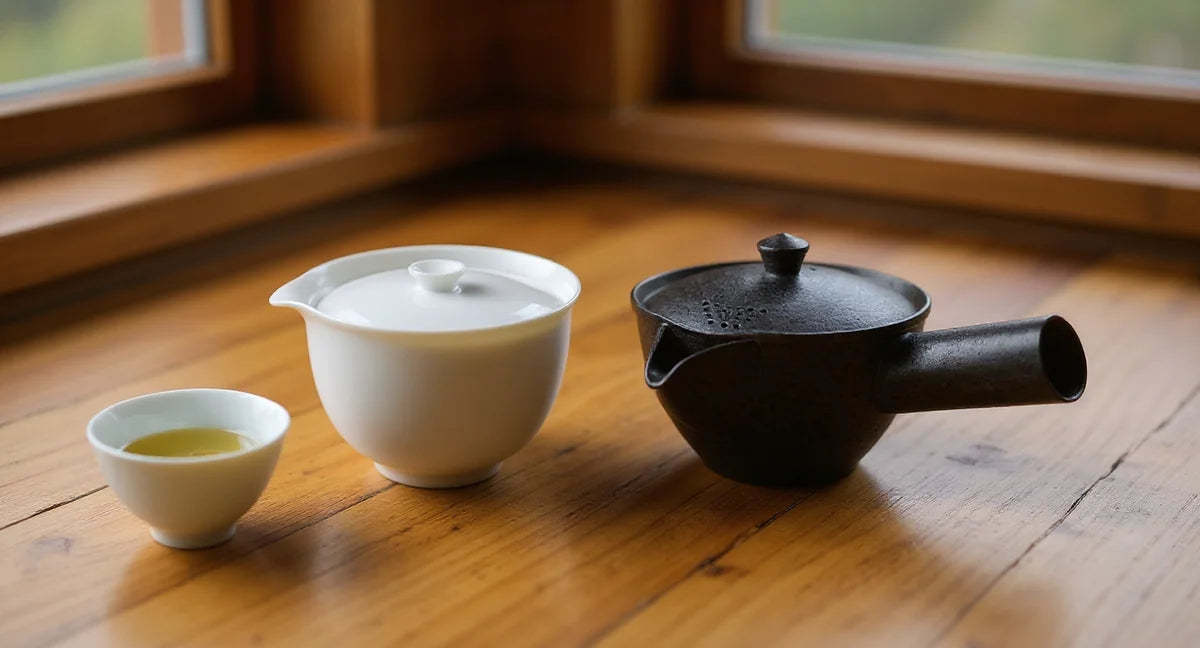
The best vessel for susuri-cha is a small cup, ideally a small yunomi or another cup that holds only a few careful sips at a time. A compact size matters because this method is built around concentration. If the cup is too large, it invites too much water, weakens the liquor, and makes the leaves harder to control at the rim. A smaller vessel keeps the brew focused, keeps the temperature steadier, and naturally slows the pace of drinking.
A lidded cup has practical advantages, especially with Gyokuro. The lid helps retain warmth and aroma during short infusions, and it gives you a clean way to hold the leaves back while you sip through a narrow gap. That said, a lid is useful rather than mandatory. Many people enjoy susuri-cha from a lidless cup with a gently narrowing lip. What matters most is a vessel that feels stable in the hand, lets you tilt precisely, and encourages small mouthfuls rather than large gulps. In practice, that usually means choosing a cup in the 40-80 ml range rather than an everyday mug.
Material and shape also influence the experience. Thin porcelain highlights clarity and aroma, while a lightly textured clay cup can soften the feel of the sip and make the act of holding it more grounded. A wider opening releases fragrance more readily; a slightly narrower mouth makes it easier to manage leaves when drinking without a lid. We tend to think of the vessel as part of the preparation, not just a container. With susuri-cha, the cup sets the rhythm of the session.
How to enjoy susuri-cha with ice
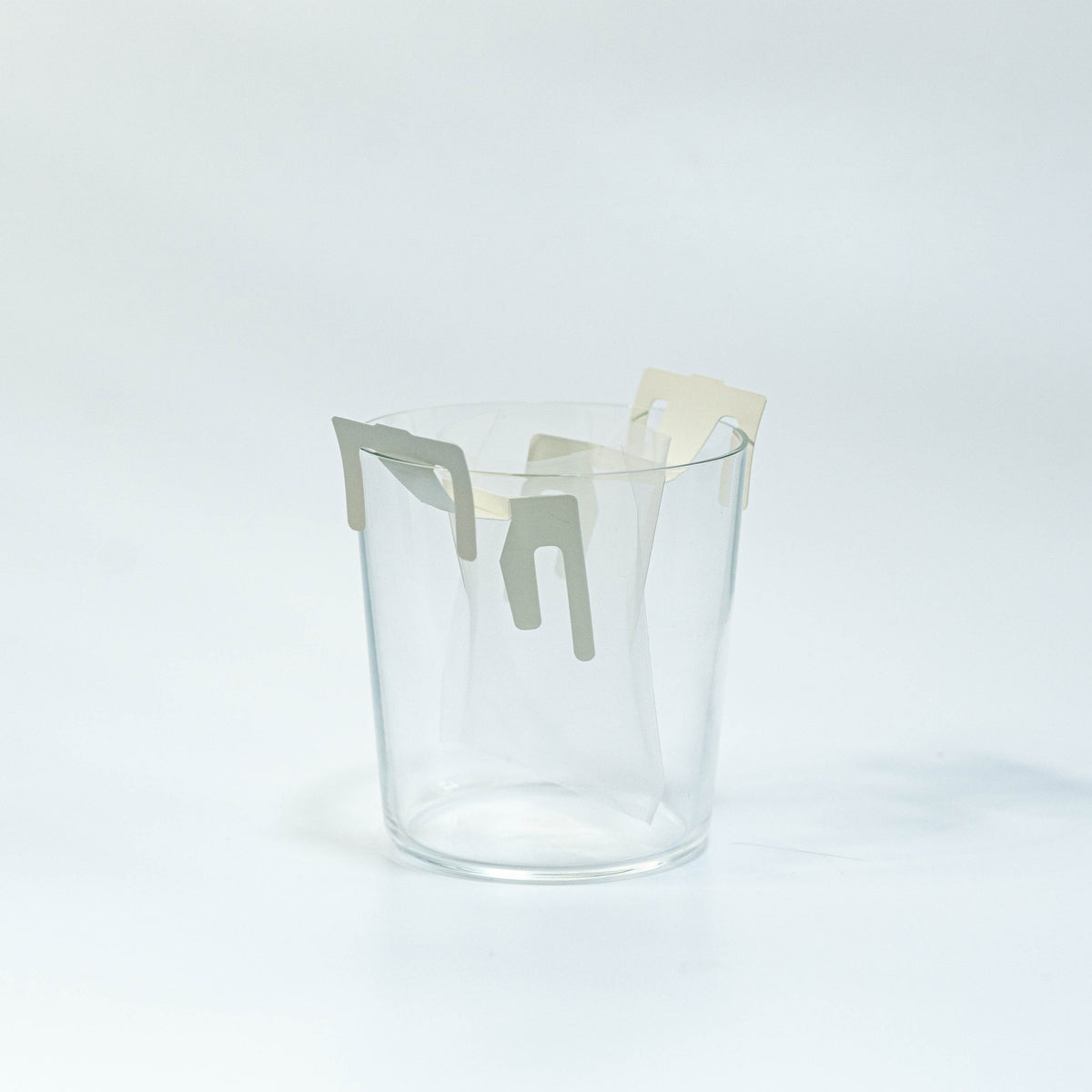
A summer version uses ice instead of hot water. Place 4–5g of Gyokuro leaves in a small cup and add about 20g of ice — roughly a tablespoon. Let it sit. As the ice melts slowly over 20–30 minutes, it draws out primarily the most soluble compounds — theanine and other amino acids — at very low temperature. The result is intensely sweet, almost syrupy, with an oceanic depth and none of the bitterness that heat might bring. When the ice has fully melted, tilt the cup and sip from the gap at the edge.
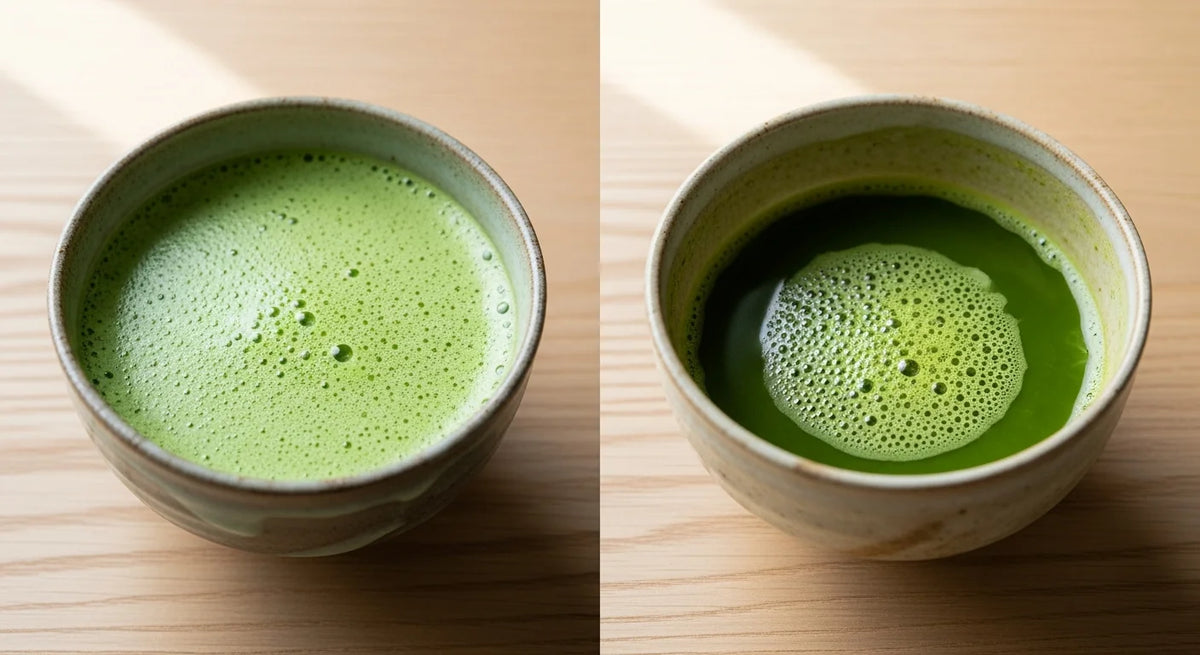
What makes the iced version memorable is the way intensity builds almost invisibly. At first, there may be only a pale green sheen at the bottom of the cup and a faint fragrance rising from the wet leaves. Ten minutes later, the liquid begins to deepen in color, often from nearly clear to a richer yellow-green, and the aroma gathers with it. Because the melt is so slow, each sip can taste slightly different from the one before: the earliest sips are delicate and cool, the middle stage feels richer and more rounded, and the final portion is often the sweetest and most saturated. Watching that gradual change is part of the pleasure.
To capture the last drops, hold the lid upside down and let the remaining liquid drip onto it, then sip directly from the lid. The final drops are always the sweetest.
Eating the tea leaves afterwards
The leaves used for susuri-cha — fully hydrated, tender, and rich in the plant's remaining nutrients — are worth eating. Season with ponzu, soy sauce, or a light vinegar dressing. The texture is soft, the flavor grassy-sweet. High-quality shaded teas are not something to discard after one use.
Keep the seasoning light so the character of the leaf still comes through. For about 5g of used Gyokuro leaves, a simple ratio is 2 teaspoons of ponzu with 1 teaspoon of rice vinegar, or 2 teaspoons of ponzu with a few drops of sesame oil if you want a rounder finish. A few white sesame seeds, a tiny amount of grated daikon, or a pinch of katsuobushi can work well too, but restraint matters. The point is not to turn the leaves into a heavily dressed side dish. It is to appreciate them as the final expression of the tea.
If you want to go a step further, the leaves can be folded into a small salad of cucumber, daikon sprouts, or tofu, where their softness becomes an asset rather than an afterthought. They can also be set over warm rice with a little ponzu, or tucked into a simple bowl with shirasu or torn nori if you want something more substantial. However you serve them, use them the same day and avoid strong dressings that would bury the sweetness you spent so much care extracting in the cup.
At FETC, we find that susuri-cha changes how we think about tea time. It is less about volume and more about attention: a few grams of fine Gyokuro, a small cup, and an unhurried morning are often enough to show how much character a tea can hold.
Frequently Asked Questions
What is susuri-cha?
Susuri-cha is a Japanese way to brew and drink tea directly in a small cup, usually Gyokuro. We sip through a slight lid gap, or from a lidless rim, so each small pull carries aroma upward.
Which teas work best for susuri-cha?
Gyokuro is the classic choice because shaded cultivation gives it concentrated theanine-rich sweetness. High-grade Sencha and Kabusecha also work; roasted or bitter teas can become too sharp.
What vessel should I use for susuri-cha?
Start with a small yunomi or handleless cup, ideally around 40–80 ml. A lid helps hold back leaves and keep aroma in, but a lidless cup with a narrow lip also works well.
How do we make iced susuri-cha?
Use 4–5g Gyokuro with about 20g ice in a small cup. Let the ice melt slowly over 20–30 minutes; when it has fully melted, tilt the cup and sip from the gap at the edge.
What beginner mistake should I avoid?
The common mistake is using too much water or too large a cup. Susuri-cha depends on concentration, so keep the vessel small, use tiny sips, and adjust the leaf or ice amount to your taste.