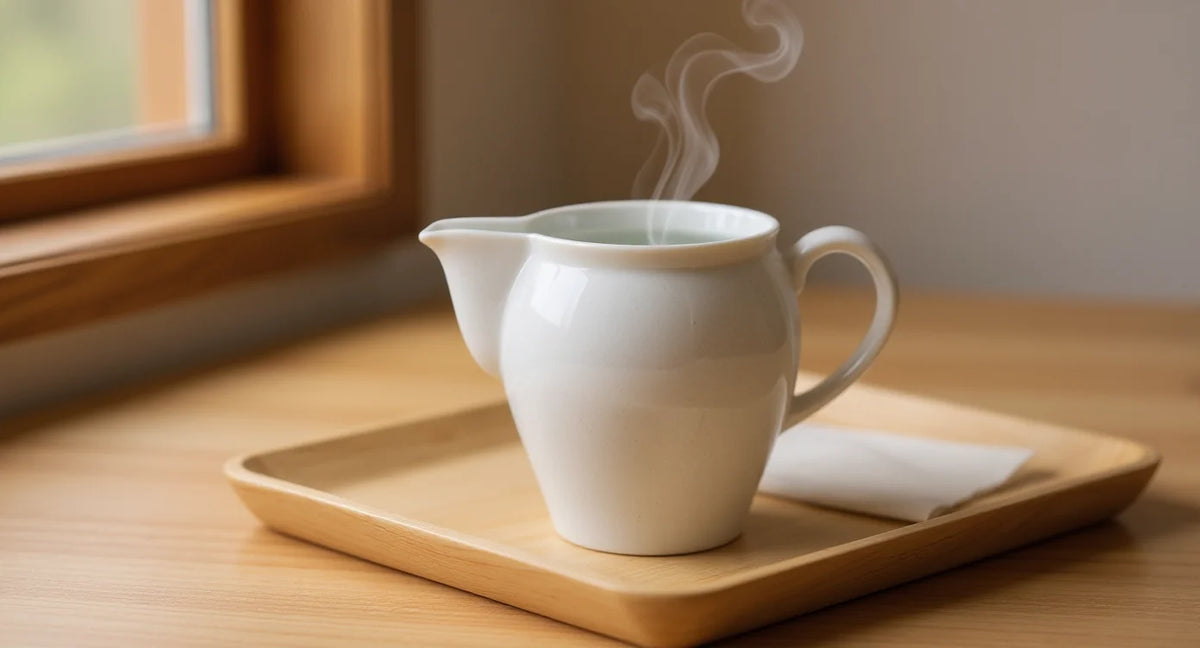

Pale green in the pitcher. Almost transparent at the edges, then suddenly luminous where the light passes through. The aroma is quiet at first, but the taste is not: sweet grass, a little sea breeze, a clean finish that seems to disappear and then return. If you know cold brew coffee, the first surprise with cold brew tea is that it does not feel like a workaround for heat. It feels like its own drink. Cold brewing extracts a different side of the leaf.
A good cold brew green tea is softer than most hot infusions and lower in bitterness. In NARO's measurements, Sencha steeped in refrigerator-cold water (about 10°C) for one hour released about half the caffeine of a 2-minute brew at 80°C, and the level did not rise with 16 to 24 hours of steeping. Cold brew is not caffeine-free, and the amount in the cup depends on how much leaf you use. Not diluted. Not sleepy. Just clearer in shape. Once you know the basic methods, it is one of the easiest ways to enjoy tea at home, especially if you are working with loose leaf tea and want something calm waiting in the fridge.
Why cold water makes tea taste different
When tea meets cold water, extraction slows down and the balance shifts. That shift is the whole point. The leaf still opens. Compounds still dissolve. But they do not all move at the same speed, and they do not respond to temperature in the same way.
Theanine is a good place to start. It is one of the amino acids behind tea's umami and gentle sweetness, and it dissolves readily even in cool water. That is why cold brew tea can taste round and savory without feeling heavy. The leaf gives up sweetness early. The cup feels composed from the start. If you want the deeper chemistry, our article on theanine explains why that soft, settled taste matters so much.
Catechins behave differently. These polyphenols bring structure, briskness, bitterness, and astringency. They do extract in cold water, but not efficiently. Once water rises above about 60°C / 140°F, catechin extraction becomes much more active, which is why hot tea can move quickly from vivid to sharp if the temperature is too high or the steep runs too long. Our guide to temperature and tea flavor shows how dramatically the cup changes with only a small change in heat.
NARO's Sencha measurements found about half the caffeine of a 2-minute brew at 80°C after one hour at about 10°C, with no increase after 16 to 24 hours. Not to zero, and not in exactly the same way for every leaf, but noticeably lower in many cases compared with a standard hot brew made from the same tea. Cold water extracts it more slowly, especially over the shorter windows used for most Japanese green teas. The result is often a cup that feels lighter in the body and quieter in the head. For many people, that is part of the appeal.
So yes, cold brew tea is less bitter. But stopping there misses the real story. This is not hot tea with one problem removed. It is a genuinely different flavor profile. Sweeter, smoother, and more transparent, yet still deep enough to show cultivar, processing, and place. Sencha tastes greener. Gyokuro tastes denser. Hojicha tastes more rounded and grain-like. Cold water does not flatten those differences. It redraws them.
That is also why cold brewing works so well for people who think they are sensitive to green tea bitterness. Often the issue is not the leaf itself. It is heat. Pull the same tea through cold water instead, and what comes forward is umami, sweetness, and clean aroma rather than a rush of tannic grip. Different extraction. Different conversation with the leaf.
Three ways to cold brew and when to use each
Mizudashi, the everyday method
The easiest method is mizudashi (水出し), a Japanese term that means "water extraction." This is the everyday style you see in home refrigerators across Japan in warm weather: cold water, tea leaves, a pitcher, a few patient hours. It is the method we recommend first because it asks for almost nothing and gives back a lot.
For mizudashi, use 10 to 15 grams of tea per 1 liter of water, or about 2 to 3 tablespoons depending on the leaf shape. That range works especially well for Sencha, deep-steamed Sencha, Genmaicha, and many styles of cold brew loose leaf tea with smaller, lighter leaves. If you like a gentler cup, stay closer to 10 grams. If you want more body, move toward 15.
Step 1: Fill a clean glass pitcher with cold filtered water. Filtered water matters more than many people expect because cold brewing strips away fewer harsh notes to hide mineral imbalance. If the water tastes flat or chalky on its own, the tea often will too.

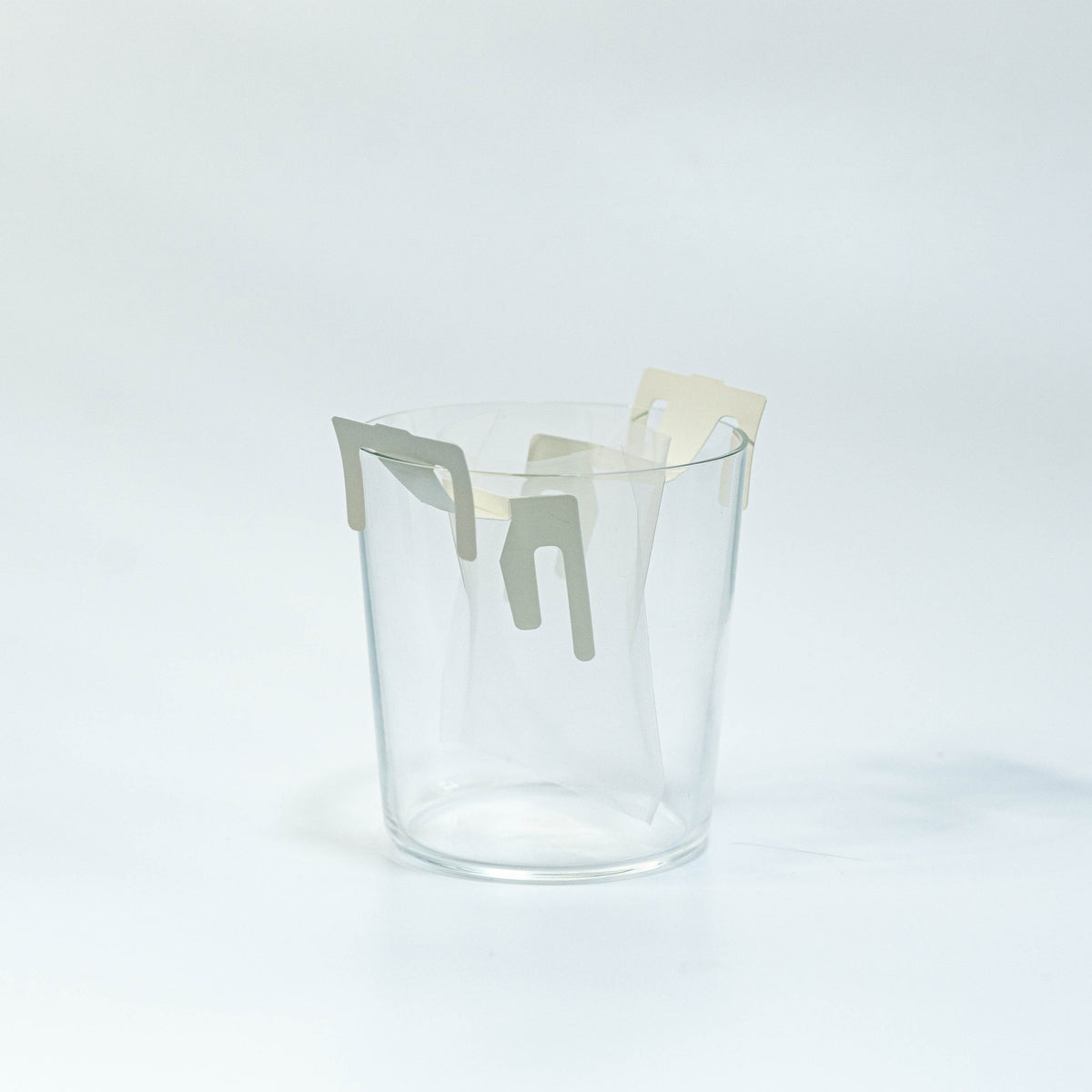
Step 2: Add the tea leaves in a filter bag, tea bag, or infuser. You can let the leaves float freely if you plan to strain later, but for daily use our team likes a bag because cleanup is easier and the leaves are simple to remove at the right moment. This is also the most convenient way to make cold brew green tea before bed and pour it in the morning.

Step 3: Refrigerate the pitcher for 3 to 6 hours. The exact time depends on the tea. A fine-leaf Fukamushi may be expressive after 3 hours. A more standard Sencha often wants 4 to 6. Taste as it goes. The best cold brew tea is not the one that steeped the longest. It is the one removed at the moment the sweetness, body, and freshness line up.
Step 4: Remove the leaves, stir or swirl once, and serve. Over ice if you like. Straight from the pitcher if you do not. The liquor should be clean, mild, and refreshing, with enough substance to feel like tea rather than flavored water.

Mizudashi is best for daily drinking and for making a batch the whole family can share. It keeps the process simple. Put it together in the morning, and it is ready by lunch. Set it up at night, and your first drink the next day is already waiting.
The flavor profile is the point: clean, mild, refreshing. Not empty. Good mizudashi still has depth, but it carries that depth lightly. If hot green tea can sometimes feel intense, this is the version that lets the leaf exhale.
Koridashi, ice on leaves and concentrated umami
The second method is koridashi (氷出し), literally "ice extraction." Instead of using a full pitcher of water, you place tea leaves in a small teapot or kyusu, cover them with ice cubes, and let the ice melt slowly over the leaves. It is slower in one way and more direct in another. The water begins nearly at freezing point. Extraction happens drop by drop.
Use 15 to 20 grams of tea per 1 liter equivalent of ice, or about 3 to 4 tablespoons. In practice, koridashi is usually made in a smaller vessel, so the brew feels concentrated rather than casual. Depending on room temperature and the size of the ice, it may take 30 minutes or as long as 2 hours.
This method pulls almost pure sweetness and umami at first, with minimal catechin extraction. The body can feel thick, almost syrupy, and the finish can seem impossibly gentle. No bitterness at all when the tea suits the method. That is why the best choices for koridashi are high-theanine, shade-grown teas such as Gyokuro and Kabusecha. The colder and slower the extraction, the more clearly those teas show their savory depth.
Give the pot a gentle shake or small stir before pouring. The most concentrated liquid often settles unevenly around the leaves and the melting ice, and a quick redistribution makes the cup more balanced. Koridashi is not the cold brew you make absentmindedly. It is the one you make when you want to sit with a tea and pay attention.
Flash chill, hot brew over ice
The third method is the fast one. Brew the tea hot, usually around 80 to 90°C, then pour it directly over a glass or pitcher full of ice. This is not cold extraction in the strict sense, but it belongs in the same family because it solves the same desire: you want tea now, and you want it cold.
Flash chilling captures a different part of the leaf than mizudashi or koridashi. Hot water reaches aroma compounds that cold water leaves behind, especially the lifted floral and green volatiles that make some teas feel vivid on the nose. Then the instant chill stops further extraction and locks those aromas in place. The effect is bright, aromatic, and refreshing.
The result feels closer to hot tea served cold. More fragrance. More edge. More sparkle. If mizudashi is smooth and quiet, flash chill is brisker and more animated. It works especially well when you want an iced tea with clarity and aroma but do not have three hours to wait for the refrigerator to do the work.
Which tea to cold brew
Not every tea behaves the same way in cold water. Some turn silky. Some stay thin. Some bloom after a few hours, while others need the better part of a day. Choosing the leaf is half the work, which is why the best cold brew tea often begins with matching the method to the tea rather than asking for one universal recipe.
Sencha is the standard starting point. It gives a balanced cold brew: green, clean, lightly savory, and easy to drink in quantity. For mizudashi, 4 to 6 hours is usually enough. If someone asks our team how to cold brew tea for the first time, this is the leaf we reach for because it teaches the method clearly. You can taste what cold water is doing without having to decode the tea.
Deep-steamed Sencha, often called Fukamushi, has more broken leaf particles and a fuller body. It usually needs a slightly shorter steep, around 3 to 5 hours, because the smaller pieces release flavor more quickly. The liquor can look a little cloudier, and the texture often feels richer. If standard Sencha is a clean line, Fukamushi is a softer brushstroke.
Gyokuro is the tea to use when the goal is intensity rather than volume. Its shaded cultivation preserves more theanine, which is why koridashi suits it so well. The cold extract can taste almost concentrated, with deep umami and a sweetness that lingers. You can use Gyokuro for mizudashi too, but it shines most clearly when the extraction stays extremely slow and cold.
Hojicha is another excellent option, especially if you want something softer and toastier than green tea. The roasted notes carry well into a cold infusion, but the tea usually needs longer, around 6 to 8 hours, to build enough presence. What emerges is gentle and nutty, with almost no grassy edge at all. For people who enjoy iced coffee or roasted grains, cold brew Hojicha often feels immediately familiar. If you are curious about exactly how much caffeine ends up in the cup, our article on Hojicha caffeine breaks down the numbers.
Genmaicha brings toasted rice into the picture, which makes the cold cup smell warm even when the liquid is cold. 4 to 6 hours is a good starting range. The result is refreshing, savory, and easy to pair with food. It is one of the friendliest styles for lunch or afternoon drinking because the grain notes make the tea feel grounding rather than delicate.
Matcha is the outlier. You do not really cold brew it because there is no steeping step. Instead, whisk Matcha with a small amount of cool water to make a smooth paste, then add more cold water and ice. Instant cold Matcha. Different from infusion, but useful when you want the depth of green tea without waiting.
For oolong, 6 to 8 hours is a good range, especially with greener, more floral styles. The aromatics stay soft but persistent, and the mouthfeel often turns silky. Black tea also adapts well, though it usually needs 8 to 12 hours for malt, fruit, and sweetness to develop fully. If your question is whether cold brew loose leaf tea has to mean Japanese green tea, the answer is no. But green tea is where the contrast between hot and cold extraction becomes most striking.
One practical rule helps across all of these teas: use whole leaves when possible, then adjust time before adjusting everything else. Too weak? Brew longer. Too heavy or dull? Brew a little less. Cold water gives you room to move gradually, which is one reason beginners often find it easier than precision hot brewing.
Water and equipment
Cold brew tea does not need specialist gear, but good water makes a visible difference. Filtered water or naturally soft water is ideal because it lets sweetness and aroma come through cleanly. Hard water tends to mute the cup and flatten the finish. If your cold brew always tastes a little closed, even with good tea, the water is worth checking. We go into that in more detail in our article on soft water vs hard water.
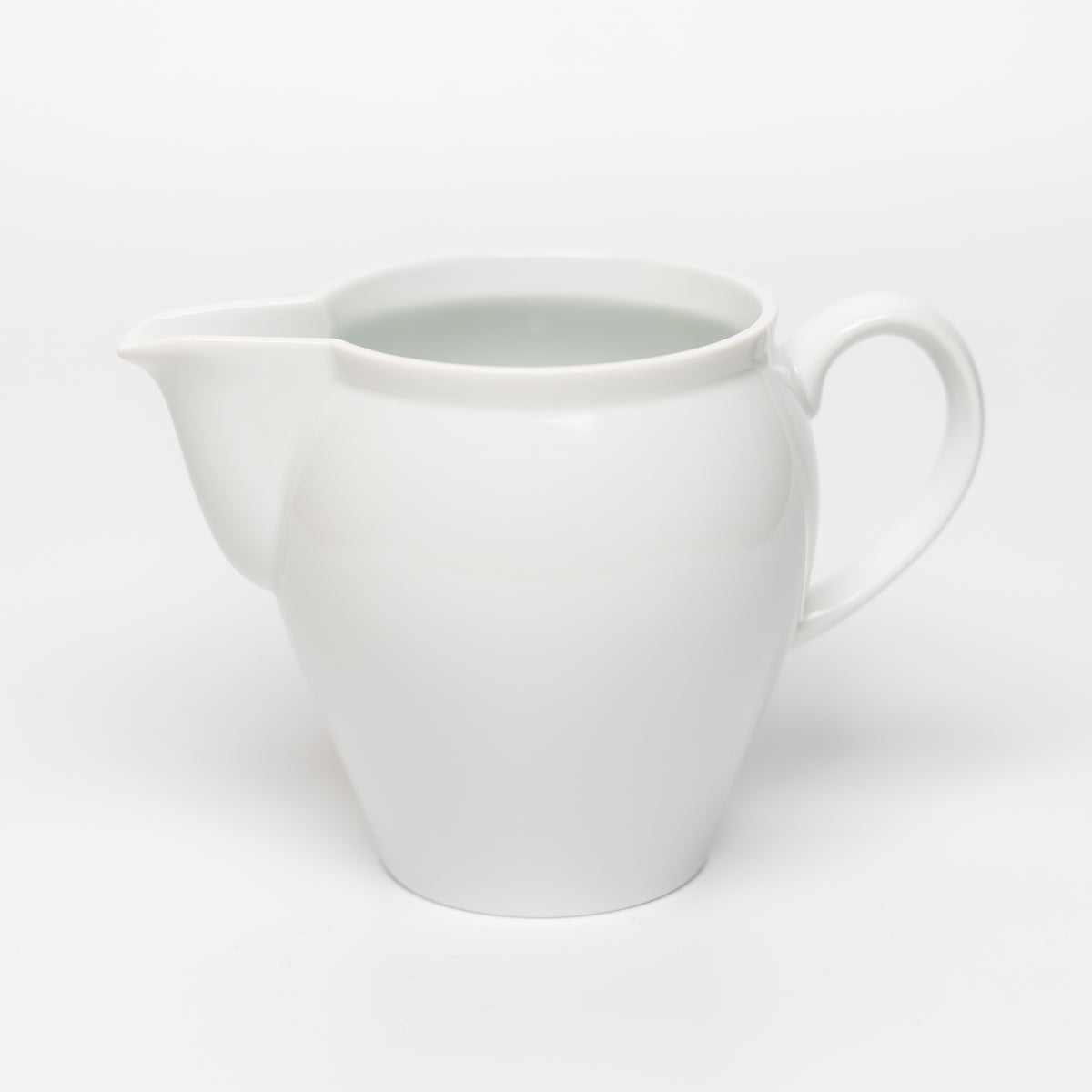
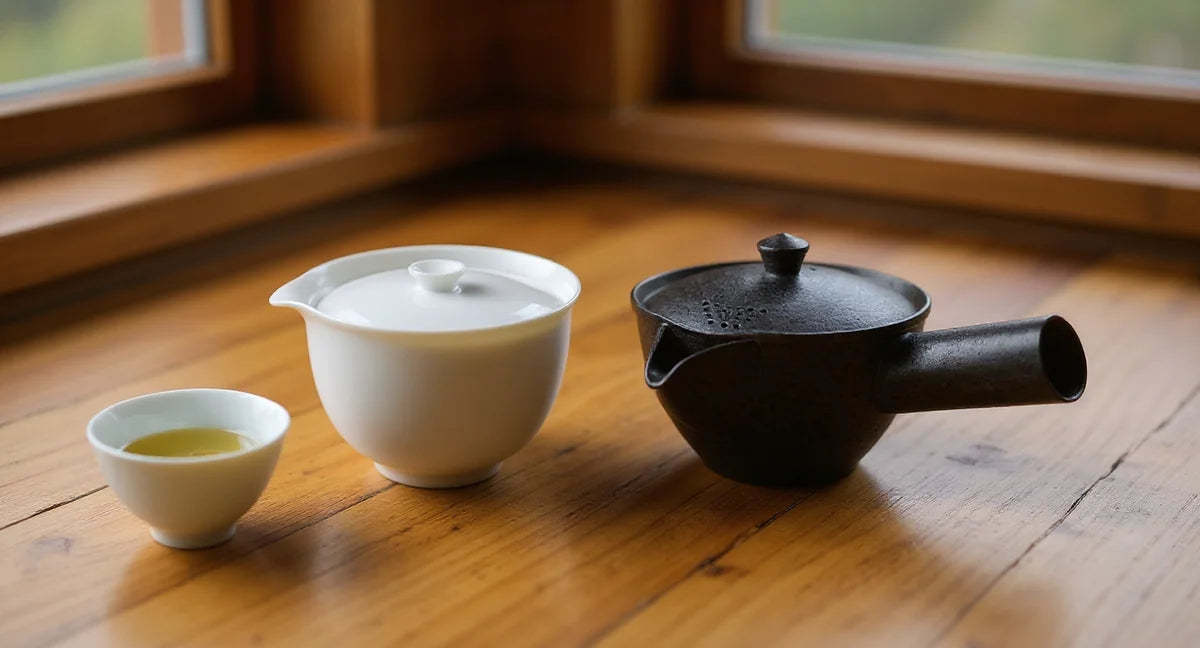
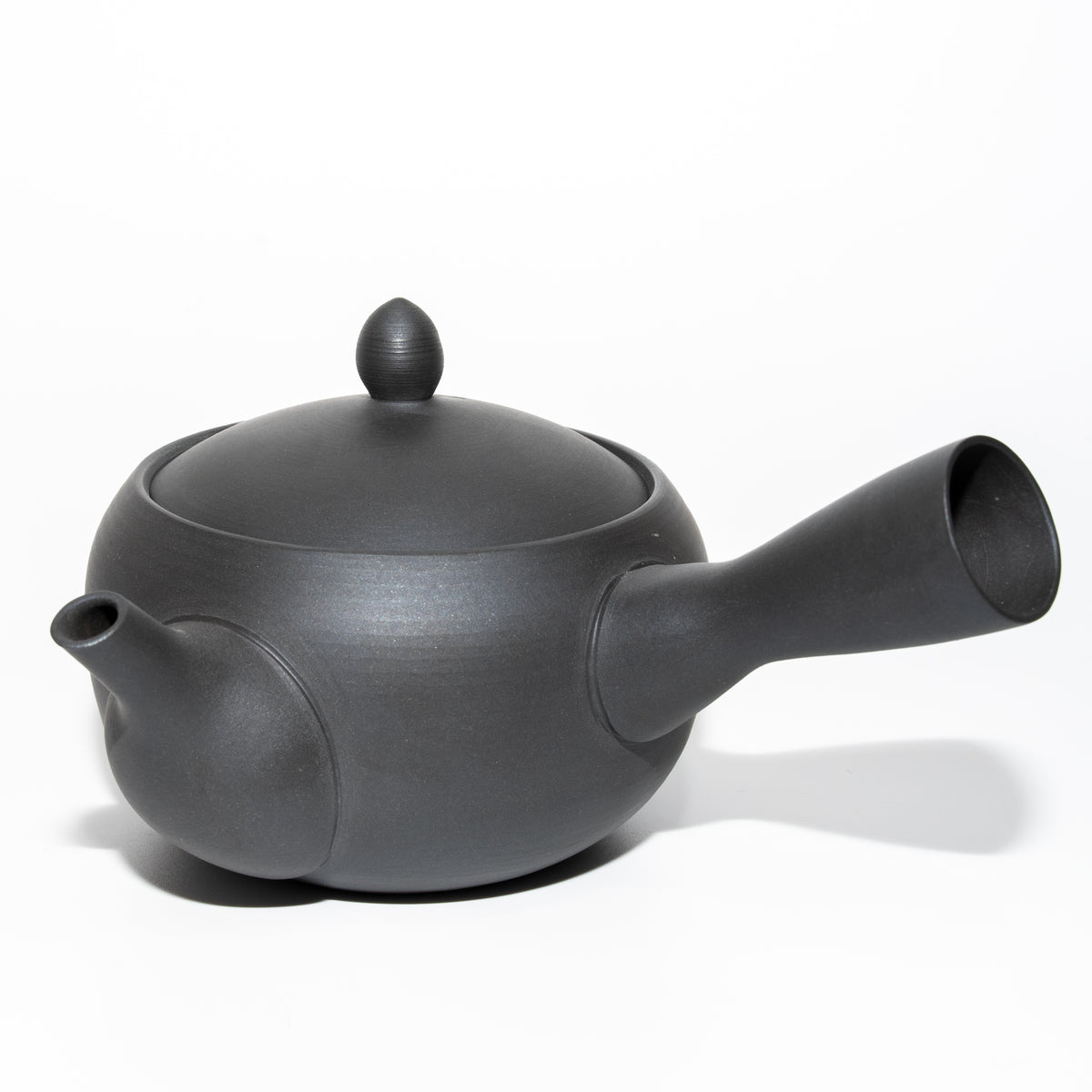
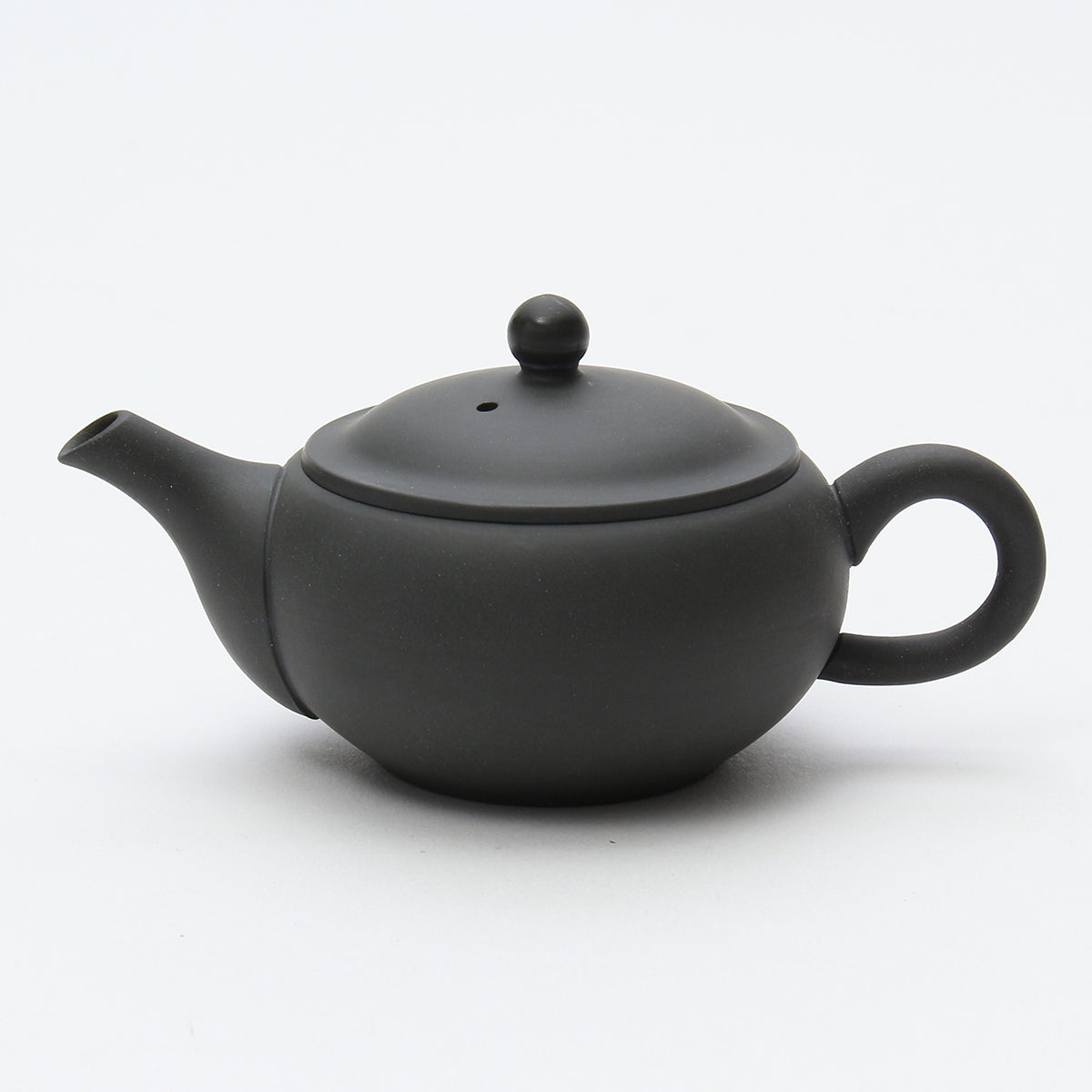
For equipment, any clean glass pitcher works. Glass is practical because it does not hold odors easily and lets you watch the color change as the tea steeps. A small kyusu, the side-handled Japanese teapot used for leaf tea, is especially useful for koridashi because it pours concentrated tea neatly and handles small leaf quantities well. Tea filter bags are handy too. They make batch brewing easier, and they make it much easier to remove the leaves before bitterness starts creeping back in.
NARO recommends cold-brewed green tea to people watching caffeine. In NARO's Sencha measurements, one hour at about 10°C released about half the caffeine of a 2-minute brew at 80°C, not zero; the cup's amount also depends on how much leaf you use. It is still tea, still active, but usually calmer than a hot brew from the same leaf. Our guide to caffeine in tea gives a broader picture of how tea type, temperature, and steeping method all affect the final cup.
Keeping it fresh
Cold brew tea is best when it feels alive, and that freshness has a short window. Keep it refrigerated and drink it within 48 hours — ideally the same day or the next. There are no preservatives in a homemade batch, and the clean taste that makes cold brew appealing can turn flat faster than you might expect once the tea sits too long.
Remove the leaves as soon as the tea is ready. This matters. Even in cold water, extraction does not stop. Leave the leaves in the pitcher overnight after the tea has reached its sweet spot, and bitterness slowly returns. The cup grows murkier, heavier, less precise. A two-second step that protects the whole batch.
You can re-steep the leaves once more if you like. Add fresh cold water and give them another few hours in the fridge. The second batch will be lighter, softer, and less aromatic, but still pleasant, especially with Sencha, Genmaicha, or Hojicha.
Store the finished tea in a sealed glass pitcher or a BPA-free container, and keep it away from strong-smelling foods. Tea absorbs aroma easily. An uncovered pitcher next to cut onions or leftovers with garlic is a sad way to lose a careful batch. A lid helps. So does a little fridge discipline. For dry leaf storage — keeping your tea fresh before it reaches the pitcher — our guide on how to store tea leaves covers containers, refrigeration rules, and freshness timelines by tea type.
Cold brew can become a summer habit. In Japan, from June to September, a pitcher in the refrigerator can feel almost universal. You open the door and there it is, pale green and ready. The simplest way to start is still the best one: Sencha, cold water, and an overnight steep. Then the first sip in the morning. Quiet, sweet, and clear enough to reset the whole day.
Frequently Asked Questions
What is the best starting ratio for everyday cold brew green tea?
We recommend starting with 10 to 15 grams of loose leaf tea per 1 liter of cold filtered water in a clean glass pitcher. Use 10 grams for a gentler cup and 15 grams for more body.
How long should mizudashi steep in the refrigerator?
Most Japanese green teas work well at 3 to 6 hours in the fridge. Fukamushi may be ready around 3 hours, while standard Sencha often tastes best after 4 to 6 hours.
How is koridashi different from regular cold brew?
Koridashi places tea leaves in a small kyusu or pot under ice, so water nearly at freezing point extracts drop by drop. Depending on room temperature and ice size, it may take 30 minutes or as long as 2 hours, creating a denser umami-rich cup.
What can make cold brew taste bitter or dull?
Leaving the leaves in after the tea has reached its sweet spot lets bitterness slowly return, and the cup grows murkier and heavier. Even in cold water, extraction does not stop, so remove the leaves as soon as the tea is ready. For future batches, adjust time before adjusting everything else.
Which teas are easiest to cold brew first?
Sencha is the clearest starting point because it shows the method well. For mizudashi, use 10 to 15 grams per 1 liter of water; Sencha usually needs 4 to 6 hours. Genmaicha is also friendly: 4 to 6 hours is a good starting range, and the result is refreshing, savory, and easy to pair with food.