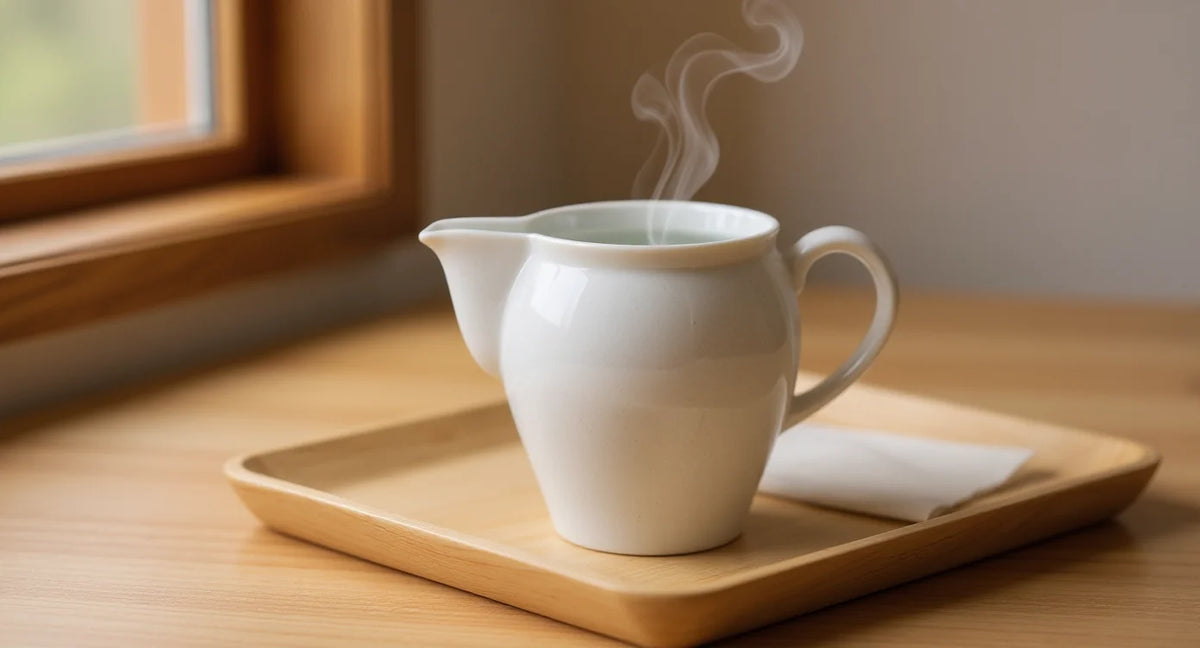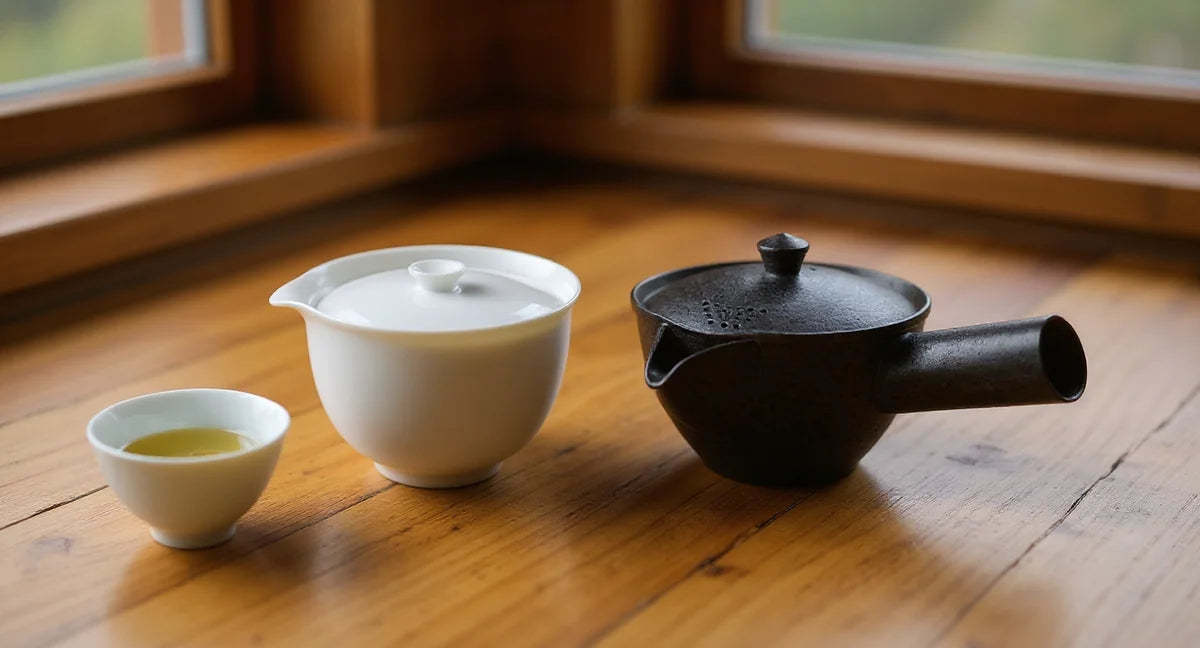

The first thing you notice is the weight. A clay body warm from the rinse water, a lid held steady with the thumb, the brief clean arc of the pour. A good Japanese teapot does not only look quiet on a shelf; it steadies the hand and settles the pace. Leaf, water, cup, then another pour a minute later.
That rhythm is why so many tea drinkers end up looking for a kyusu teapot. Built for loose-leaf tea, especially green tea, the kyusu shows its practical advantages from the first use: a smaller scale, faster pours, a built-in strainer, and a handle meant for control rather than ceremony alone. If you drink Sencha at home, or want a Japanese teapot that suits everyday brewing instead of display, this is usually where the search should begin.
What is a kyusu?
Kyusu (急須) is the Japanese word for teapot, but in daily use it usually refers to the compact Japanese teapot designed around Japanese loose-leaf teas. The body is often smaller than a Western teapot, commonly around 200 to 350 mL, because Japanese tea is rarely brewed as one long soak. You pour a short first infusion, then a second, then often a third. Small batches. Fresh attention each time.
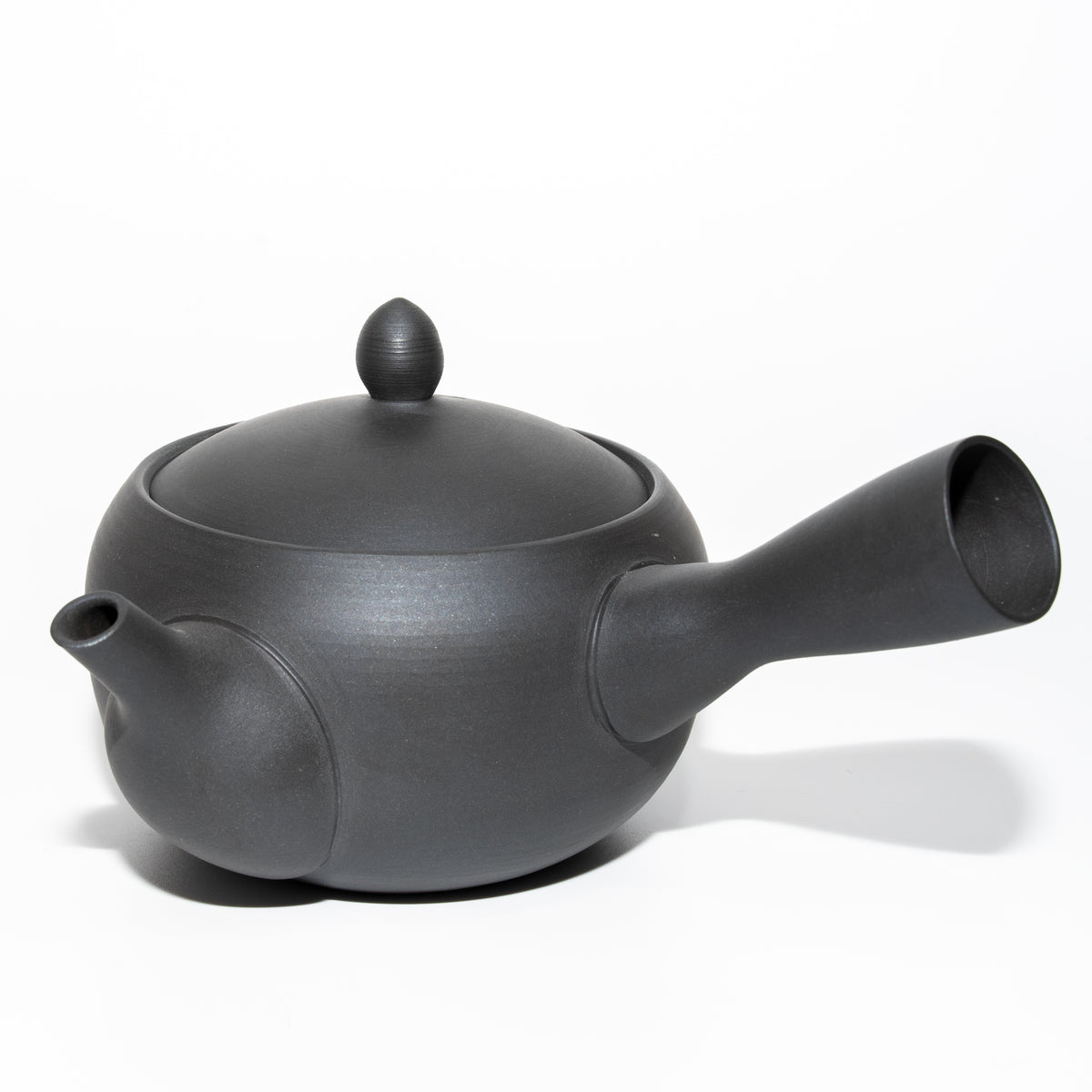
The most recognizable version is the side-handle form called yokode. The handle sits at a right angle to the spout, so you can pour with one hand while the thumb keeps the lid in place. It is a small design decision, but it changes the feeling of the pot. The wrist turns naturally. The stream is easier to stop cleanly. Fine leaves stay where they should.
Most kyusu also solve a problem that beginners often overcomplicate: they already contain the filter. If you are shopping for a Japanese teapot with a strainer, a good kyusu usually has one built into the body. It may be a ceramic mesh formed from the same clay or a stainless steel mesh fixed near the spout. No separate basket infuser needed, and no extra metal chamber crowding the leaves. That open interior matters because Japanese green tea wants room to unfurl.
This is one reason a kyusu feels so well matched to Sencha, the tea most people picture when they think of daily Japanese green tea. The pot is small because the pours are small. A quick pour keeps the leaves from over-steeping. Even the shape of the filter is there to let broken or needle-like leaves release flavor without turning the cup harsh.
Four styles of Japanese teapot

When people compare Japanese teapot types, they are usually comparing handle placement and brewing purpose. The pot changes because the tea changes. A side handle suits one rhythm, a top handle another. Once you know the four main styles, it becomes much easier to choose a pot that fits your shelf and your cup.
Yokode kyusu, the side-handle classic
The classic side handle teapot is the yokode kyusu. The handle sits at 90 degrees to the spout, so the whole pour can happen with one hand. Your fingers wrap the handle, your thumb settles on the lid, and the wrist makes a short clean turn. For Sencha, especially when you want a quick and complete pour, this is still the most intuitive design.
There is a reason this is the style most people mean when they say kyusu. Japanese green tea is often brewed in short steeps, and a yokode pot lets you pour out the tea evenly before the leaves continue cooking in the residual water. That matters even more with finer leaf grades. A pot that pours fast is not a luxury. It is part of how the tea stays balanced.
In our own collection, Sencha320 and Round Kyusu sit in this everyday territory: moderate size, easy grip, enough precision for a solo pot or two smaller cups. For most households brewing Sencha once or twice a day, this is still the safest first choice.
Ushirode kyusu, the familiar back handle
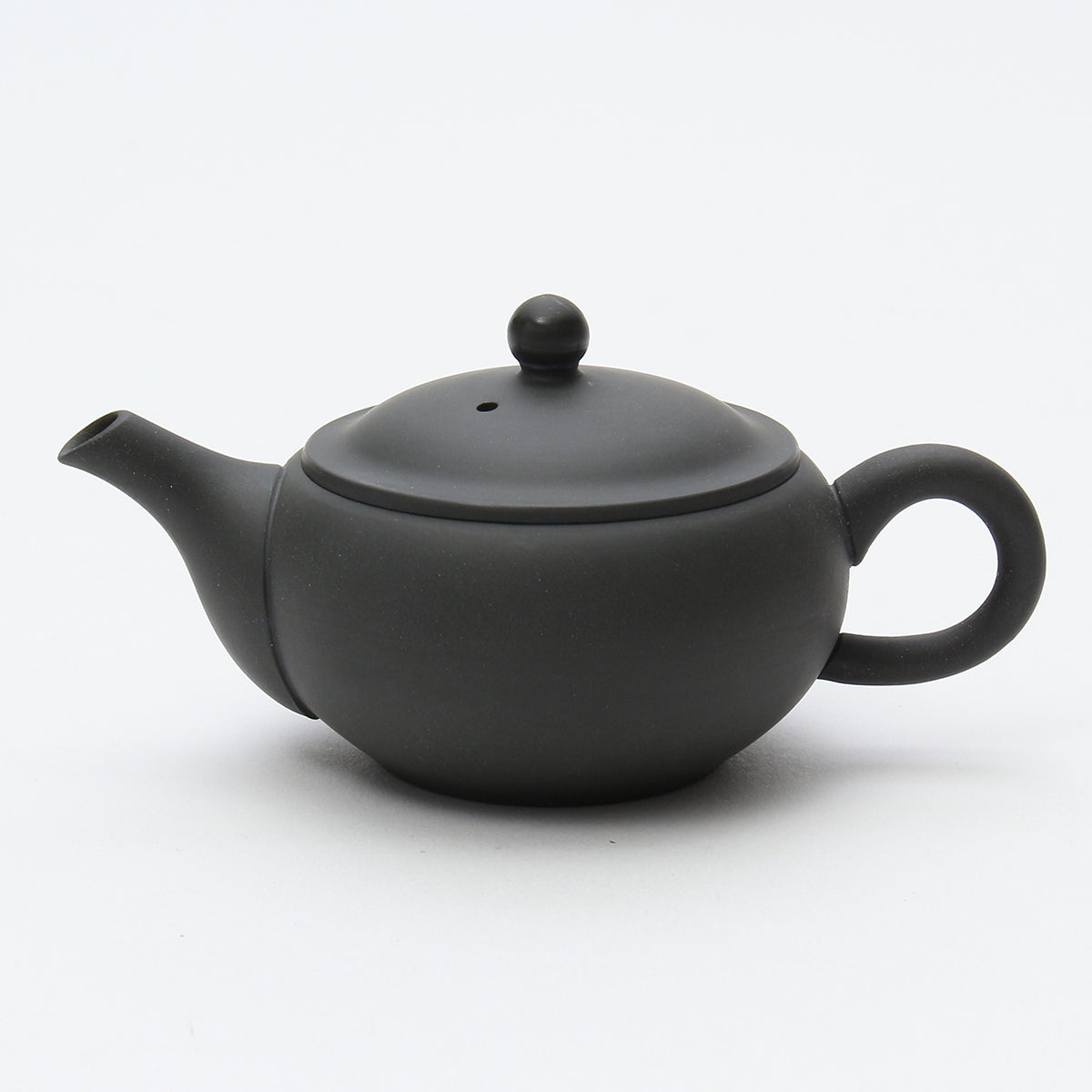
The ushirode style, sometimes called atode, places the handle opposite the spout, much like a Western teapot. The gesture feels familiar if that is the shape you learned first. It is also useful when you want a larger pour, whether for several cups at once or for a tea that does not demand the same quick stop-start rhythm as fine Sencha.
Back-handle pots often make sense for shared tea at the table. The grip is stable, the body can be a little larger, and the weight distribution feels comfortable when volume increases. In the FETC lineup, Sencha690 belongs here. It is a better fit when one small cup becomes three, or when tea is part of a longer breakfast rather than a brief solitary pour.
Uwade, or dobin, for larger and warmer brews
The top-handle style is called uwade, and when the body is fuller and more rounded you will often see the name dobin. The handle arches over the pot, leaving the sides free and making it easier to carry a larger volume from kettle to table. This is the Japanese teapot style many people enjoy for Hojicha or Bancha, teas that welcome a roomier pot and a more relaxed pace.
A dobin feels like a household object. Less tight, less exacting. Some are intended only for brewing and serving. Some traditional forms can also handle direct heat, so check the maker's guidance before placing one on a stove. What matters for most home drinkers is the generous capacity and the easy grip. In our collection, Acorn Dobin lives in that part of the map.
Houhin, almost nothing between hand and tea
A houhin has no handle at all. Small body, small lid, often a delicate lip for pouring. It is the pot most associated with Gyokuro and very high-grade Sencha, brewed at around 60°C — cool enough to hold the pot in your palm. Brewing like this is quieter and slower. The pot sits close to the palm, and the tea asks for attention.
If you already enjoy the dense umami of Gyokuro, a houhin makes sense in a way that is immediately physical. The smaller volume suits concentrated infusions. The absence of a handle keeps the form compact. And because low-temperature brewing is part of the point, the pot becomes inseparable from technique. Our article on how to brew Gyokuro shows why this shape and that tea belong so naturally together. For a full guide to these handleless shapes, see Shiboridashi and Houhin: Japan's Handleless Teapots.
Clay, glaze, and what they mean for your tea
Shape is the first thing you see in a Japanese teapot. Material is what you keep noticing later. A Japanese clay teapot holds warmth differently from porcelain. Unglazed clay changes with use. Even the same Sencha can feel sharper or rounder depending on the body it meets. None of this is magic, but it is not decoration either.
Unglazed clay, a pot that slowly records the tea
Unglazed clay, often described in Japanese teaware as yakishime, absorbs a trace of tea oil over time. That is why many tea drinkers dedicate one unglazed pot to one tea family. Sencha in one pot. Hojicha in another, if needed. With repeated use the surface darkens a little, the aroma settles in, and the pot develops character. Not damage, but a record of its use.
This is also why soap is a poor match for unglazed ware. The same porous surface that slowly takes on tea will also take on detergent. If you want a pot that becomes more personal the longer you own it, unglazed clay is part of the appeal. If you want one vessel for every tea in the cupboard, it may be too specific.
Tokoname and Banko, the two names you will meet first
If you are drawn to a Japanese clay teapot, the first regional name you will likely encounter is Tokoname. A Tokoname ware teapot comes from Aichi Prefecture, one of Japan's best-known pottery regions for kyusu. The clay is often red-brown, rich in iron, and many tea drinkers value a Tokoname teapot because it can soften the astringency of green tea into something rounder and calmer. It is an easy clay to understand in the cup.
By comparison, Banko ware comes from Mie Prefecture and tends toward purple-brown or darker clay bodies. A Banko ware pot is often lighter in the hand than people expect, and the clay is known for good heat resistance. For daily use, that combination can be very appealing: enough warmth retention for comfortable brewing, without the heavier feel some dense clay pots carry.
The choice goes beyond Tokoname and Banko, but these are the two references most buyers should know. For an everyday Sencha pot, Tokoname carries a long tradition of side-handle brewing. If you want something lighter and equally rooted in Japanese teaware history, Banko is a very sensible place to look.
Glazed ceramic and porcelain, versatile and easy to live with
Glazed ceramic does not absorb tea oils the way unglazed clay does. That makes it the most flexible option for people who move between teas. Sencha in the morning, Genmaicha at lunch, perhaps Hojicha. A glazed pot is easier to clean and less likely to carry yesterday's tea into today's infusion. For first-time buyers, that versatility matters more than romance.
Porcelain belongs in a similar conversation. It is usually thinner, often lighter, and it shows the color of the liquor beautifully, which can be useful when you are still learning how different teas look as they brew. If your main priority is clarity and ease, start there. If you want to compare clay, glaze, and porcelain in more detail, our article on tea ware materials lays out the broader landscape.
Material also works together with water. Soft water tends to show sweetness and umami more clearly, while harder water can mute or redirect them. The pot is only one part of the equation. Our piece on water and tea flavor is useful if you want to understand why the same Japanese teapot can behave a little differently from one kitchen to another. If you want to understand more about how water temperature affects extraction, our guide on tea and temperature is a useful companion.
How to choose the right kyusu
The right kyusu is usually not the rarest one, nor the one with the most elaborate story. It is the pot that suits the tea you actually brew and the number of cups you usually pour. When our team helps someone choose a first Japanese teapot, we almost always begin with three questions: what tea do you drink most, how many people are you serving, and do you want one pot for everything or a dedicated pot for one style?
- For daily Sencha, choose a yokode around 200 to 350 mL. This is the size range that keeps Japanese green tea lively across multiple short infusions. Tokoname clay and glazed ceramic both make sense here.
- For Gyokuro, think smaller. A houhin or a small side-handle pot keeps the pour controlled and the liquor concentrated, which suits low-temperature brewing.
- For Hojicha or Bancha, a larger ushirode or dobin often feels easier. Roasted teas are forgiving, and the larger body suits household pouring.
- For several tea types in one week, choose glazed ceramic. It is the most forgiving option when you do not want the pot to absorb and specialize.
Size matters more than many first-time buyers expect. A 320 mL pot such as our Sencha320 feels natural for one person, or for two modest cups. Small Kyusu and Flat Kyusu live in a similarly intimate range. Once you move toward a larger pot such as Sencha690, the experience changes. The Japanese teapot becomes less about minute control and more about serving. Neither is better in the abstract. It depends on whether the tea belongs to your own quiet corner or the whole table.

Look at the strainer: choose by how fine the leaf is
The filter deserves its own attention, as it directly affects how easily a kyusu pours. Ceramic mesh strainers, built into the clay body with holes distributed widely across the inner wall, allow quick and even drainage. Stainless steel mesh is easy to maintain and works reliably across a wide range of tea leaves. A traditional half-moon strainer arched directly inside the spout is a classic style best suited for larger-leaf Sencha and Bancha.
A fine strainer matters especially for deep-steamed Sencha (fukamushi) because the longer steaming time makes the leaf fragile, producing fine fragments during brewing. With a coarse strainer, those particles can flow into the cup, and the final pour may slow. The rule of thumb is simple: the smaller the leaf, the more drainage area you want. Our guide on brewing Sencha well shows why filter design and pour speed matter so much.
There is also the question of price. In our collection, the range runs from about JPY 6,600 to JPY 15,180, which is a wide enough spread to allow both practical entry points and more refined handmade pieces. The point is not to spend for prestige. It is to buy a pot you will actually reach for. If you want to compare shapes and sizes directly, our FETC teapot collection is the clearest way to see the differences at a glance.
Taking care of a kyusu that will age well
A kyusu is not difficult to care for, but it does ask for a little consistency. Rinse it with hot water after each use. Empty the leaves promptly. Leave the lid off and let the pot air dry fully before you return it to the shelf. These are small habits, but they keep the aroma clean and prevent lingering moisture from making the pot smell stale.
Skip soap, especially with unglazed clay. A dedicated Japanese clay teapot is meant to absorb the memory of tea, not detergent. Over time the surface may deepen in color and the inside may take on a soft sheen. That is usually a good sign. The pot is settling into use. If that kind of seasoning makes you nervous, start with a glazed kyusu instead. It is easier to clean, more neutral across tea types, and much more forgiving in a busy kitchen.
The simplest rule is this: treat the pot as a working tool, not a fragile ornament. A kyusu should become easier to trust the more you use it. Better balance in the hand. Faster judgment of the pour. A lid that feels familiar before the water is even in the pot.
At FETC, we tend to think a kyusu is at its best when it disappears into the act of making tea. Not flashy, not fussy, just right for the leaf and the moment. A side handle for daily Sencha, a houhin for a careful Gyokuro, a dobin for a warmer, larger pour. If you are still exploring which types of Japanese tea suit your cup, that is a useful place to start before choosing a pot.
The catechins in green tea interact gently with unglazed clay over time, which is one reason dedicated clay pots are often described as improving the feel of astringency in Sencha. Choosing a Japanese teapot does not need to feel complicated. Start with the tea you drink most. Choose the size that matches your cups. Decide whether you want the living character of unglazed clay or the flexibility of glaze. The rest follows naturally, one pour at a time.
Frequently Asked Questions
What size kyusu should we choose for daily Sencha?
For daily Sencha, we’d start with a yokode kyusu around 200–350 mL. That size supports short, repeated infusions and lets the tea pour out before fine leaves over-steep.
How are yokode, ushirode, dobin, and houhin different?
They mainly differ by handle placement and purpose. Yokode gives quick one-hand pours, ushirode suits larger table servings, dobin carries more tea, and houhin fits low-temperature Gyokuro.
Should a first kyusu be unglazed clay or glazed ceramic?
If you brew mostly one tea, unglazed clay can slowly take on that tea’s aroma and soften the feel of Sencha. For switching among Sencha, Genmaicha, or Hojicha, glazed ceramic is easier.
Which strainer works best for deep-steamed Sencha?
Fukamushi Sencha has fine, fragile leaves, so a wide ceramic mesh is especially useful. It drains quickly, reduces clogging, and keeps the pot interior open for the leaves.
Can we wash a kyusu with soap?
Rinse with hot water, empty leaves promptly, and dry with the lid off. Avoid soap on unglazed clay because the porous surface can hold detergent scent; glazed ware is more forgiving.