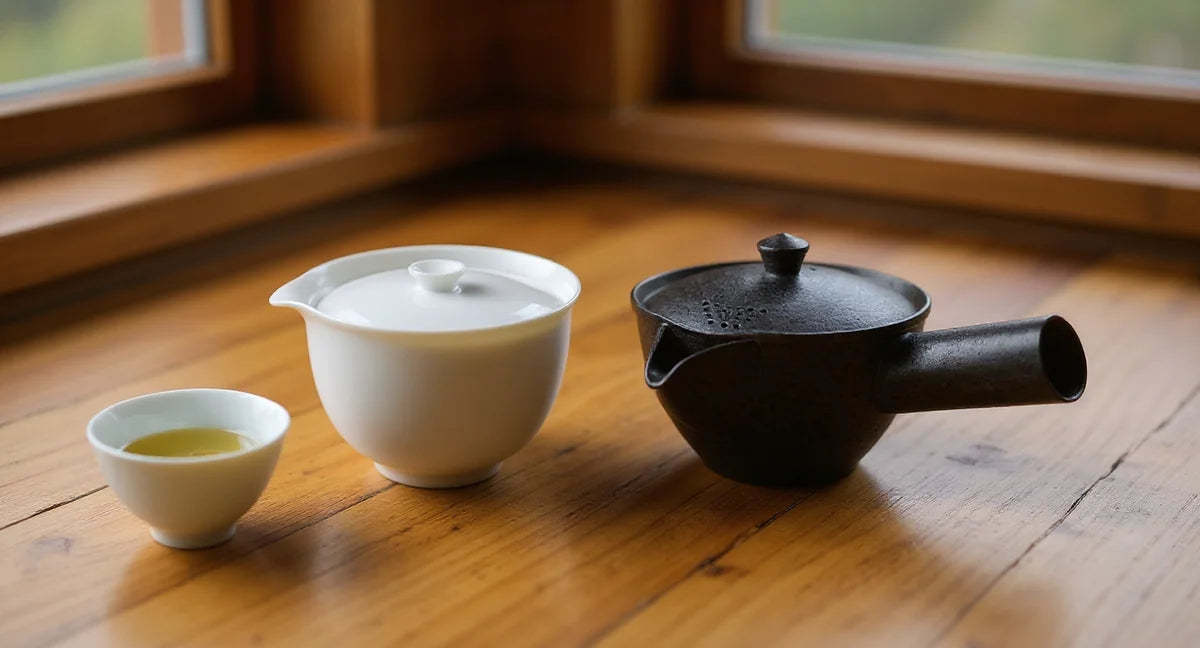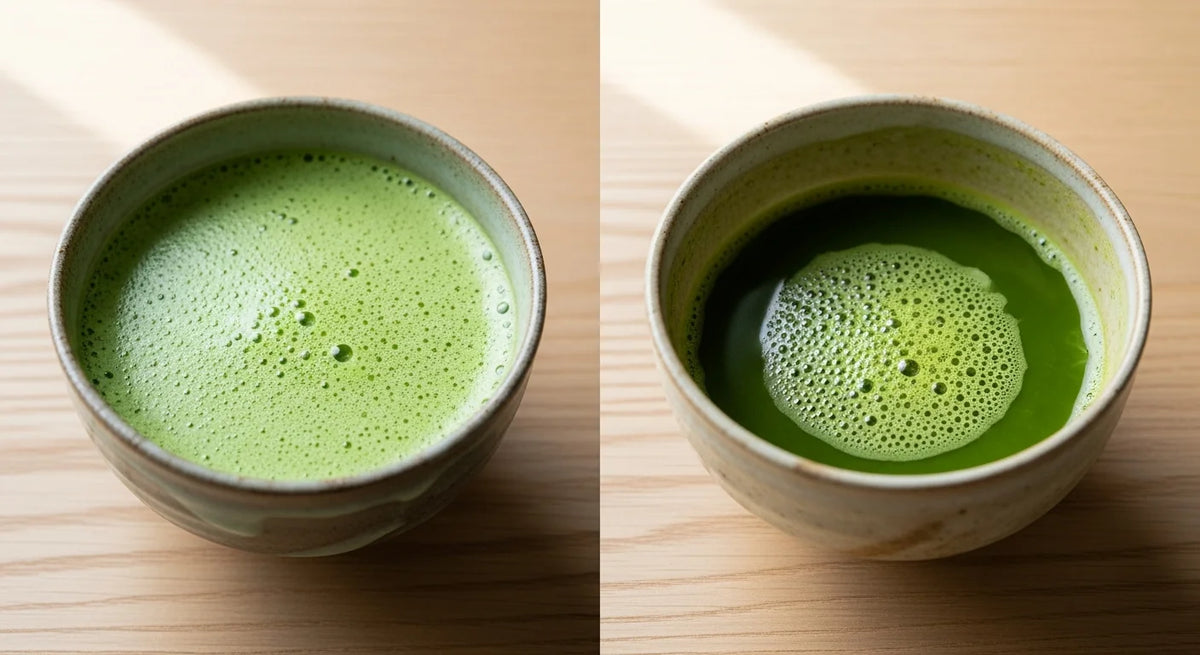
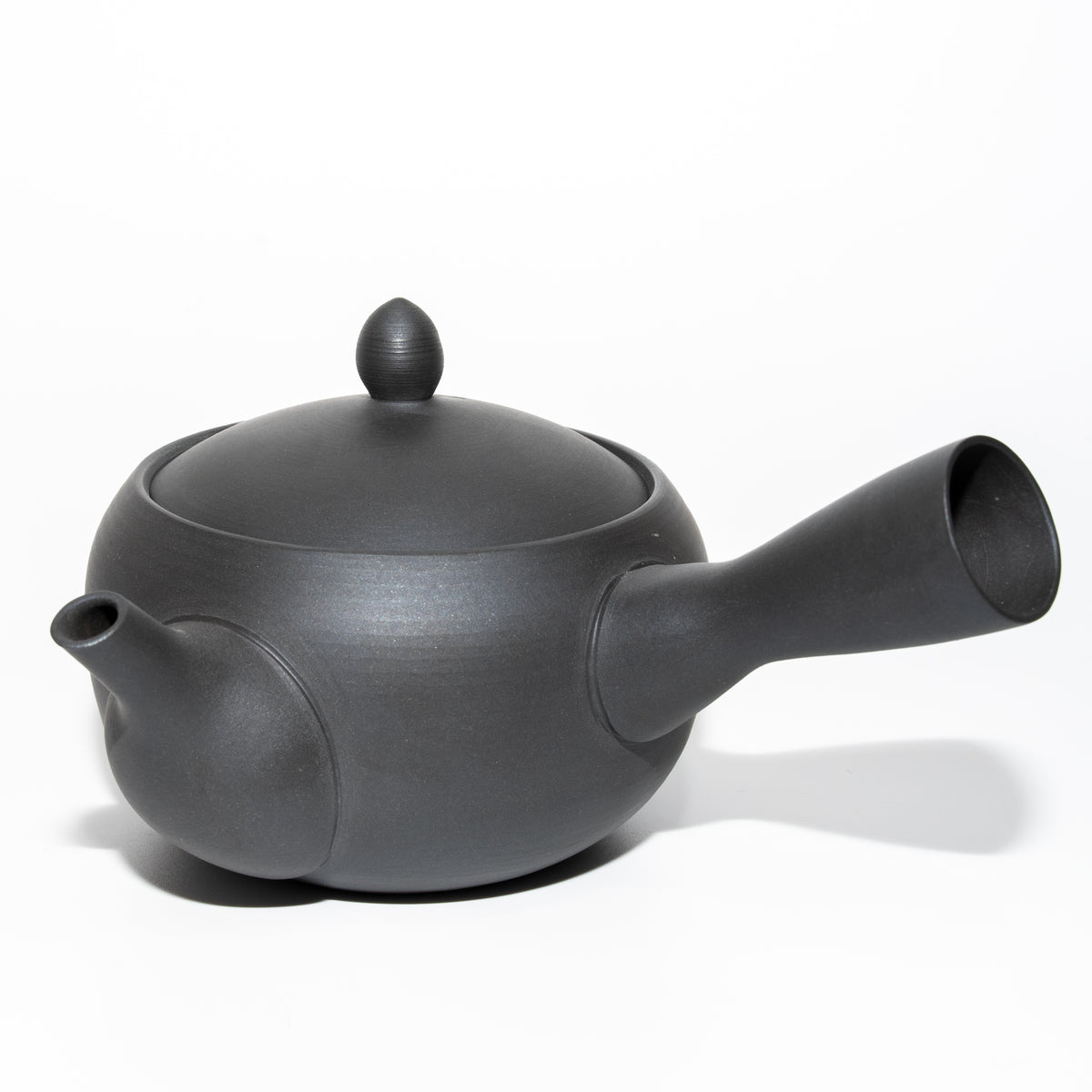
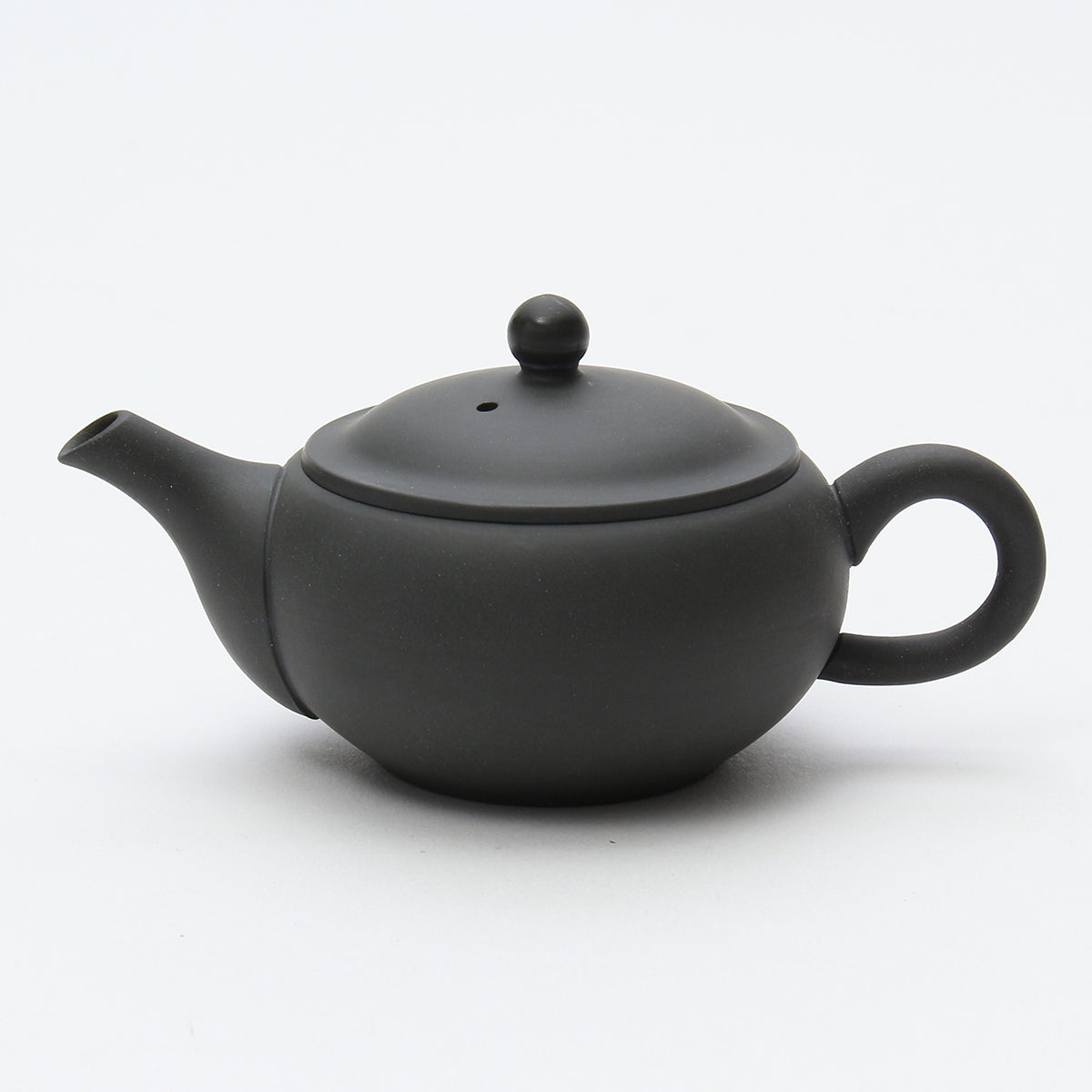

Floral lift, toasted grain, that mineral warmth that lingers after a sip of rock oolong. If you are searching for oolong tea caffeine, the short answer is about 20mg per 100mL in Japan's food composition tables. But that single number hides a much wider range. A leaf-heavy loose-leaf brew can climb well above 50mg.
The official benchmark is useful. It gives us a shared starting point, and it tells us that oolong is usually milder than coffee. Still, the benchmark comes from one brewing condition: 15g of leaves, 90C water, 650mL, 30 seconds. Change the leaf, change the vessel, change the steep, and the cup changes with it.
That is part of oolong's charm. High mountain teas feel airy and open. Da Hong Pao and other rock oolongs land darker and firmer, with a mineral weight that sits differently than the floral lift of a high mountain cup. Bottled oolong and loose-leaf oolong are not really the same drink. Once we look past the headline number, the question becomes more interesting: how much caffeine is actually in your cup, and what can you do with that knowledge?
How much caffeine is actually in oolong tea?
The official benchmark for brewed oolong tea is 20mg of caffeine per 100mL. Useful, but incomplete. That figure comes from one test brew, not from every floral Taiwanese-style oolong, every roasted rock tea, or every ready-to-drink bottle. The leaf matters. The recipe matters.
Japan's Standard Tables of Food Composition place brewed oolong tea at 20mg per 100mL under a specific method: 15g of leaves, 90C water, 650mL of water, and a 30-second infusion. In that standard, a 150mL cup lands around 30mg. A 250mL mug lands around 50mg. Our broader guide to oolong tea ingredients gives the bigger picture, but caffeine is where the variation becomes easiest to feel.
- Official brewed benchmark: 20mg per 100mL
- Standard test brew: 15g leaves, 90C, 650mL, 30 seconds
- Commercial oolong dry leaf in Boros et al. (2016): 10.96 to 39.71mg of caffeine per gram
- Average across 1,398 Chinese oolong samples in Yong et al. (2022): about 27mg per gram
Those dry-leaf numbers explain why one "oolong tea caffeine" answer never feels complete. Some leaves start richer than others. Some brews use 3g in a mug, others 6g to 8g in a small pot. Bottled oolong is usually designed for easy drinking and lower concentration. Loose-leaf oolong can be leaf-heavy, short-steeped, and markedly brisk. Same name. Different drink.
In practice, that means a light 120mL infusion may stay below 20mg if the tea is brewed cool and easy, while a stronger 150mL to 200mL serving can move well past 50mg. The official number is not wrong. It is just a midpoint, not a ceiling.
Why is the range so wide?
Oolong is a spectrum, not a single style. Oxidation can run from about 15 percent to 85 percent, leaves can be tightly rolled or long and twisted, and brewing ratios can shift fast. That is why two honest cups of oolong can feel almost unrelated in caffeine terms.
Oxidation level shapes the caffeine profile
Lightly oxidized oolongs, often around 15 to 25 percent, tend to drink closer to green tea. Think high mountain oolong or Baozhong (a lightly oxidized Taiwanese oolong): floral aroma, greener leaf, softer extraction. Heavily oxidized styles such as Oriental Beauty (a highly oxidized, insect-bitten Taiwanese oolong), often around 60 to 85 percent, can drink closer to black tea and often give a stronger caffeine impression, especially when brewed hot and full-bodied.
That does not mean oxidation alone determines the number. Tender buds, picking season, leaf-to-water ratio, and steep count all matter too. But "semi-oxidized" covers a huge landscape, which is why the category is so slippery. Our article on semi-oxidized tea and oolong types maps that spectrum more clearly.
Does roasting lower caffeine?
Usually, not by much. Heavily roasted oolongs such as Da Hong Pao or other rock teas may taste darker, toastier, and calmer, but roasting changes flavor far more than it changes caffeine. The cup feels softer because the aroma shifts toward wood, grain, caramel, and minerals, not because the stimulant disappears.
Hojicha is the clearest comparison. It is roasted, but Japan's food composition tables still list brewed Hojicha at 20mg per 100mL, the same benchmark as Sencha. Oolong works similarly. Roast reshapes the leaf's perfume. It is not a reliable shortcut to low caffeine. We go deeper into that step in our piece on the manufacturing process of semi-oxidized tea.
Oolong tea vs coffee, green tea, and black tea
By concentration, oolong sits in the middle. It is lower than coffee, lower than black tea, far below Gyokuro, and close to Sencha or Hojicha. But caffeine alone does not explain how a drink feels. Tea also brings theanine and polyphenols, which change the texture of alertness.
Using Japan's food composition tables as a common reference, the per-100mL comparison looks like this:
- Gyokuro: 160mg
- coffee: 60mg
- black tea: 30mg
- Sencha: 20mg
- oolong: 20mg
- Hojicha: 20mg
- Genmaicha: 10mg
Those concentration numbers help, but serving size still changes the real-world total. A 100mL Gyokuro pour already carries 160mg. A 150mL cup of standard oolong is about 30mg. A 250mL coffee at 60mg per 100mL would land around 150mg under the same table. If you want a broader map of Japanese teas, our guide to green tea caffeine shows how widely tea can vary even within one family.
Then there is the feel of the caffeine. Tea contains theanine, an amino acid associated with calmer attention. In controlled trials, Owen et al. (2008) found that 100mg of L-theanine plus 50mg of caffeine improved attention, and Giesbrecht et al. (2010) reported that 97mg of theanine plus 40mg of caffeine increased alertness while reducing tiredness. That is one reason oolong can feel steadier than coffee, even when the numbers overlap. We explain the chemistry in more detail in our articles on tea ingredients and caffeine and tea ingredients and theanine.
Oolong also brings its own twist. In a 2020 crossover trial by Zhang et al. at the University of Tsukuba, 12 healthy, non-obese men drank 700mL a day of oolong, a caffeine-only beverage, or placebo for 14 days per condition. Both oolong and caffeine alone increased 24-hour fat oxidation by about 20% versus placebo, without increasing energy expenditure. During sleep, the respiratory quotient (RQ) was lower with oolong than with caffeine alone; sleep architecture did not differ significantly among conditions. Caffeine matters. Oolong's other compounds matter too.
How to adjust the caffeine in your cup
You can change oolong tea caffeine without giving up oolong. Temperature, steep count, leaf amount, and timing all move the number. In studies by Lantano and colleagues and by Lin and Luo at National Ilan University, oolong steeped at 4°C for 12 to 24 hours released about the same amount of caffeine as a hot brew or more. Later steeps are usually lighter. Even dropping from 90C to about 80C can make a strong cup feel noticeably gentler.
Cold brew still contains caffeine, and Lantano and colleagues note that the amount in a cup depends on how much leaf you use. Yang and colleagues found that caffeine entered cold water more slowly at first, while longer steeping continued to release caffeine. Overnight oolong in the refrigerator often tastes rounder and softer than the same leaf brewed hot. Our guide to cold and ice brew tea walks through the method.
Second, use oolong the way it wants to be used: across multiple steeps. The first infusion usually takes the largest share of readily available caffeine. The second and third steeps are often lighter. Around 80C will usually extract less caffeine than a near-boiling brew, especially when you trim the leaf quantity by 1g to 2g as well. For the fundamentals, our article on how to brew oolong tea gives a good starting ratio.
- Standard benchmark: 20mg per 100mL, so a 150mL cup is about 30mg
- EFSA guidance for healthy adults: up to 400mg of caffeine per day
- EFSA guidance during pregnancy: up to 200mg per day
- A single dose of 100mg close to bedtime may affect sleep
- The WHO similarly recommends that pregnant women reduce caffeine intake if they are consuming above 300mg per day
Those limits are broad, not personalized. Still, they make the math clearer. Four standard 150mL cups of oolong would total about 120mg. Two stronger 50mg cups get you to the same place faster. And once a single serving approaches 100mg, bedtime becomes more relevant. As a practical rule, we usually stop 2 to 3 hours before sleep if the brew is concentrated, or choose later steeps instead.
At FETC, we do not find one fixed number very useful for oolong. Morning rock tea, afternoon high mountain oolong, each asks for a different cup. Variety, oxidation, and brewing all shift the equation. Knowing the range lets us choose with a little more freedom and a little less guesswork. That spread is exactly what makes oolong so adaptable across a day, and across seasons.
Caffeine is not a number to fear. It is a number to choose by. Once you know whether your cup is closer to 20mg or closer to 60mg, oolong becomes easier to place in a real day, and easier to enjoy on its own terms.
This article is general information, not medical advice. If you have specific concerns about caffeine and your health, consult a qualified healthcare professional.
References
- MEXT — Japanese Standard Tables of Food Composition — official Japanese food-composition database covering tea entries.
- Food Safety Commission of Japan — Caffeine Fact Sheet — Japanese food-safety fact sheet on caffeine.
- EFSA — Safety of caffeine (2015) — scientific opinion on the safety of caffeine intake.
- WHO — Caffeine intake during pregnancy — guidance page on caffeine intake during pregnancy.
- Boros et al. (2016), Pharmacognosy Magazine — analysis of theanine and caffeine in commercial tea infusions.
- Yong et al. (2022), Food Chem. Toxicol. — tea caffeine exposure assessment based on Chinese tea samples and consumption data.
- Zhang et al. (2020), Nutrients — human study on caffeine and oolong tea beverages.
- Owen et al. (2008), Nutritional Neuroscience — human study on L-theanine and caffeine in attention tasks.
- Giesbrecht et al. (2010), Nutritional Neuroscience — human study on L-theanine and caffeine in cognitive performance tasks.
Frequently Asked Questions
Does oolong tea have more caffeine than green tea?
Using Japan's standard brewed-tea benchmark, oolong tea and sencha are both listed at 20mg of caffeine per 100mL. The actual cup can still vary because the leaf type, oxidation level, leaf amount, water temperature, and steep time all matter. Gyokuro is the major exception among Japanese green teas, with a much higher benchmark of 160mg per 100mL.
Can I drink oolong tea at night?
A standard 150mL cup of oolong tea is about 30mg of caffeine, but stronger loose-leaf brewing can go higher. EFSA notes that a single 100mg dose close to bedtime may affect sleep, so we usually stop 2 to 3 hours before bed if the brew is concentrated.
How much oolong tea is okay during pregnancy?
EFSA uses up to 200mg of caffeine per day as a pregnancy guideline, while WHO recommends reducing intake when it is above 300mg per day. At the standard benchmark, a 150mL cup of oolong tea is about 30mg. These limits are broad, not personalized; if you have specific concerns about caffeine and your health, consult a qualified healthcare professional.
Does cold brew oolong really have less caffeine?
Yang and colleagues found that caffeine entered cold water more slowly at first, while longer steeping continued to release caffeine. In studies by Lantano and colleagues and by Lin and Luo at National Ilan University, oolong steeped at 4°C for 12 to 24 hours released about the same amount of caffeine as a hot brew or more. The leaf amount still matters, so using extra tea leaves can raise the caffeine even in a cold brew.
How can I reduce caffeine when brewing oolong tea?
Use slightly less leaf, lower the water temperature toward about 80C, shorten the steep, or drink the second and third infusions instead of only the first. The first steep often pulls the largest share of readily available caffeine. Roasting changes aroma and taste much more than caffeine, so a dark roasted oolong is not automatically low caffeine.