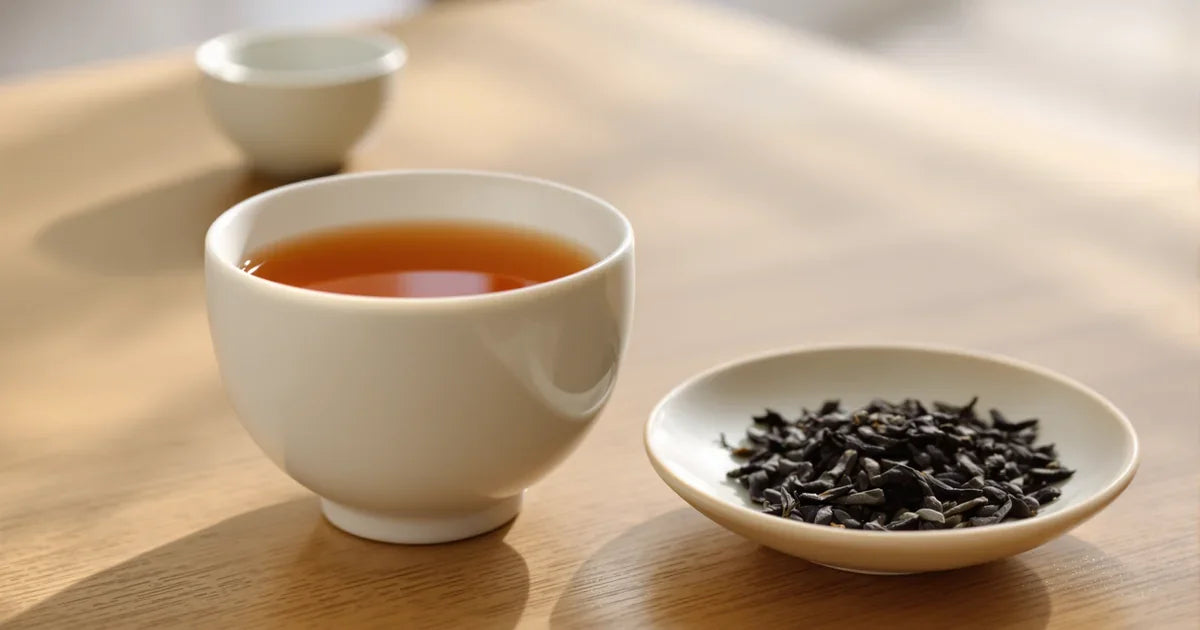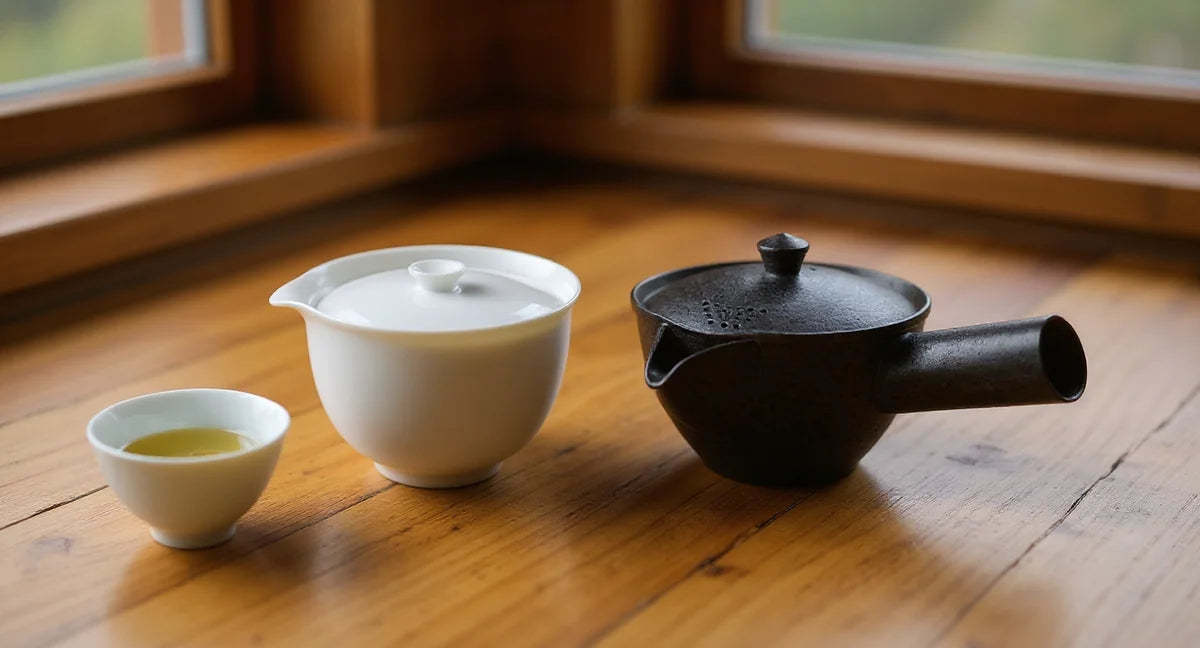
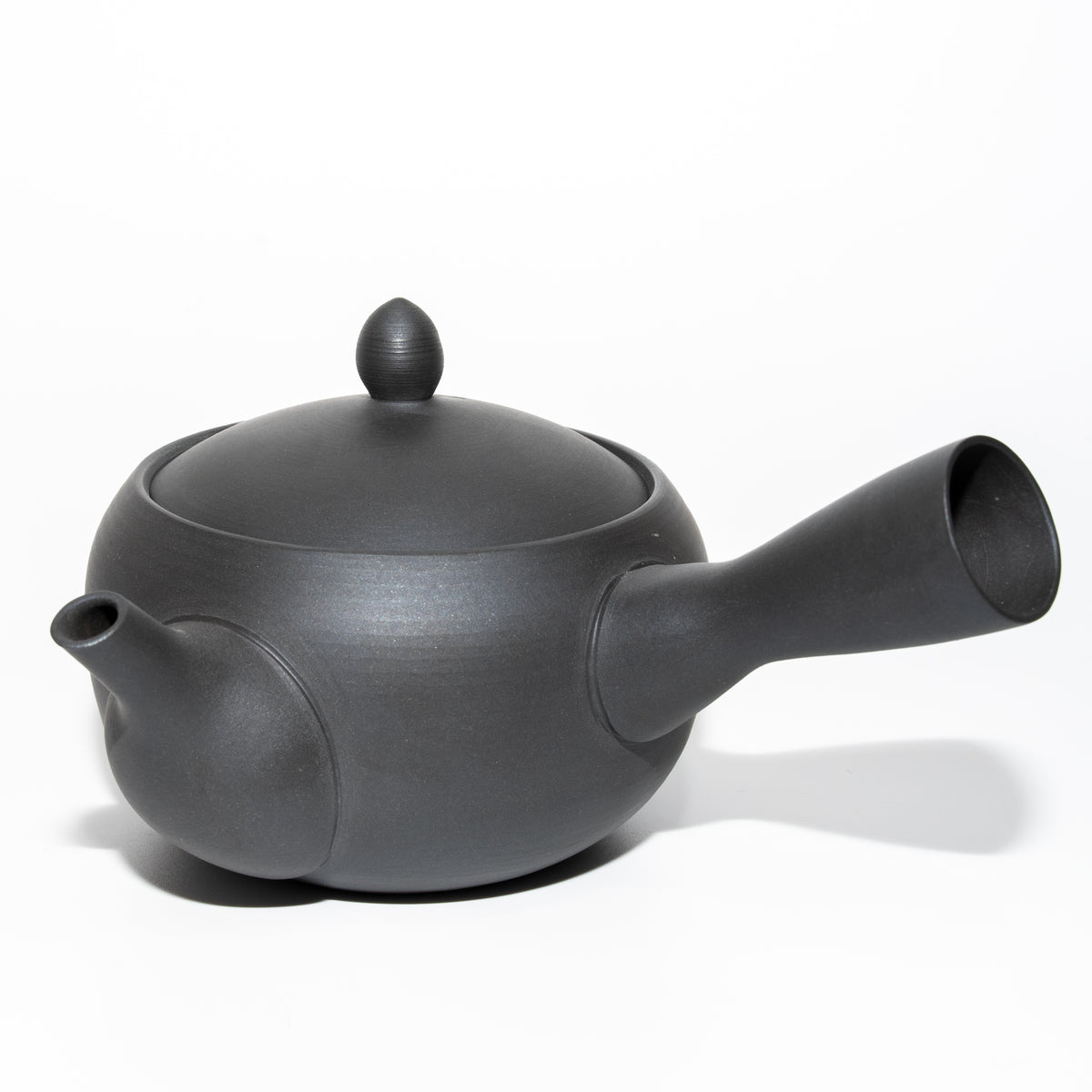
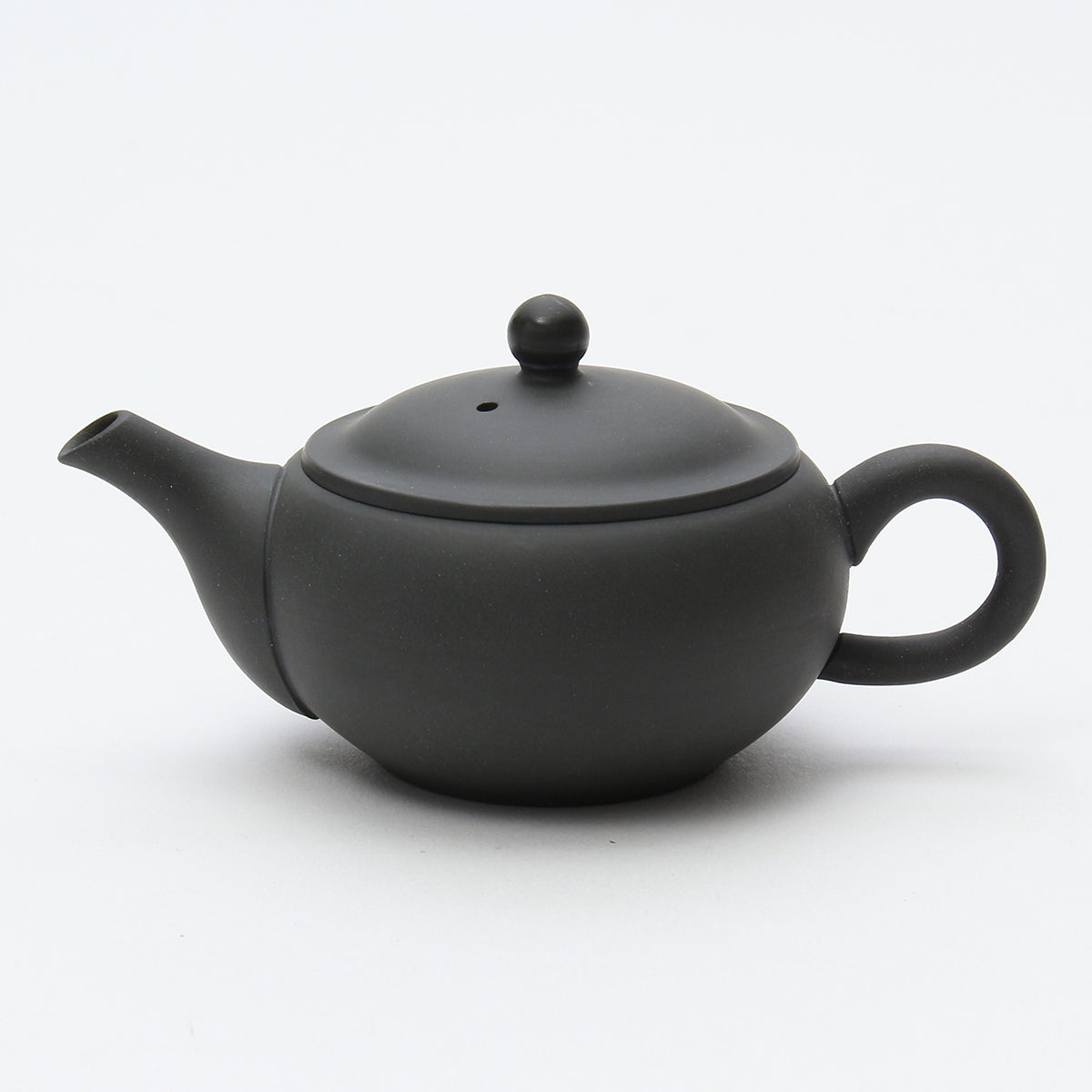

The floral lift of Darjeeling. The malty depth of Assam. The soft, honeyed sweetness of Japanese-grown black tea. Three very different cups. Three different moods. Yet all of them begin with the same leaf.
When people search for types of black tea, the names can feel endless. The logic underneath is simpler. Flavor changes with region, cultivar, and process. A tea grown in cool Himalayan air will not taste like one from a humid river plain, and a Japanese farm will handle its leaf differently again.
That is why black tea is easiest to understand from the cup outward. Start with aroma and texture. Then trace them back to altitude, rainfall, plant genetics, and the way the maker rolls, oxidizes, and dries the leaf. Once you see those patterns, the map becomes much easier to read.
What makes black tea "black tea"
Black tea is not a different plant from green tea or oolong. It is the fully oxidized expression of the same leaf, shaped by air, pressure, and time. That fuller oxidation gives black tea its coppery liquor, deeper aroma, firmer tannin structure, and the weight people often describe as body.
All true tea comes from Camellia sinensis, but the processing path changes the result. Green tea is heated early to stop oxidation. Oolong is only partly oxidized. Black tea is taken much further. Once the leaf is withered and rolled, enzymes in the bruised cells react with oxygen in the air. The aroma darkens. The liquor deepens. The leaf builds the structure that makes black tea feel rounder, fuller, and sometimes pleasantly brisk.
That does not mean every black tea tastes heavy. Oxidation creates a framework, not a single flavor. Darjeeling can still feel airy. Keemun can still feel graceful. Japanese black tea can still feel soft and sweet. If you want the broader family tree, our guide to oxidized tea and black tea gives the bigger picture, and our overview of the manufacturing process of oxidized tea shows where that color and body actually come from.
The world's major black teas by region
The main types of black tea are easiest to understand by region. Mountain air, monsoon rain, cultivar choice, and factory style all leave a mark. A Darjeeling first flush and an Assam breakfast tea may share a species name, but they do not behave like the same drink.
The quickest way to sort black tea is to think in families of place. India gives us both floral high-grown teas and deep, malty lowland teas. Sri Lanka teaches how altitude changes texture. China shows how refined or smoky black tea can be. East Africa brings briskness and blending power. Each region is a flavor logic, not just a pin on a map.
| Tea | Region | Flavor profile | Best for |
|---|---|---|---|
| Darjeeling | India | Floral, muscatel, light body | Straight |
| Assam | India | Malty, full body, brisk | Milk tea, breakfast |
| Nilgiri | India | Clean, balanced, fragrant | Iced tea |
| Uva | Sri Lanka | Menthol-like, crisp, brisk | Straight |
| Dimbula | Sri Lanka | Balanced, versatile | Everyday, beginners |
| Nuwara Eliya | Sri Lanka | Pale, floral, bright | Straight, afternoon |
| Keemun | China | Orchid fragrance, cocoa, long finish | Straight |
| Lapsang Souchong | China | Pine smoke, resinous | Food pairing |
| Kenya CTC | East Africa | Bright, brisk, clean | Blends, milk tea |
| Wakoucha | Japan | Soft, low astringency, sweet | Japanese food, sweets |
India, Darjeeling, Assam, Nilgiri
Darjeeling grows along Himalayan foothills at roughly 600 to 2,000 meters. Many gardens still work with China-type cultivars, and that helps explain the tea's lifted, fine-boned character. First flush Darjeeling, picked in spring, can taste floral, green, and almost shimmering. Second flush, picked as summer settles in, turns deeper and fruitier, with the muscatel note that made Darjeeling famous. This is why it is so often called the "Champagne of teas." We usually want it straight, without milk, so those small aromatic turns stay visible.
Assam sits at the other end of the spectrum. It grows in the warm, low river plains of northeastern India, where large-leaf Assam cultivars thrive in humid conditions. The cup is darker, broader, and unmistakably malty. Much of Assam is made as CTC, short for crush-tear-curl, a manufacturing style that breaks the leaf into small pellets and brews fast, strong, and consistent. That is exactly why Assam became such a natural base for milk tea and breakfast blends.
Nilgiri, from the southern highlands of India, often gets less attention than the other two, but it deserves a place in the conversation. Good Nilgiri is clean, balanced, and fragrant without pushing too hard in any direction. It also holds up especially well over ice, staying bright rather than muddy. If Darjeeling is all about lift and Assam is all about depth, Nilgiri is the quiet middle. For more background on how these regions developed, our article on the history of tea in India is worth reading.
Sri Lanka, Ceylon tea and the altitude factor
Sri Lanka's black tea is sold under the old name Ceylon, but the real key is altitude. High-grown teas, from above about 1,200 meters, tend to be light, floral, and brisk. Medium-grown teas usually sit in the middle, with more body and a balanced finish. Low-grown teas move toward thickness and strength. In Ceylon, elevation is not background detail. It is the structure of the shelf.
Nuwara Eliya is the classic high-grown reference point. Cool air and elevation give it a pale, lifted profile, often with floral notes and a bright snap that many people compare to mountain teas elsewhere. Uva, another high-grown district, is often named among the world's three great black teas. Its signature is a cool, menthol-like character that can feel almost wintergreen at the edge of the cup. When you taste Uva, you understand how specific a place can be.
Dimbula is often the easiest starting point because it does so many things well. It can be clean enough to drink straight, but it also has enough shape for lemon, sugar, or a little milk. In that kind of service, porcelain keeps the liquor color easy to read. That versatility is part of why Ceylon tea has remained such a reliable everyday category. If you want to go deeper into the island's tea regions and their colonial history, see our guide to the history of tea in Sri Lanka.
China, Keemun and Lapsang Souchong
Chinese black tea often leans less on brute strength and more on aromatic detail. Keemun, from Qimen in Anhui, is one of the best examples. A good Keemun can carry orchid-like fragrance, gentle tannins, a little cocoa or dried fruit, and a finish that seems to keep unfolding after the sip is gone. It is commonly counted among the world's three great black teas, and it rewards patient drinking.
Lapsang Souchong, or Zhengshan Xiaozhong, moves in the opposite direction and is impossible to confuse with anything else. Traditionally made in Fujian and pine-smoked during drying, it is often described as the original black tea style, said to have taken shape around 1646. The smoke can be resinous, campfire-like, even medicinal if the style is assertive. Polarizing, yes. But with cheese, roast meats, or mushrooms, it can be startlingly good. We trace more of that story in our article on the history of tea in China.
Africa, Kenya and Rwanda
Kenya is often cited as the world's third-largest tea producer, and much of its black tea is built for clarity and drive. CTC production dominates, which gives a bright, brisk cup that takes milk well and also disappears beautifully into blends. That clean force is why Kenyan tea underpins so many supermarket breakfast teas, even when the box foregrounds another country. We cover the broader context in our piece on the history of tea in Kenya.
Rwanda is smaller, but worth noticing. High elevations and cooler conditions can give its black teas a transparent sort of depth, firm enough for breakfast, yet often tidier and more fragrant than people expect. If Kenya is the workhorse of modern black tea blending, Rwanda shows how much nuance East African tea can carry.
Japanese black tea, wakoucha
Wakoucha, Japanese black tea, stands apart for its soft edges. It often carries less astringency, more quiet sweetness, and a kind of clarity that feels familiar if you already drink Japanese green tea. The surprise is not that Japan makes black tea. It is how distinctly Japanese the result can taste.
In Japan, black tea did not become the dominant tea culture. Sencha, Gyokuro, Matcha, and Hojicha shaped that landscape. But when Japanese farmers make black tea, they bring the same agricultural precision with them: careful plucking windows, close attention to cultivar, and a preference for clean, transparent aroma over sheer force. The processing is still black tea processing, fully oxidized and dried, but the sensibility behind it comes from Japanese tea growing.
That is why wakoucha often feels gentler than drinkers expect. The astringency is usually lower. The sweetness shows up earlier. The finish can feel soft rather than gripping. This makes it remarkably easy to pair with Japanese food and sweets. Dorayaki, castella, bean paste confections, butter cookies, even lightly seasoned savory dishes. Wakoucha rarely tries to overpower the table. It sits beside food in the same way many Japanese teas do, with calm confidence.
Cultivar matters here as much as region. Benifuuki is a good example. It was bred for black tea production, and it tends to produce a cup with real aromatic presence and enough body to feel complete without turning rough. Later, the cultivar also became better known in Japan for methylated catechins that appear in discussions around allergy-season products, which is why its name shows up outside tea circles too. We go into that leaf in more detail in our article on Benifuuki.
Izumi is rarer and especially prized for fragrance. When it is made well, the aroma can feel floral in a high, delicate way, almost like the first lift from the cup is doing the whole introduction for you. Production is limited, so it is not a cultivar most people encounter by accident. But it is one of the clearest examples of how expressive Japanese black tea can be. We have a separate profile on Izumi if you want to follow that thread.
Many Japanese tea cultivars also sit on a genetic bridge between Assam and China groups, and that matters. Assam lineage can bring body and aroma. China lineage can bring finesse, smaller leaves, and a different balance of sweetness and tannin. When Japanese growers work with those materials, they are not imitating Darjeeling or Assam. They are making a black tea that still carries the logic of Japanese tea agriculture. Our notes on the Assam group and China group help explain why these family traits show up in the cup.
For us, this is the most interesting part of the black tea conversation. The leaf is familiar, the oxidation is familiar, and yet the result can feel newly composed. Less edge. More softness. A black tea that makes sense with the rhythms of a Japanese table.
Blends and flavored teas
Not every black tea is meant to express a single garden. Some are built for balance, some for milk, some for perfume. Blends and flavored teas are not lower forms of black tea. They just begin with a different goal: consistency, pairing, or a very specific aromatic effect.
Single origin teas and blends answer different questions. A single origin tea asks what one place, one harvest, or one estate tastes like. A blend asks what happens when you combine strengths. Brightness from one region. Malt from another. A cleaner finish from a third. Neither approach is automatically better. They are different kinds of craftsmanship.
Earl Grey is the clearest example of flavored black tea done on purpose. Bergamot oil is layered over a black tea base, usually Ceylon, China tea, or a combination that keeps enough structure beneath the citrus perfume. The best versions smell lifted rather than soapy, and the base tea still matters. English Breakfast usually moves in another direction, toward utility and comfort. Assam and Kenyan teas often form the backbone because they bring enough body to stand up to milk.
Chai begins with still another intention. Traditionally, a sturdy Assam-style base is simmered with spices such as cardamom, cinnamon, ginger, clove, and black pepper. The tea is not there for delicacy. It is there to hold its own inside a richer, sweeter, spiced drink. That is why it works. Once you think in terms of purpose, the category becomes clearer: Earl Grey is about aroma, English Breakfast about structure, chai about extraction and spice.
Which black tea should you choose?
Choosing among types of black tea gets easier when you start with the cup you want. Straight or with milk. Hot or iced. Morning or late afternoon. The most useful question is often not which tea is best, but which tea fits the moment in front of you.
We find that a few simple use cases are more helpful than memorizing every origin name at once. Once you know the shape you want in the cup, the regional map starts making sense. And once you have the right leaf, technique matters too. Our guide on how to brew black tea well is a good next step.
- For straight tea, reach first for Darjeeling first flush, Keemun, Nuwara Eliya, or wakoucha. These are teas where aroma and aftertaste do much of the work. Milk tends to hide what makes them special.
- For milk tea, Assam, Uva, Kenyan CTC, and English Breakfast are the dependable choices. They have the body, briskness, or malty weight to stay present once dairy enters the cup.
- For iced tea, Nilgiri, Dimbula, and Earl Grey are especially useful. They stay clear, aromatic, and refreshing even when chilled, rather than collapsing into flatness.
- For a first cup, Dimbula or wakoucha is often the kindest starting point. Both tend to be balanced, easy to read, and broad enough in appeal that you can discover your preferences without fighting the tea.
We are a Japanese tea company, but every time we look at black tea we see the same leaf taking a completely different path. A cold mountain wind in Darjeeling. Floodplains in Assam. Pine smoke in Fujian. Careful cultivar work on a Japanese farm. Learn those paths, and choosing becomes much easier.
It also becomes more enjoyable. You stop shopping by label alone and start shopping by texture, aroma, and occasion. Some days call for brightness. Some for malt. Some for the quiet sweetness of Japanese black tea. If you want one more angle on the cup, our article on black tea ingredients looks at what sits inside the brew itself.
Frequently Asked Questions
How is black tea different from green tea and oolong?
Black tea, green tea, and oolong all come from Camellia sinensis. Black tea is fully oxidized after withering and rolling, which gives it deeper color, fuller aroma, and firmer tannin.
Which black teas are best for milk tea?
We would start with Assam, Uva, Kenya CTC, or English Breakfast. They have enough malt, body, or briskness to stay present in the cup once milk is added.
What makes wakoucha different from Assam or Darjeeling?
Wakoucha is Japanese-grown black tea, often softer, lower in astringency, and gently sweet. It is not trying to copy Assam depth or Darjeeling lift; it reflects Japanese tea farming.
How should wakoucha be served to enjoy its softer character?
We usually serve wakoucha straight so milk does not hide its aroma and aftertaste. Its soft sweetness also pairs well with Japanese food and sweets.
Why are Darjeeling, Uva, and Keemun often grouped together?
They are often treated as three classic reference points: Darjeeling for floral muscatel lift, Uva for crisp menthol-like briskness, and Keemun for orchid fragrance and a long finish.