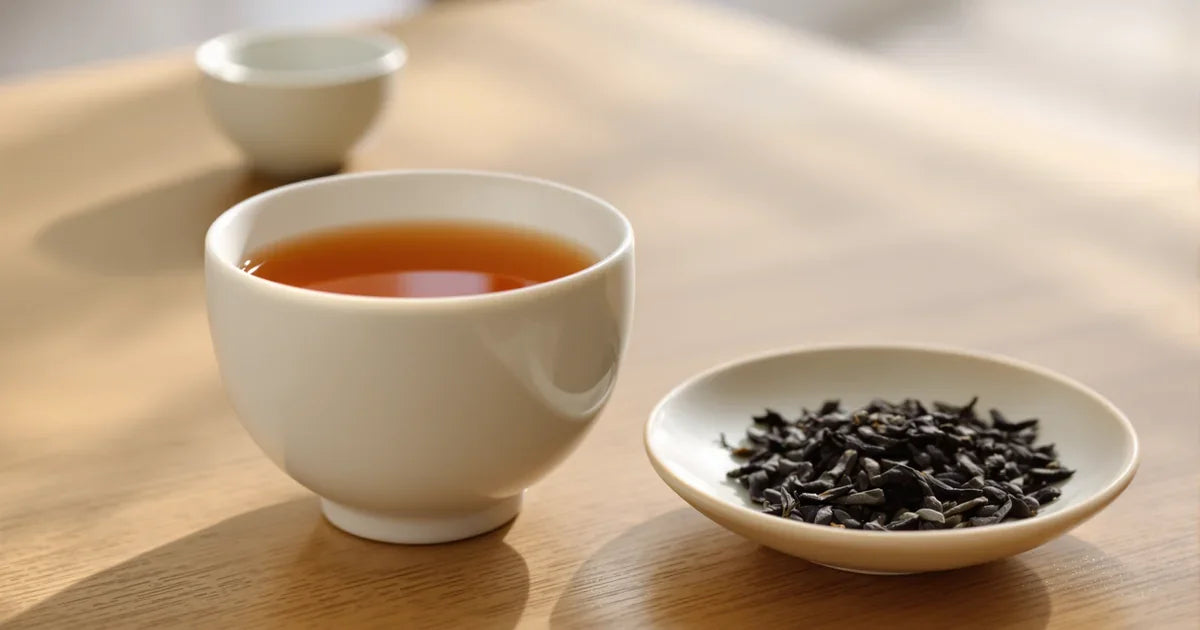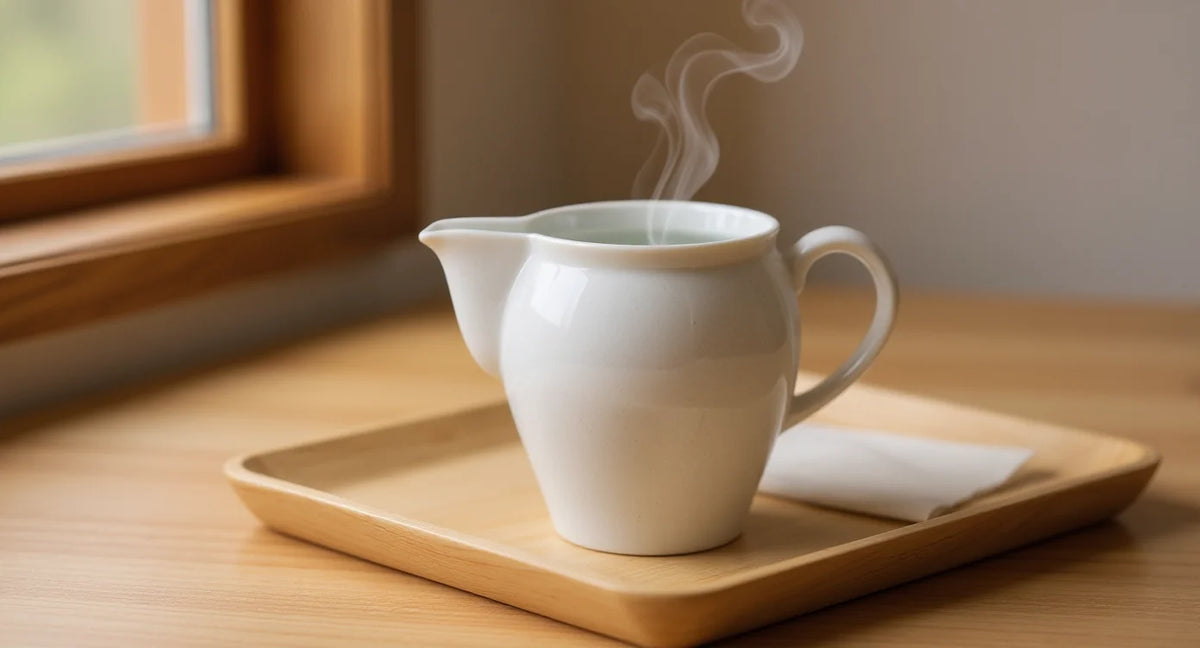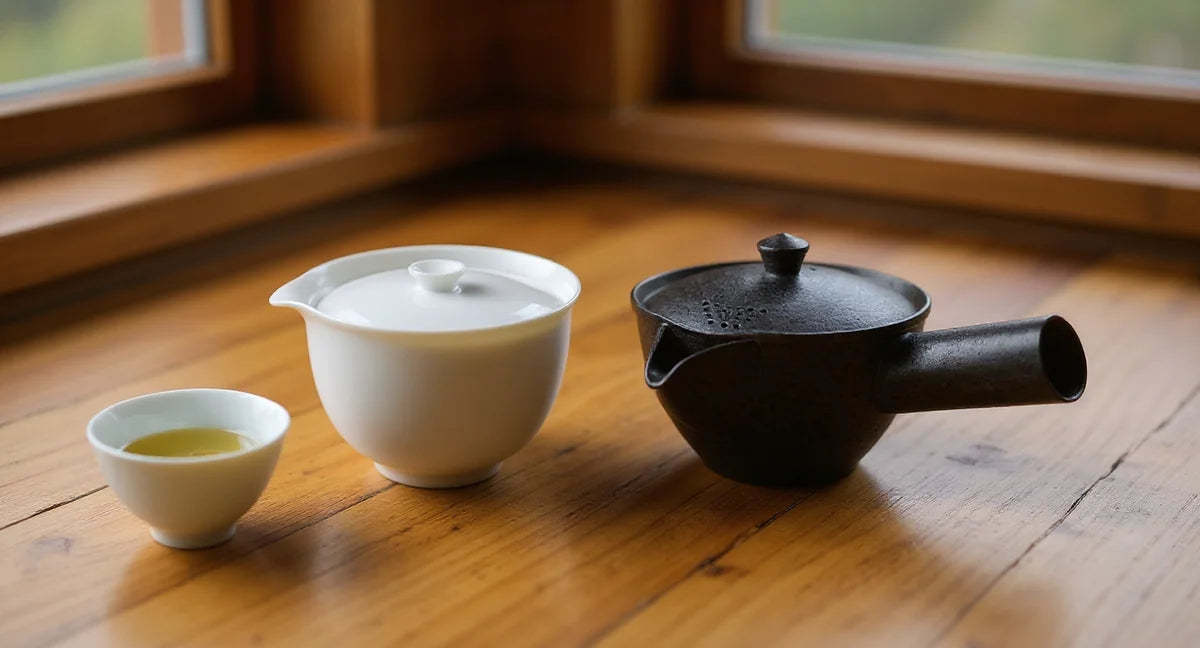

The bowl glows vivid green, the foam sits soft on the surface, and the first sip spreads savory sweetness across the tongue. Ceremonial grade Matcha usually means Matcha meant to be whisked and drunk straight, but it is not a regulated Japanese standard. In Japan, quality is judged more by the Tencha, cultivar, shading, milling, and whether the tea suits usucha or koicha.
That gap matters because "ceremonial grade Matcha" is probably the most searched Matcha phrase in English, while in Japan the phrase itself barely carries authority. A producer in Uji or Nishio is more likely to talk about the leaf, the harvest, the blend, and what kind of bowl the tea is meant to become. Thick tea. Thin tea. Daily drinking. Formal use. The language is more practical than the export label suggests.
We do not think the term is useless. It helps English-speaking drinkers separate drinking Matcha from baking Matcha. But it hides the more interesting question. What actually makes one Matcha luminous, sweet, and deep, while another turns flat, sharp, or dusty? The answer starts before grinding, with the shaded leaf that becomes Matcha at all.
What "ceremonial grade" actually means
Ceremonial grade Matcha is not a Japanese government classification, and there is no legal standard that says exactly what the phrase must mean. You will not find one official threshold for amino acids, one mandated harvest date, or one required processing method that separates ceremonial from non-ceremonial. That is why the same label can appear on excellent Matcha, average Matcha, and sometimes frankly poor Matcha.
The phrase developed mainly in export markets as a way to distinguish Matcha for drinking from Matcha for cooking. In that sense, it is useful shorthand. If a tin says ceremonial, the seller is signaling that the powder is intended to be whisked with water and consumed on its own. If a bag says culinary, the expectation is different: stronger flavor, more bitterness, lower price, better performance in milk, sugar, or baked goods.
What the term misses is that Japanese tea culture does not usually sort Matcha by a single retail grade word. It sorts by suitability and by context. Is the tea good enough for usucha, the thin tea whisked into a light, foamy bowl? Is it refined enough for koicha, the thick tea kneaded into a dense, glossy preparation where flaws are impossible to hide? Is it intended for practice, for sweets, or for blending? Those distinctions tell you more than "ceremonial" by itself.
Producers also look at the underlying Tencha, the shaded leaf that is processed specifically to become Matcha. A Matcha made from careful first-flush Tencha, shaded deeply and finished gently, may be suitable for koicha. A more ordinary lot may still make a pleasant usucha. Another may be perfectly respectable for lattes. Same category of tea. Very different expectations in the bowl.
That is why we tend to describe the term this way: not wrong, just incomplete. It points in the right direction, but only broadly. It tells you the tea is supposed to be drinkable straight. It does not tell you how sweet it is, how the bitterness lands, whether the foam will be fine or coarse, what cultivars were used, or whether the tea has the depth for koicha rather than only the brightness for usucha.
For shoppers outside Japan, the most practical way to read the label is this: ceremonial grade Matcha should mean "drinking quality," not "highest possible quality." Some ceremonial Matcha is genuinely elegant. Some is just decent daily tea in a nice tin. Once you know that, you stop treating the phrase as a verdict and start treating it as the beginning of a better set of questions.
What makes Matcha high quality — the real indicators
It starts with Tencha
Matcha is ground Tencha. That sounds obvious, but it changes how you evaluate quality. Before there is powder, before there is foam, before there is a bright green photo online, there is a leaf grown for a very specific purpose. Tencha is not rolled like Sencha. After harvest, it is steamed and dried in flat pieces, then refined by removing stems and veins before grinding. If the Tencha is poor, the Matcha cannot rise above it.
High quality Tencha is usually shade-grown for roughly 20 to 30 days before harvest. In Japanese tea this is part of the broader logic of covered cultivation, explained in our articles on Matcha and Tencha and covered cultivation of tea. The effect is not cosmetic. Shade changes the chemistry of the leaf. Chlorophyll stays high, which helps give Matcha its saturated green color, and the leaf retains more amino acids that contribute to sweetness and umami.
Sunlight pushes tea plants toward defense. More light generally means more catechins, the polyphenols associated with bitterness and astringency. Shade slows that shift. The leaf holds onto more of the compounds that make a bowl feel soft and savory, especially theanine. If you want the ingredient side in more detail, our guides to theanine and catechin explain why shaded teas taste calmer and rounder than teas grown fully in the sun.
Harvest timing matters too. The best Matcha is generally made from young spring leaves, often first flush, because tenderness and amino acid content are highest then. Later harvest material can still be useful, especially for culinary applications, but the flavor usually grows firmer and more direct. Less silk, more edge. That is not always a defect. It just suits a different job.
Tencha production is also specialized work. The leaves have to be handled in a way that preserves aroma and color before they ever meet the mill. That is one reason good Matcha costs what it does. You are paying not only for powder, but for shading, selection, processing, and the leaf losses involved in turning tea into refined Tencha first.
Cultivar matters more than grade labels
Cultivar often tells you more than the label on the front of the tin. A generic ceremonial Matcha might sound impressive, but if you know whether it is Samidori, Okumidori, Gokou, or a blend built around those cultivars, you are already much closer to understanding the bowl.
Samidori is one of the classic Uji cultivars for Tencha and Matcha. It tends to give a bowl with rich umami, deep green color, and a poised sweetness that feels polished rather than loud. When Samidori is good, the impression is often elegant and composed. Not sugary. More like sweet cream, young peas, fresh nori, and a clean, lingering finish.
Okumidori usually feels a little broader and calmer. It is often described as balanced, with steady umami, moderate sweetness, and less pointed top-note intensity. It can make very good daily Matcha because it lands in the middle so well. Enough depth to drink straight, enough structure to stay clear in the cup, and often a slightly milder posture than the more overtly sweet cultivars.
Gokou is different again. This is the cultivar many drinkers remember after a particularly memorable bowl because the sweetness can feel almost creamy. In strong Matcha it brings density, softness, and very low apparent bitterness, which is exactly why it is prized for koicha. The bowl can seem to expand rather than sharpen as you drink it. Thick, rounded, almost velvety.
Single-cultivar Matcha can be beautiful because it lets one voice speak clearly. But blends matter too. Many excellent Matcha makers blend cultivars the way a good team assembles a cuvee, not to hide defects but to build balance. One cultivar for body, another for color, another for lift, another for sweetness. A blend may outperform a single-cultivar Matcha if the goal is a more complete usucha. The point is not purity for its own sake. It is the bowl in front of you.
That is another reason the phrase Matcha grades can be misleading in English. People imagine a simple ladder. In reality, quality can move in several directions at once: sweeter, greener, deeper, more fragrant, more suitable for koicha, more suitable for daily whisking. Cultivar is one of the clearest reasons why.
Milling and freshness
After Tencha comes the mill. Traditional granite stone mills are slow, often producing only a few dozen grams per hour, but that slowness is part of the point. The powder stays fine, the heat stays controlled, and the mouthfeel tends to become softer and creamier. Industrial ball mills and other high-output systems can make far more Matcha in less time, and some are perfectly suitable for everyday tea, but output is not the same thing as refinement.
Particle size changes the drinking experience immediately. Finer Matcha suspends more evenly in water, feels less gritty on the tongue, and usually makes a more delicate foam. Coarser powder can still be flavorful, but it often reads as rougher, flatter, or more chalky. When people say a Matcha tastes "dusty," the issue is not always flavor chemistry alone. Sometimes it is the grind.
Foam is a useful clue here. A good whisk and technique matter, of course, but finely milled Matcha tends to form tighter, smaller bubbles that persist a little longer. Poorly milled powder often gives larger, unstable foam that collapses quickly, leaving the bowl watery at the edges. The texture tells the truth before the palate fully catches up.
Freshness matters just as much. Matcha is fragile because the leaf is pulverized and exposed to air. Once you open the tin, oxidation begins moving fast. The bright top notes fade first, then the sweetness dulls, and eventually a stale, cereal-like flatness starts to replace the lively green aroma. As a working rule, we think opened Matcha is best within about a month.
That does not mean old Matcha becomes dangerous. It means it becomes disappointing. For this reason we prefer small tins, tight seals, and realistic buying habits over oversized bargain bags. Better to finish a smaller amount while it is still vivid than to save money and drink the last half after the tea has already gone silent.
Ceremonial vs culinary Matcha — what's really different
What is the difference between ceremonial and culinary Matcha?
The practical difference is simple. Ceremonial Matcha is made to be whisked with water and drunk as tea. Culinary Matcha is made to keep its shape when mixed with milk, sugar, chocolate, batter, or cream. That difference in intended use affects how the tea is grown, selected, and sold.
A good ceremonial Matcha usually leans toward sweetness, umami, and low upfront bitterness. The color is vivid green. The aroma feels fresh, creamy, sometimes marine, sometimes like young beans or tender grass. The finish should be clean enough that you want another sip. If bitterness appears, it should arrive late and lightly, more as structure than as attack.
Culinary Matcha is not "bad Matcha." It is usually built from stronger material with more robust flavor. That can mean less shading, later harvests, different blends, or simply a selection aimed at boldness rather than delicacy. In water, some culinary Matcha can taste harsh or thin. In a latte or cake, that same assertiveness is useful. Milk and sugar would bury a more delicate tea.
The manufacturing side matters too. If you want a clearer sense of that pipeline, our article on the manufacturing process of Matcha and Tencha shows how the raw material and finishing choices shape the powder. The gap between ceremonial and culinary is not only about the front label. It is about the leaf chosen for the job.
Color offers one clue but not the whole answer. Ceremonial Matcha is often a brighter blue-green, while culinary Matcha can shift toward yellow-green or olive. Texture tells another part. Drinking Matcha wants softness and suspension. Cooking Matcha mostly wants enough flavor to survive the recipe. Those are different design goals.
Is ceremonial grade Matcha really better?
If you drink your Matcha straight with water, yes, ceremonial grade Matcha is usually better than culinary Matcha because it is meant for that exact use. If you mostly make lattes, smoothies, ice cream, or baked goods, not necessarily. In those cases, paying for subtle sweetness and fine aromatic detail may be wasteful because the other ingredients will cover it.
We see people make the same mistake in both directions. Some buy the cheapest culinary powder and wonder why their bowl tastes sharp and flat. Others put expensive ceremonial Matcha into syrup-heavy drinks where its best qualities disappear. The right question is not "Which one is higher status?" It is "What am I asking this tea to do?"
There is also a wide middle. Some Matcha sold as latte grade or cafe grade is much better than the category name suggests. Some ceremonial tins are only modestly better than that. This is why intended use, transparency, and actual tasting matter more than prestige language. A well-made midrange usucha Matcha can be more satisfying day after day than a costly koicha-level tea used carelessly.
So the difference between ceremonial and culinary Matcha is real, but it is not moral. One is not the good version and the other the bad version. They are separate tools. Use ceremonial Matcha when the bowl itself is the point. Use culinary Matcha when the Matcha needs to cut through milk, fat, sugar, or heat.
How to tell if your Matcha is actually good
You do not need a tea lab to evaluate Matcha at home. A consistent tasting setup will tell you a great deal. Sift about 2 grams into a warm bowl, add 60 to 70 mL of water around 75 to 80 C, then whisk briskly for 10 to 15 seconds. Same bowl, same whisk, same temperature. Differences show up quickly. For a detailed step-by-step guide to whisking, see how to make Matcha.
- Color should look vivid and alive, closer to deep spring green than to olive, khaki, or brownish yellow.
- Aroma should feel fresh and sweet-grassy, often with notes of nori, edamame, cream, or tender leaves rather than hay or stale cereal.
- Foam should form in fine bubbles and hold for a little while instead of breaking immediately into large, uneven craters.
- Mouthfeel should be smooth and suspended, not sandy, gritty, or aggressively powdery on the tongue.
- Taste should move from umami into sweetness, with bitterness arriving only at the finish if it appears at all.
That sequence matters. In good Matcha, bitterness is usually a frame, not the main picture. If the first impression is sharp, metallic, or aggressively vegetal, the powder may be low grade, poorly stored, or simply better suited to milk than to a straight bowl. If the bowl tastes empty rather than bitter, the issue may be different: stale tea, weak concentration, or a Matcha chosen more for color than for depth.
Foam deserves one extra note because people overread it. Poor whisking can ruin good Matcha. But when your technique is reasonably sound, foam still tells you something meaningful about milling and freshness. Good Matcha tends to look composed in the bowl. The surface is finer. The liquid underneath stays unified rather than separating fast.
Price is not a perfect guide, but it is a useful reality check. Genuinely good Matcha is labor intensive and not cheap. In the US market, anything below about $0.75 per gram is usually a sign that you are in culinary or very entry-level territory, even if the packaging says ceremonial. That does not mean every expensive tin is excellent. It means very cheap tins rarely are.
Transparency helps. We trust a label more when it tells us the region, the intended use, and ideally something about cultivar or producer. Uji and Nishio are the names most international shoppers know, and for good reason, but origin alone is not enough. "Product of Japan" is a start, not a guarantee. Better clues are more specific: single origin, first flush, usucha suitable, koicha suitable, stone milled, blend composition, or a recent pack date.
When a brand relies only on adjectives like premium, ceremonial, and highest grade, we become cautious. Good tea does not need a lecture, but it usually comes with a little traceable detail. The label should help you picture the leaf behind the powder.
How to choose — a practical guide
For daily whisking
If you want a Matcha for everyday bowls, look for a single-origin Matcha from Uji or Nishio, or a clearly described blend from those regions, in a sensible middle price band and labeled for usucha or daily drinking rather than for formal koicha. This is often where value lives. You get enough sweetness and umami to enjoy the tea straight, but without paying for the rarest lots. For many people, this is the sweet spot: balanced blends, reliable color, easy whisking, and a flavor you will actually want every morning.
Okumidori-heavy blends can be especially good here because they tend to be steady and forgiving. If the seller gives no cultivar information, that is not automatically bad, but we do like seeing some explanation of flavor profile and intended use. Daily tea should feel generous, not mysterious.
For special bowls and koicha
If the goal is a slower, more focused bowl, move upward toward Matcha explicitly described as koicha-capable or suitable for thick tea. This is where single-cultivar lots like Samidori or Gokou can become very compelling. The powder should be sweet enough, low enough in bitterness, and dense enough in flavor to remain harmonious even when prepared with very little water.
Koicha is where quality becomes unforgiving. In usucha, foam and dilution can soften flaws a little. In koicha, there is nowhere to hide. If you have only ever tried Matcha in lattes, this can be a revelation. The tea feels less like a flavored drink and more like a concentrated expression of the leaf itself.
For lattes, smoothies, and baking
Choose culinary Matcha on purpose. This is one category where restraint is smart. A robust, well-made culinary powder will usually give you more Matcha character in milk than an elegant ceremonial tea whose subtlety gets lost. For lattes, we like powders with strong aroma, clear bitterness, and enough color to survive dairy or oat milk. For baking, an even sturdier grade is often the right move because sugar and heat both mute nuance.
If you enjoy an unsweetened or lightly sweetened Matcha latte, you may prefer trading up slightly from basic culinary into a cafe or latte grade. That middle zone often gives better color and a cleaner finish without wasting the delicacy of high-end ceremonial tea.
What to look for on the label and how to store it
Before buying, we ask a few simple questions.
- Does the label name a real origin such as Uji or Nishio rather than only a country?
- Does it say whether the tea is for usucha, koicha, or culinary use?
- Does it mention cultivar, harvest season, or whether the powder is stone milled?
- Is the package size small enough that you can finish it while it is still fresh?
Once opened, seal the tin well, keep it away from light and heat, and refrigerate it if your kitchen runs warm. Then let the tin come back toward room temperature before opening it again, so condensation does not gather on the powder. The goal is simple: keep oxygen, moisture, and heat from flattening the tea before you can enjoy it. In most homes, using the Matcha within about a month of opening is a realistic target.
From our side at FETC, working with Matcha producers in Japan, the label matters less than what is in the tin. A good bowl of Matcha tells you about shade, cultivar, and careful milling long before it tells you about marketing. Once you understand that, ceremonial grade Matcha becomes easier to read. Useful, yes. Final answer, no.
The better compass is the one Japanese producers have used all along: how the Tencha was grown, how the powder was made, and what kind of bowl it is meant to become. Learn that, and you can choose well whether you are buying a daily usucha, a special koicha, or a bag of robust Matcha for your morning latte.
For more on caffeine in Matcha or our Matcha latte recipe, follow the links.
Frequently Asked Questions
Is ceremonial grade Matcha an official Japanese standard?
No. Ceremonial grade is an export-market label, not a Japanese legal grade. We read it as drinking quality, then check Tencha, cultivar, origin, milling, and intended use.
How is ceremonial Matcha different from culinary Matcha?
Ceremonial Matcha is meant to be whisked with water and drunk straight, with more sweetness, umami, and softer bitterness. Culinary Matcha is built to stand up to milk, sugar, heat, or batter.
What signs show that a Matcha is high quality?
Look for vivid deep green color, fresh grassy aroma with nori or cream notes, fine foam, smooth suspension, and a taste that moves from umami to sweetness before light bitterness.
What brewing ratio and temperature are recommended?
For a clear home comparison, we sift about 2 grams of Matcha, add 60 to 70 mL of water around 75 to 80 C, then whisk briskly for 10 to 15 seconds.
Which cultivars matter for choosing Matcha?
Samidori tends to be elegant, green, and umami-rich; Okumidori is balanced for daily bowls; Gokou can feel creamy and dense, often fitting koicha when the lot is high quality.