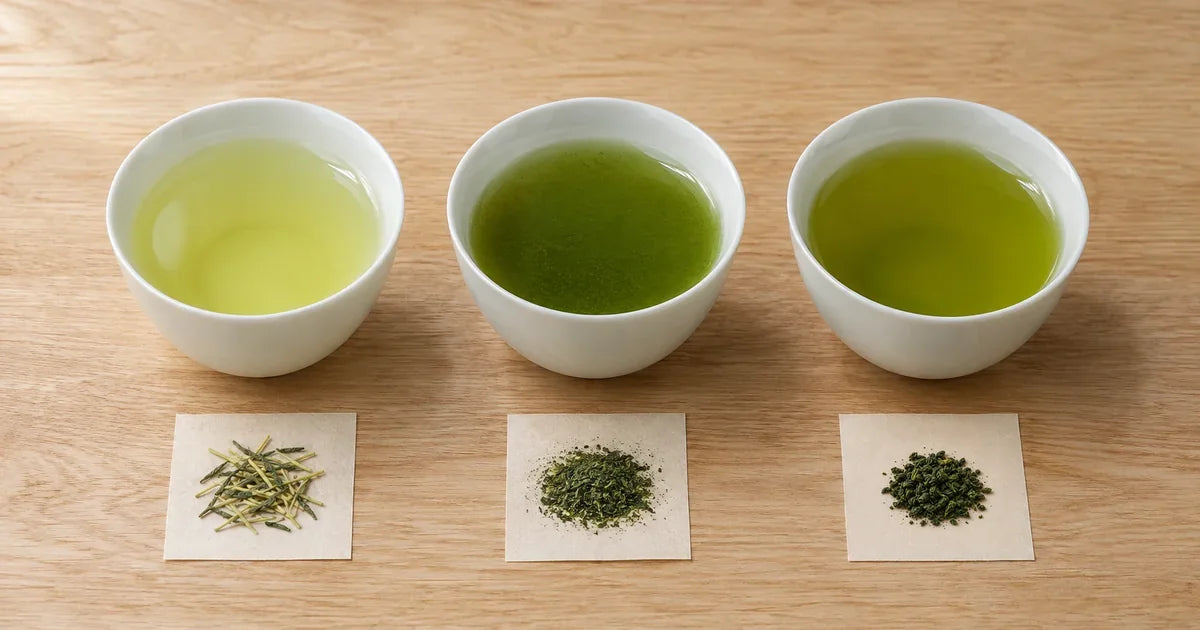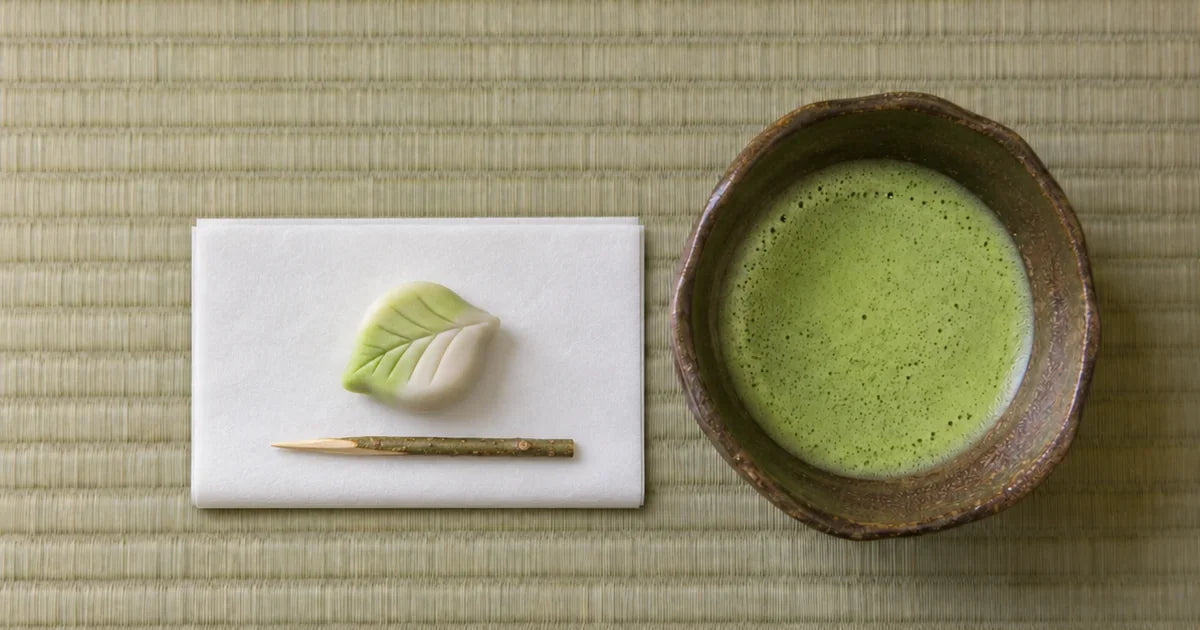

Steam rising from a small cup. The color somewhere between pale jade and sunlit grass. A sip that tastes clean — vegetal, a little sweet, with a quiet astringency that clears the palate and sharpens the morning. Green tea does not announce itself the way coffee does. It arrives gently. And yet, cup after cup, year after year, the research keeps pointing in the same direction: this simple drink may be doing more for the body than most people realize.
At FETC, we spend our days with Japanese green tea — sourcing it, tasting it, learning from the farmers who grow it. We are not doctors, and this article is not medical advice. But we have watched the science closely, and we think it is worth walking through what researchers have found, what remains uncertain, and why the type of green tea you choose may matter more than you expect.
If you are wondering whether green tea is good for you, the short answer is that decades of research suggest real benefits. The longer answer — which compounds, how much reaches your bloodstream, and where the evidence is still incomplete — is where it gets interesting.
What gives green tea its power
Green tea is not a single active ingredient. It is a package. Catechins, theanine, caffeine, vitamins, minerals, and a family of smaller compounds all arrive together in every cup. The balance between them shifts depending on the variety, the cultivation method, and how you brew it. That shifting balance is what makes one green tea feel sharp and bracing while another feels soft and calming — and it is also why the health conversation cannot stop at a single molecule.
Catechins and EGCG
Catechins are a group of polyphenols — natural plant compounds with antioxidant properties. Green tea contains several types, but the one that dominates the research is epigallocatechin gallate, usually shortened to EGCG. According to Radeva-Ilieva et al. (2025), EGCG accounts for roughly 50 to 70 percent of total catechins in green tea, making it the primary bioactive compound in the cup.
What makes catechins so interesting is their range. Khan and Mukhtar's 2018 review connects tea polyphenols with antioxidant activity, cardiovascular support, metabolic regulation, and anti-inflammatory pathways. That is a wide net, and not every finding translates neatly from a test tube to a human body. But the breadth of research gives the category weight that few other plant compounds can match.
If you want to understand catechins at a chemical level, our article on tea ingredients: catechin goes deeper into how they form in the leaf and what happens during processing. For now, the essential point is this: catechins are green tea's most studied health compound, and EGCG is both the most abundant and the most frequently investigated member of that group.
L-theanine
Theanine is an amino acid found almost exclusively in tea. It is the compound most responsible for the savory, umami-rich quality of Japanese green tea, and it is also the reason tea can feel calming even when it contains caffeine.
Research suggests that theanine promotes alpha brain wave activity — the kind associated with a relaxed but alert mental state. This is not the same as sedation. It is closer to the calm focus people often describe when they compare tea to coffee. The stimulation is there, but the edge is softer.
How much theanine ends up in your cup depends heavily on how the tea was grown. Shade-grown teas like Gyokuro and Matcha contain dramatically more theanine than sun-grown varieties. The reason is light: in sunlight the leaf makes more catechins, and some of its theanine is broken down and used as a building block. Block the light, and the leaf holds onto its amino acids. This is the science behind covered cultivation, a practice that changes not just flavor but the functional profile of the tea. Our piece on theanine explains the compound in full.
Caffeine — and why tea delivers it differently
Green tea contains caffeine. MEXT 8th edition lists brewed Sencha at about 20mg per 100mL, or roughly 36mg in a 180mL cup; Cleveland Clinic cites around 30mg per 8-ounce serving for a standard US preparation, using a different serving-size and preparation basis. That is less than most coffee, but it is not zero. Matcha can reach about 64mg with 2g of powder. A pour of Gyokuro can approach coffee territory.
What sets tea caffeine apart is the company it keeps. Caffeine in coffee arrives largely on its own. Caffeine in green tea arrives alongside theanine, catechins, and a slower extraction pattern. Many drinkers describe the result as steadier alertness with less of the spike-and-crash cycle. Research on caffeine and theanine in combination indicates the pairing may support sustained attention while moderating some of caffeine's sharper effects.
For more on how caffeine levels vary across Japanese green teas, our guide to green tea caffeine maps the full range from Bancha to Gyokuro.
Evidence-based green tea benefits
What follows is a summary of the most consistently supported health benefits in the research literature. We have tried to distinguish between strong observational evidence, promising but early findings, and areas where enthusiasm has outrun proof. Not every benefit applies equally to every person, and none of them replace medical care.
Rich in protective antioxidants
Green tea is one of the most antioxidant-rich beverages available. Its catechins, particularly EGCG, can neutralize free radicals — unstable molecules that contribute to cell damage and are associated with aging and chronic disease.
This does not mean green tea is a shield against all oxidative stress. No single food or drink provides complete protection. But as part of a broader dietary pattern, the antioxidant contribution of regular green tea consumption appears to be meaningful. Our overview of green tea ingredients covers the full chemical profile.
Supports cardiovascular health
This is one of the areas where the evidence is most consistent. Multiple large-scale observational studies have found associations between regular green tea consumption and lower rates of cardiovascular disease. In the Ohsaki cohort, Kuriyama et al. (2006) followed more than 40,000 Japanese adults and linked higher intake with lower cardiovascular mortality, especially stroke. Research compiled by the Cleveland Clinic suggests that 2 to 4 cups of green tea per day may be associated with as much as a 24 percent lower risk of stroke.
The proposed mechanisms include improved cholesterol profiles (particularly a reduction in LDL oxidation), better endothelial function, and modest blood-pressure-lowering effects. None of these have been proven as isolated cause-and-effect relationships in the way a pharmaceutical trial would demand, but the direction across populations and study types has been remarkably steady.
May support focus and brain function
Green tea contains both caffeine and theanine, and researchers have tested the two compounds together at set doses. Owen et al. (2008) compared caffeine with and without L-theanine against a placebo in 27 participants; the combination improved speed and accuracy on an attention-switching task. A later trial found otherwise: Dodd et al. (2015) gave 24 participants capsules of the two compounds at levels equivalent to one to two cups of tea and found no positive effects of the combination on cognition or mood.
Longer-term, some epidemiological studies have found associations between regular green tea consumption and reduced risk of cognitive decline in older adults. These findings are observational, not causal, but they are consistent with laboratory research showing that EGCG and theanine may have neuroprotective properties. Many tea drinkers notice the effect intuitively. The mental clarity that follows a cup of Sencha or Matcha does not feel like the hard push of coffee. It feels more like a window opening. Quiet. Clear. Sustained.
May help regulate blood sugar
Some research suggests that green tea polyphenols may improve insulin sensitivity and help moderate blood glucose spikes after meals. In the Fukuoka Diabetes Registry, Komorita et al. (2020) followed 4,923 Japanese patients with type 2 diabetes; those who reported 4 or more cups of green tea daily had a 40 percent lower risk of death from any cause than those who drank none.
This is encouraging data, but observational studies cannot prove that green tea caused the reduced risk. People who drink four cups daily may also have other health habits that contribute. Green tea alongside a high-sugar meal is not a corrective. It may, however, be one part of a dietary pattern that supports metabolic health over time.
Promotes healthy metabolism
Green tea catechins, particularly EGCG, have been studied for their potential role in supporting fat oxidation — the process by which the body breaks down stored fat for energy. Some clinical trials have found modest increases in metabolic rate among participants consuming green tea extract or catechin-enriched beverages.
The operative word is modest. The effect size in most studies is small — not the dramatic fat-burning impact that supplement marketing sometimes implies. But as part of an overall healthy pattern, the research suggests a real, if gentle, contribution.
Shows promise in cancer prevention research
Laboratory studies have shown that EGCG can inhibit the growth of certain cancer cell lines and promote apoptosis (programmed cell death) in vitro. Epidemiological data from populations with high green tea consumption have shown correlations with lower rates of certain cancers.
However, the gap between laboratory results and real-world prevention is significant. In vitro studies use EGCG concentrations far higher than what a person could achieve through drinking tea, and clinical trials have produced mixed results. The honest assessment is that the research is promising but incomplete. Green tea may play a role in cancer risk reduction as part of a broader dietary approach, but it would be irresponsible to describe it as a preventive measure on its own.
Reduces chronic inflammation
Chronic low-grade inflammation is increasingly recognized as a contributing factor in cardiovascular disease, metabolic disorders, and neurodegenerative conditions. Green tea polyphenols — EGCG in particular — have demonstrated anti-inflammatory effects in both laboratory and clinical settings. Some studies have shown reductions in inflammatory markers like C-reactive protein (CRP) among regular green tea drinkers.
The effect appears to be cumulative rather than acute. A single cup will not measurably lower inflammation, but consistent consumption over weeks and months may contribute to a less inflammatory internal environment. This is a benefit that is difficult to feel directly but may matter a great deal over a lifetime.
Theanine and calm: what the research shows
Research on this centers on theanine. Nobre et al. (2008) reported a greater rise in alpha brain wave activity after 50mg of isolated L-theanine than after placebo, and they describe such activity as a sign of a relaxed mind without drowsiness. In one small trial, 200mg of L-theanine taken in capsules, not as tea, lowered tension and anxiety scores after mental tasks compared with placebo (Yoto et al., 2012). EFSA's 2011 assessment, however, did not establish a cause-and-effect relationship between L-theanine from tea and alleviation of psychological stress.
Many people still reach for green tea during stressful work rather than after it. The cup does not slow you down the way a glass of wine might. Shade-grown teas like Gyokuro and Matcha hold more theanine than sun-grown varieties, and shading raises caffeine as well.
Supports oral health
Green tea catechins have shown antibacterial properties that may benefit oral health. Research suggests they can inhibit the growth of Streptococcus mutans, the primary bacterium responsible for plaque formation and tooth decay. Some studies have also found that green tea consumption is associated with a lower risk of periodontal disease.
The evidence here is modest but interesting. Green tea is not a substitute for brushing and flossing, but as a beverage, it may be one of the more tooth-friendly choices available — particularly compared to acidic or sugary drinks. The low acidity and natural fluoride content of many green teas add to this mild protective profile.
Skin: mixed results in people
Cleveland Clinic says nonhuman studies found that polyphenols in green tea increase collagen and elasticity in skin. Trials in people are small, tested polyphenol drinks or supplements rather than ordinary tea, and disagree: one 12-week trial found less UV reddening and better elasticity, while a three-month trial and a two-year trial found no clear benefit (Heinrich et al., 2011; Farrar et al., 2015; Janjua et al., 2009).
The evidence here is more preliminary than for cardiovascular or metabolic benefits. Green tea does not replace sun protection or dermatological treatment.
Not all green tea is equal
Most articles about green tea health benefits treat the drink as one thing. The reality inside Japanese tea is far more varied — as our guide to Japanese tea types explains. How the tea was grown, when it was picked, and how it was processed all change the compound profile — and that means different teas offer genuinely different health characteristics.
This is plant chemistry, not marketing. A tea grown in full sun has a different catechin-to-theanine ratio than one grown under shade, and a powdered tea consumed whole delivers a different dose than an infusion where the leaf stays behind. Caffeine density moves too; everyday Sencha, shade-grown Gyokuro, and a 2g bowl of Matcha are not interchangeable.
Sencha — the catechin champion
Sencha is Japan's everyday green tea, grown in full sunlight and accounting for the majority of Japanese tea production. Sunlight encourages catechin production, which is why Sencha tends to have more total catechins than shade-grown varieties.
For someone focused primarily on antioxidant intake, Sencha is a strong choice. The flavor is brisk, clean, and a little astringent — that pleasant sharpness is itself a marker of catechin presence. Astringency is not a flaw. It is the taste of polyphenols at work. The MEXT 8th edition benchmark of about 20mg caffeine per 100mL also keeps Sencha comparisons grounded. First-flush spring Sencha tends to offer the best balance of catechins and sweetness, while later harvests lean more heavily toward the brisk, astringent end.
Gyokuro and Kabusecha — maximum L-theanine
If Sencha is the catechin leader, Gyokuro is the theanine champion. Shaded for about 20 days before harvest, Gyokuro retains far more of its amino acid content because the reduced light slows the use of theanine in catechin production. The result is a tea that is intensely savory, rich in umami, and remarkably high in theanine.
Kabusecha sits between the two — partially shaded, usually for about a week. It offers a middle ground: more theanine than Sencha, more catechins than Gyokuro. For someone who wants elevated L-theanine without Gyokuro's price or intensity, Kabusecha is the practical entry point into shade-grown tea.
The trade-off is real and rooted in biology. Sunlight builds catechins. Shade preserves theanine. You cannot maximize both in the same leaf. But you can choose the balance that suits you, or alternate between them — Sencha for antioxidant-rich mornings, Gyokuro for calm, focused afternoons.
Matcha — the whole-leaf advantage
With Matcha, you consume the entire leaf as a fine powder whisked into water. Nothing is left behind. This means you receive the full spectrum of the leaf's compounds — catechins, theanine, caffeine, chlorophyll, fiber, and fat-soluble nutrients that an infusion would leave trapped in the discarded leaf. By dry leaf weight, Matcha contains roughly four times as much theanine as Bancha, according to a 1994 survey of market teas in the Tea Research Journal.
There is an important nuance. Matcha is shade-grown, so its catechin levels per gram of dry leaf are actually lower than sun-grown Sencha. The whole-leaf advantage changes the dose because you ingest everything rather than just what hot water extracts. Matcha and brewed Sencha are not simple equivalents. For a full comparison, our article on Matcha vs green tea traces how these two paths diverge. And if caffeine is a concern, our guide to Matcha caffeine maps the numbers honestly.
Hojicha and Kamairicha — when heat changes the rules
Hojicha is green tea that has been roasted at high temperatures after standard processing. The roasting transforms the color from green to chestnut brown and the aroma from vegetal to toasty and warm. It also reduces some of the catechin content, but the MEXT 8th edition lists brewed Hojicha at about 20mg of caffeine per 100mL, the same figure it gives for brewed Sencha.
Hojicha is often dismissed in health conversations because it has lower catechins than unroasted teas. That misses what Hojicha does well: its distinct pyrazine aroma, toasty warmth, and a comforting place in the green tea family. Our article on Hojicha health benefits covers this in more detail.
Kamairicha gives us a different heat story. In our tasting of Ureshino Kamairicha from Saga, ambient-water brewing gave straw and roasted-corn aroma, soft mouthfeel, and a clean finish; at 90°C, compared with 60°C, the sweetness integrated better and the balance became more even. That makes Kamairicha the useful counterexample to the idea that lower temperature is always better for green tea.
| Variety | Catechins | Theanine | Caffeine (per serving) | Key benefit |
|---|---|---|---|---|
| Sencha | High (sun-grown, maximum conversion) | Moderate | about 36mg | Catechin-forward antioxidant profile among brewed teas |
| Gyokuro | Moderate (shade preserves theanine instead) | Very high | ~35-80mg* | Maximum theanine for calm focus and umami depth |
| Matcha | Very high (whole leaf consumed) | Very high | ~64mg | Most nutritionally dense — full-spectrum leaf intake |
| Hojicha | Lower (reduced by roasting) | Low to moderate | about 36mg | Gentle, toasty flavor with a comforting aroma |
| Kamairicha | Moderate (some oxidation during pan-firing) | Moderate | Varies by leaf and brew | Pan-fired aroma; benefits from higher brewing heat |
*Gyokuro is traditionally served in small cups (30–50 mL). Per 100mL, it contains about 160mg of caffeine according to the Japanese Standard Tables of Food Composition. The Sencha and Hojicha figures use the MEXT 8th brewed-infusion values of about 20mg per 100mL for each, scaled to a 180mL cup.
How brewing changes what you get
The health profile of your cup is not fixed at the farm gate. Brewing is the final variable, and it is one you control. Water temperature, steeping time, and leaf-to-water ratio all influence which compounds end up in your cup.
We think of temperature as a compound selector: higher heat tends to pull more catechins and caffeine; lower heat foregrounds amino acids, sweetness, and theanine. It is a dial, not a better-or-worse rule.
Temperature and extraction
Hotter water extracts catechins more aggressively. This is why a cup of Sencha brewed at 80°C (176°F) tends to taste more astringent than one brewed at 70°C (158°F) — you are literally pulling more polyphenols into the water. If you want a more catechin-forward brewed tea, higher temperatures favor that outcome.
We have seen the shift clearly in tasting. In a 2020 FETC tasting of Kagoshima Yutakamidori, 60°C for 80 seconds brought clear astringency while staying pleasurable; 80°C for 50 seconds improved the balance, with astringency present but not dominant. In our tasting notes, a second taster at the same settings recorded that 60°C conveyed the Yutakamidori character clearly, with firm astringency, while 80°C had a wild, crisp edge, a grain-like note and a very clean finish.
Okuharuka from Sayama showed the other side. In our tasting notes, Okuharuka brewed at 80°C for 60 seconds was enjoyable, with a greenish aroma and fairly pronounced bitterness reminiscent of old-school Sencha. At 60°C for 120 seconds, floral top note and fruity undertones emerged while bitterness disappeared; at 70°C for 120 seconds with rapid chilling, florality stayed and body firmed. Lower temperature did not just reduce bitterness. It changed the cup's structure.
This is why Gyokuro is traditionally brewed at lower temperatures: the goal is to foreground the depth that shading created, not to extract every last catechin. Our article on tea and temperature explores this variable in more detail. The practical lesson is not universal "hot" or "cool." Hotter for catechin intensity. Cooler for amino acids and calm. Higher again for Kamairicha when pan-fired sweetness needs heat to integrate.
Cold brewing for maximum theanine
Cold brewing takes the temperature principle to its logical end. Over several hours, theanine and amino acids dissolve readily, while catechins and caffeine are extracted much more slowly.
Our cold-brew tasting of Tsuyuhikari Fukamushi Sencha from Makinohara, Shizuoka, showed that mechanism in the cup: seaweed and aonori-adjacent aroma, very low residual astringency, and strong umami. This is why mizu-dashi — cold brewing in Japanese — can function as an L-theanine-forward preparation, not just a summer version of hot tea.
The cup becomes sweeter, smoother, and lower in bitterness. In NARO's measurements, Sencha steeped in refrigerator-cold water (about 10°C) released about half the caffeine of a 2-minute brew at 80°C, and the level did not rise with 16 to 24 hours of steeping. Cold brew is not caffeine-free, and the amount in the cup depends on how much leaf you use. The trade-off is fewer catechins per cup.
Our guide to cold and ice brew tea walks through the method: leaves, cold water, refrigerator, time.
How much green tea should you drink?
Research compiled by the Cleveland Clinic suggests that 2 to 4 cups of green tea per day may be associated with as much as a 24 percent lower risk of stroke, and in a registry of Japanese patients with type 2 diabetes, those who reported 4 or more cups daily had a 40 percent lower risk of death from any cause than those who drank none. EFSA says consuming up to 400mg of caffeine a day spread throughout the day raises no safety concerns for healthy adults in the general population except pregnant women; that amount is well above what most green tea drinkers reach unless they consume large amounts of Matcha or Gyokuro.
These cup counts come from observational studies of people's usual intake, not from trials that set a daily dose; by the MEXT benchmark, each 180mL cup of Sencha adds about 36mg of caffeine toward EFSA's 400mg figure. Consistency over years likely matters more than volume on any single day.
One thing worth knowing: your body does not absorb most catechins you drink. Cai et al. (2018) write that only a small fraction of tea catechins in the intestinal tract can be absorbed, and a study of people drinking black tea found lower apparent bioavailability for gallated catechins such as EGCG than for the others (Warden et al., 2001).
That does not weaken the case for green tea. The epidemiological evidence is based on real people drinking real tea, not purified EGCG injected into a vein. The benefits show up at human scale, cup after cup, year after year.
The bioavailability gap also explains why concentrated green tea extract supplements can behave differently from brewed tea. EFSA's 2018 safety opinion considered traditionally prepared green tea generally safe at the intakes reported in Europe, while noting rare cases of liver injury, and linked raised liver enzymes in clinical trials to supplement doses of 800mg of EGCG or more per day. A 2018 systematic review by Hu et al. treated green tea extract in capsules and green tea as a beverage separately. For adults with normal liver function taking extract as capsules or tablets, it proposed 338mg of EGCG per day as a safe intake level. For green tea drunk as a beverage, it treated the highest intake in the studies it reviewed, 704mg of EGCG per day, as an observed safe level. The review does not mention Matcha, and these figures are amounts of EGCG, not grams of powder. A bowl of Matcha is not the same exposure as an extract capsule, and supplements should be treated as a separate medical question.
Side effects, risks, and who should be careful
Green tea is safe for most people in normal dietary amounts. But "safe for most" is not the same as "safe for all," and responsible health content requires acknowledging the exceptions. This section is general information. If any of it raises questions about your own situation, consult a qualified healthcare provider.
Caffeine sensitivity
Green tea contains caffeine, and some people are more sensitive to it than others. Symptoms of excessive intake include anxiety, insomnia, heart palpitations, and digestive discomfort. If you are caffeine-sensitive, options like Genmaicha can help you enjoy green tea's other benefits with less caffeine extraction. NARO recommends cold-brewed Sencha for people concerned about caffeine: in its measurements in refrigerator-cold water (about 10°C), extraction was about half that of a 2-minute brew at 80°C, not zero; the cup's amount depends on how much leaf you use.
Caffeine tolerance also changes over time — affected by medications, hormonal shifts, sleep patterns, and stress. A cup that felt fine last year may feel like too much during a different phase of life. Our caffeine guide maps the range across the Japanese tea family.
Iron absorption
Green tea polyphenols can bind to non-heme iron (the type found in plant foods, eggs, and supplements) and reduce its absorption. For most healthy people, this is not clinically significant. But for individuals with iron deficiency or borderline levels, timing matters.
Drink green tea separately from iron-rich meals and iron supplements; follow your medicine's instructions. Vitamin C consumed alongside iron can help counteract the effect. If you manage your iron levels carefully, discuss timing with your doctor or dietitian.
Medication interactions
Green tea can interact with certain medications. Radeva-Ilieva et al. (2025) report that the Lexicomp drug interaction database lists 48 potential interactions related to the use of green tea. They conclude that there is a risk of interactions that change how certain drugs are absorbed or processed, that it remains unclear whether this risk is clinically relevant, and that individual cases need monitoring. The medicines below are examples to ask about, not a complete list, and the evidence differs for each:
- Warfarin and other anticoagulants (blood thinners) — If you are on anticoagulant therapy, maintain consistent green tea consumption from week to week and inform your prescriber. One published case report describes a man whose warfarin became less effective, with his INR falling, after he began drinking half a gallon to a gallon (about 1.9 to 3.8 liters) of green tea a day; his INR rose again when he stopped. Tea leaves contain vitamin K, but the Japanese food composition table lists only a trace of it for Sencha infusion, and reviews disagree on how far vitamin K explains that case. Because the cause is unsettled, that low figure does not lift this caution. Matcha is different: you consume the whole leaf, vitamin K included.
- Statins (such as atorvastatin) — If you take a statin, tell your prescriber or pharmacist that you drink green tea. The US National Center for Complementary and Integrative Health (NCCIH) notes that green tea extract can reduce blood levels of the cholesterol-lowering drug atorvastatin. Radeva-Ilieva et al. report that healthy volunteers given green tea extract or EGCG together with rosuvastatin or atorvastatin had lower blood levels of those drugs. How far these extract and EGCG findings apply to a cup of tea is not settled, and that does not lift this caution. A 2025 review of clinical studies on green tea catechins by Kyriacou et al. reports different results for different statins, so ask about the one you take.
- Stimulant medications (including some ADHD medications) — If you take a stimulant medication, tell your prescriber or pharmacist how much caffeine you get from green tea and other sources. Green tea is a source of caffeine, itself a stimulant. More broadly, Radeva-Ilieva et al. note that caffeine and related compounds, while less studied than catechins, could also add to the risk of drug interactions.
- Other medicines — NCCIH notes that green tea may also interact with other medicines. Radeva-Ilieva et al. name antibiotics and antifungals among the drug groups that may be affected.
If you take prescription medications regularly, a brief conversation with your pharmacist or physician about green tea is worthwhile. Reviews report that such interactions can vary with the preparation, the dose and the person. A cup of Sencha is not the same as a concentrated supplement capsule, but that alone does not make the cup safe with your medicine.
Pregnancy and nursing
The World Health Organization recommends that pregnant individuals with high caffeine intake (above 300mg per day) reduce consumption. In the United States, the American College of Obstetricians and Gynecologists (ACOG) says that moderate caffeine intake of less than 200mg per day does not appear to be a major contributing factor in miscarriage or preterm birth. A cup of Sencha at around 30mg is well below both figures, but multiple cups combined with caffeine from other sources can add up faster than expected.
Green tea in moderate amounts is not considered harmful during pregnancy by most major health organizations. But caffeine metabolism slows during pregnancy, and the daily total across all sources is what matters. Caffeine also passes into breast milk and may affect a nursing infant. If you are pregnant or nursing, your obstetrician or midwife is the right person to consult about your own intake.
Green tea is not a medical shortcut, and we would not want it to be. Overpromises close the door on curiosity, and curiosity is what makes tea interesting.
What green tea offers is something quieter: a daily habit that research consistently associates with meaningful long-term health benefits. Cardiovascular. Cognitive. Metabolic. Anti-inflammatory. Not dramatic single-dose effects, but the kind of slow, steady support that compounds over years of ordinary mornings.
At FETC, we think the most useful thing about understanding green tea benefits is that it changes how you choose your cup. Not just which tea tastes best today, but which tea serves you best. Sencha when you want antioxidant depth. Gyokuro or Matcha when you want theanine-rich calm. Hojicha when the day calls for toasty, comforting warmth. Cold brew when you want sweetness and softness on a summer afternoon.
The leaf is the same plant. The cup is always different. And the body, quietly, keeps track.
For a broader look at what green tea is and how it compares to other teas, see our guide to green tea.
References
- Radeva-Ilieva et al. (2025), Foods — review of current research topics and open issues around green tea.
- Khan & Mukhtar (2018), Nutrients — review article on tea polyphenols and human health research.
- Cai et al. (2018), Molecules — review of tea catechin bioavailability and related research approaches.
- Cleveland Clinic — Green Tea Health Benefits — consumer health overview of green tea.
- Kuriyama et al. (2006), JAMA — Japanese cohort study on green tea consumption and mortality outcomes.
- National Cancer Center Japan — JPHC Study — study summary on green tea consumption and all-cause mortality.
- EFSA (2018), EFSA Journal — scientific opinion on the safety of green tea catechins.
- EFSA (2015) — Safety of Caffeine — scientific opinion on caffeine safety.
- World Health Organization — Caffeine in Pregnancy — ELENA guidance page on restricting caffeine intake during pregnancy.
- ACOG (2010), Committee Opinion No. 462 — committee opinion on moderate caffeine consumption during pregnancy.
- MEXT — Japanese Standard Tables of Food Composition (8th ed.) — Japanese food composition database used for nutrient reference values.
- NARO — Cold-brewed green tea (mizudashi) — page from Japan's national agricultural research organization on cold-water brewing, which extracts less EGCG and caffeine than hot water.
- Goto et al. (1994), Tea Research Journal — survey of chemical components and theanine content across commercial Japanese green teas.
- Hu et al. (2018), Regulatory Toxicology and Pharmacology — systematic review of the safety of green tea and green tea extract consumption in adults.
- Owen et al. (2008), Nutritional Neuroscience — trial comparing caffeine with and without L-theanine on cognition and mood.
- Dodd et al. (2015), Psychopharmacology — capsule trial of caffeine and L-theanine, alone and in combination, at levels equivalent to one to two cups of tea.
- Komorita et al. (2020), BMJ Open Diabetes Research & Care — Fukuoka Diabetes Registry cohort of Japanese patients with type 2 diabetes.
- Nobre et al. (2008), Asia Pacific Journal of Clinical Nutrition — study of L-theanine and alpha brain wave activity.
- Yoto et al. (2012), Journal of Physiological Anthropology — capsule trial of L-theanine and responses to mental tasks.
- EFSA (2011), EFSA Journal 9(6):2238 — scientific opinion on health claims for L-theanine from tea.
- Warden et al. (2001), Journal of Nutrition — study of catechin bioavailability in people drinking black tea.
- Heinrich et al. (2011), Journal of Nutrition — 12-week trial of a green tea polyphenol beverage and skin properties in women.
- Farrar et al. (2015), American Journal of Clinical Nutrition — randomized trial of green tea catechin capsules with vitamin C on UV-induced skin inflammation.
- Janjua et al. (2009), Dermatologic Surgery — two-year randomized trial of oral green tea polyphenols and photoaging skin.
Frequently Asked Questions
Which green tea should we choose for the most catechins?
Sencha is the strongest everyday choice for catechins because it is grown in full sun, which converts more theanine into catechins. A brisk, slightly astringent cup often signals that polyphenols are present.
Why does Matcha feel different from brewed green tea?
With Matcha, we drink the whole powdered leaf, so catechins, theanine, caffeine, fiber, chlorophyll, and fat-soluble nutrients all come along. It is shade-grown, theanine-rich, and typically higher in caffeine than Sencha.
How does brewing temperature change green tea benefits?
Hotter water pulls out more catechins and stronger astringency, which favors antioxidant intake. Cooler water emphasizes theanine and amino acids for a sweeter, calmer cup.
How much green tea per day is reasonable?
In research compiled by the Cleveland Clinic, 2 to 4 cups of green tea a day may be associated with as much as a 24 percent lower risk of stroke, and among Japanese patients with type 2 diabetes, a registry study linked 4 or more cups daily with a 40 percent lower risk of death from any cause than drinking none. These are observational associations, not a set dose; for caffeine, EFSA says consuming up to 400mg a day spread throughout the day raises no safety concerns for healthy adults in the general population except pregnant women, and a 180mL cup of Sencha has about 36mg by the MEXT benchmark.
Who should be careful with green tea?
People sensitive to caffeine, managing iron levels, or pregnant or nursing should pay attention to timing, serving size, and total daily caffeine, depending on their situation. If you take medications such as warfarin, statins, or stimulants, ask your prescriber or pharmacist about green tea, including how much you drink and your total daily caffeine.